The aviation industry has always been a marvel of engineering, but for decades, its commercial strategy remained surprisingly rudimentary. The primary objective was simple: fill the tube. Success was measured by load factors and seat density. However, as the 2020s progressed, a fundamental shift occurred. Fuel costs, environmental regulations, and razor-thin margins on base fares turned the “seat” into a commodity.
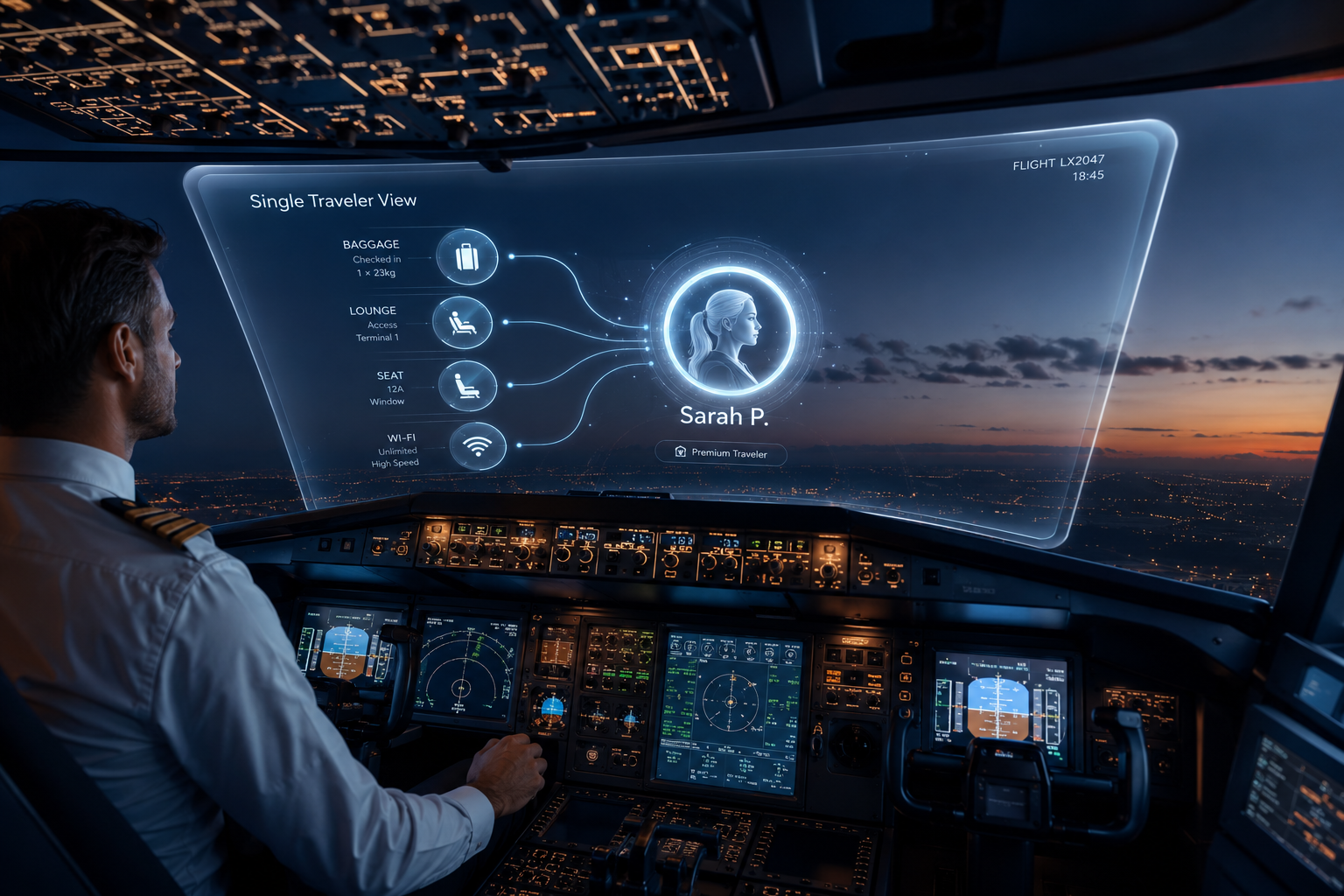
In 2026, the real profit center isn’t the ticket, it’s the ecosystem surrounding it. Ancillary revenue, once a term relegated to “baggage fees” and “on-board snacks,” has evolved into a sophisticated, multi-billion dollar strategic pillar. But there is a ceiling to how many fees a passenger will tolerate before “fee fatigue” sets in.
To break through that ceiling, airlines have turned to the most powerful asset they possess: Data. Specifically, the industry is undergoing a revolution driven by the Customer Data Platform (CDP). By moving away from fragmented, siloed data and toward a unified, real-time understanding of the passenger, airlines are transforming ancillary sales from a nuisance into a personalized service.
The Silo Problem: Why Traditional Personalization Grounded Out
To understand the power of a CDP, we must first look at the wreckage of traditional airline IT infrastructure. For years, airlines have operated with “data amnesia.”
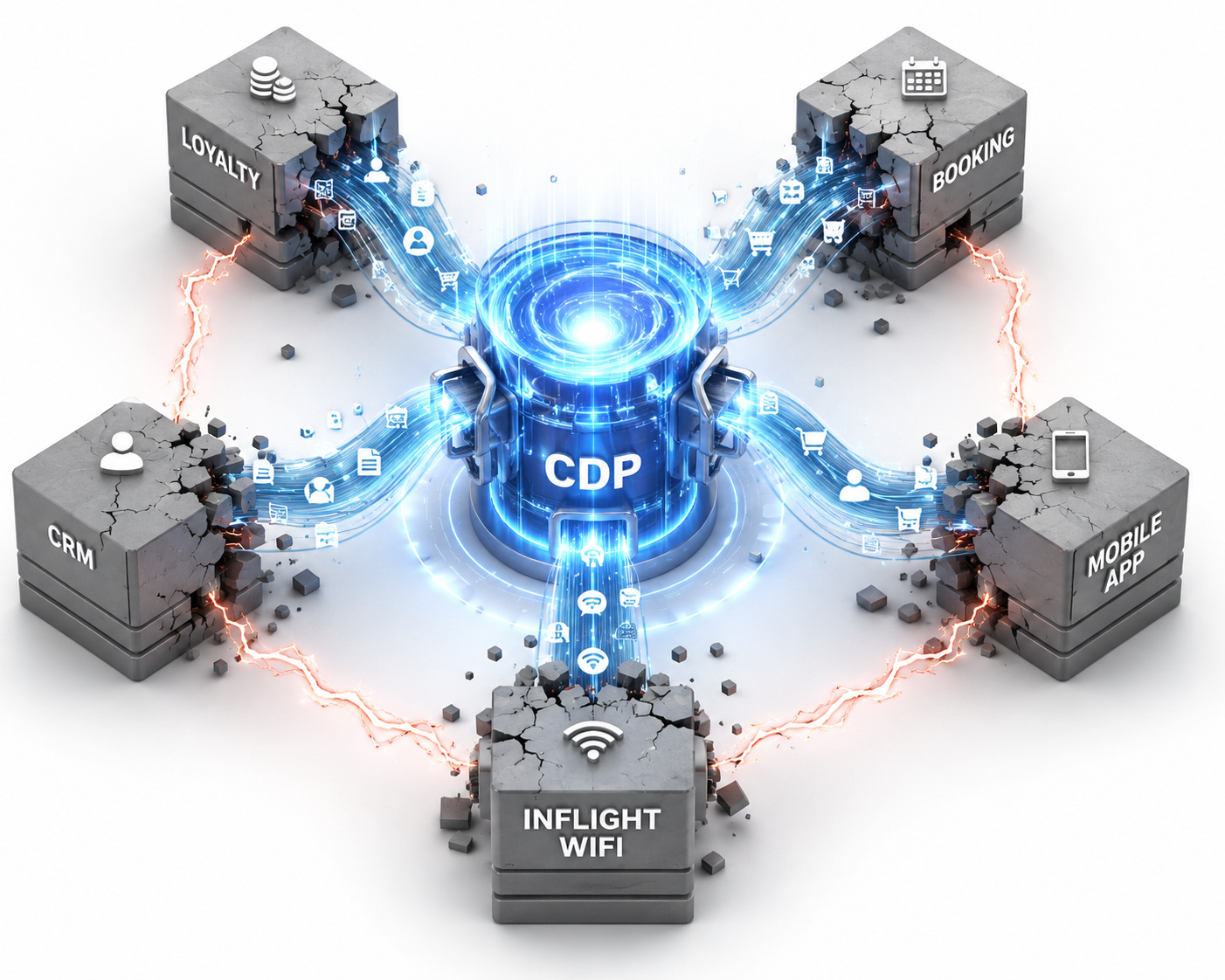
A typical passenger journey involves multiple disparate systems that rarely speak to one another:
- The PSS (Passenger Service System): Knows your name and seat number.
- The CRM (Customer Relationship Management): Knows your email address and perhaps your birthday.
- The Loyalty Program: Knows your “tier status” but nothing about your real-time behavior.
- The Web/App Analytics: Knows you’ve searched for “Paris” six times in two days but doesn’t know you’re a top-tier frequent flyer.
When these systems are disconnected, the “personalization” is clumsy. You might receive an email for a 10% discount on a flight you already booked yesterday, or be offered a “family pack” baggage deal while traveling on a solo business trip. This tells the customer, “We have all your data, but we don’t actually know you.”
Enter the CDP: The “Single Source of Truth”
A Customer Data Platform acts as the central nervous system of an airline’s commercial engine. It ingests data from every conceivable touch-point first-party web data, historical booking patterns, call center logs, in-flight Wi-Fi usage, and even social media sentiment that stitches it into a Single Customer View.
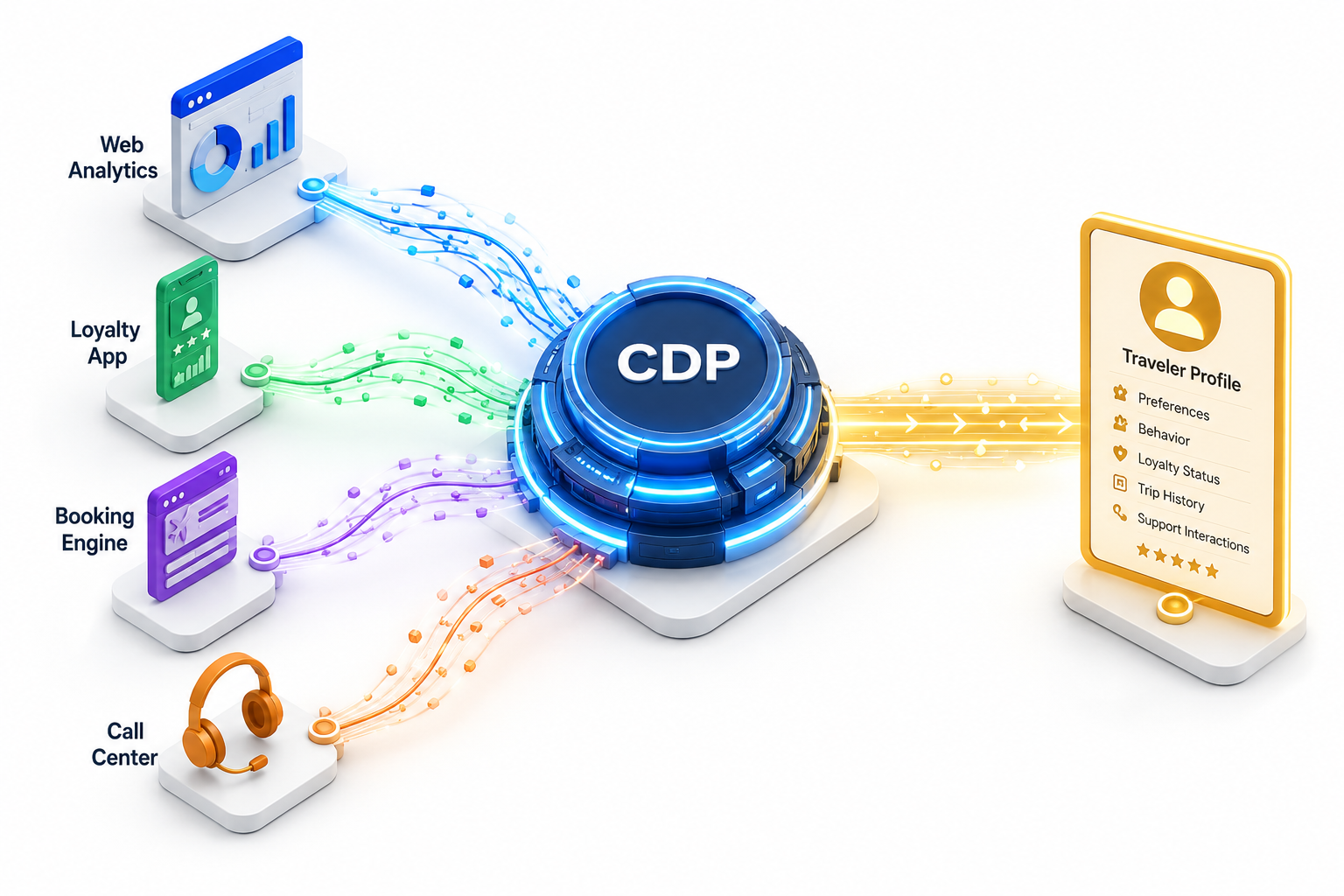
In 2026, the most advanced airlines are using CDPs to create “Living Profiles.” These aren’t static databases; they are dynamic, evolving entities that update in milliseconds. If a passenger’s flight is delayed by 45 minutes, the CDP immediately recognizes the change in state and suppresses “Buy a Lounge Pass” ads in favor of a “Complimentary Drink Voucher” to build goodwill, followed by a “Discounted Uber to Hotel” offer upon landing.
Lemnisk: Precision Engineering for Airline Growth
While the concept of a CDP is industry-wide, the execution requires a platform built for the sheer velocity of aviation data. This is where Lemnisk differentiates itself. Lemnisk isn’t just a data warehouse; it is an intelligent orchestration engine designed to convert traveler intent into immediate ancillary lift.
The Lemnisk Edge: Features that Drive the Flight Path
Lemnisk’s platform aligns specifically with the high-stakes needs of modern airlines through several key architectural advantages:
- Real-Time Data Ingestion & Identity Resolution: Lemnisk excels at “stitching” together the traveler’s journey across devices. Whether a passenger starts their search on a mobile app and completes it on a desktop, Lemnisk ensures the profile is unified in real-time, preventing redundant offers and ensuring the “Single Customer View” is truly accurate.
- Proprietary AI/ML Models for Propensity Scoring: Lemnisk doesn’t just store data; it predicts behavior with AI. Its machine learning models can assign a “propensity score” to each traveler for specific ancillaries such as the likelihood of upgrading to business class or purchasing an extra bag. This allows airlines to prioritize high-value offers to the passengers most likely to convert.
- Hyper-Personalized Journey Orchestration: With Lemnisk, airlines can move beyond simple A/B testing. The platform allows marketers to orchestrate complex, multi-stage journeys. For example, if a traveler abandons a premium seat selection, Lemnisk can automatically trigger a personalized retargeting ad on social media or a tailored “limited-time offer” via WhatsApp within minutes.
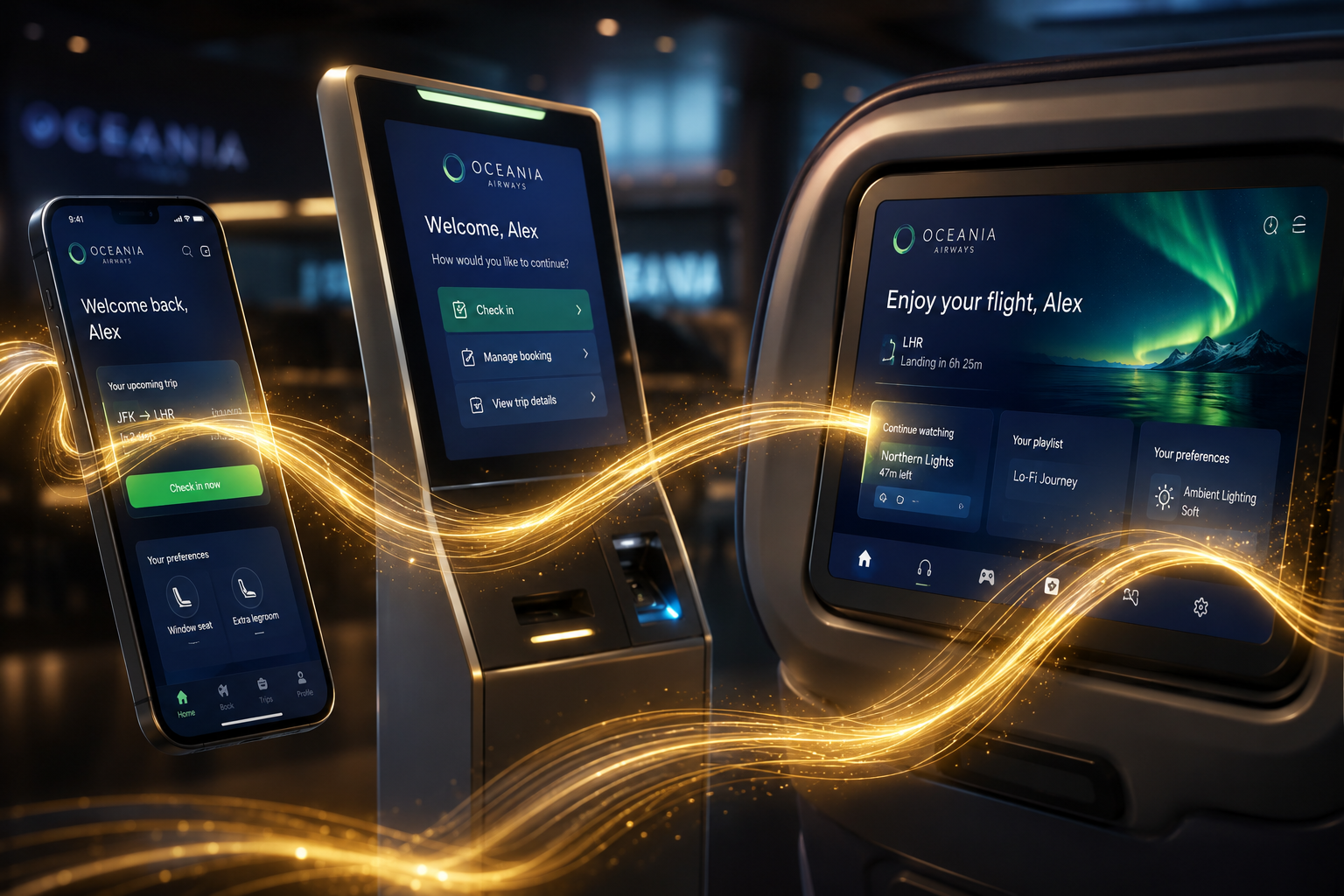
- Seamless Integration with the MarTech Stack: Lemnisk is designed to sit at the heart of an airline’s existing ecosystem. It pushes enriched customer segments directly into email tools, ad platforms, and on-board service tablets, ensuring that personalization isn’t just a marketing gimmick, but a consistent operational reality.
By leveraging Lemnisk, airlines transition from “guessing” what a passenger might want to “knowing” exactly what will add value to their specific journey at that specific second.
1. The Psychology of Predictive Merchandising
Using machine learning models layered on top of CDP data, airlines can now predict what a passenger wants before the passenger even knows they want it. Consider the “Workation” traveler. A CDP can identify this persona by looking at the data: a booking for one person, a midweek departure, a return on a Sunday, and high usage of in-flight Wi-Fi on previous trips.
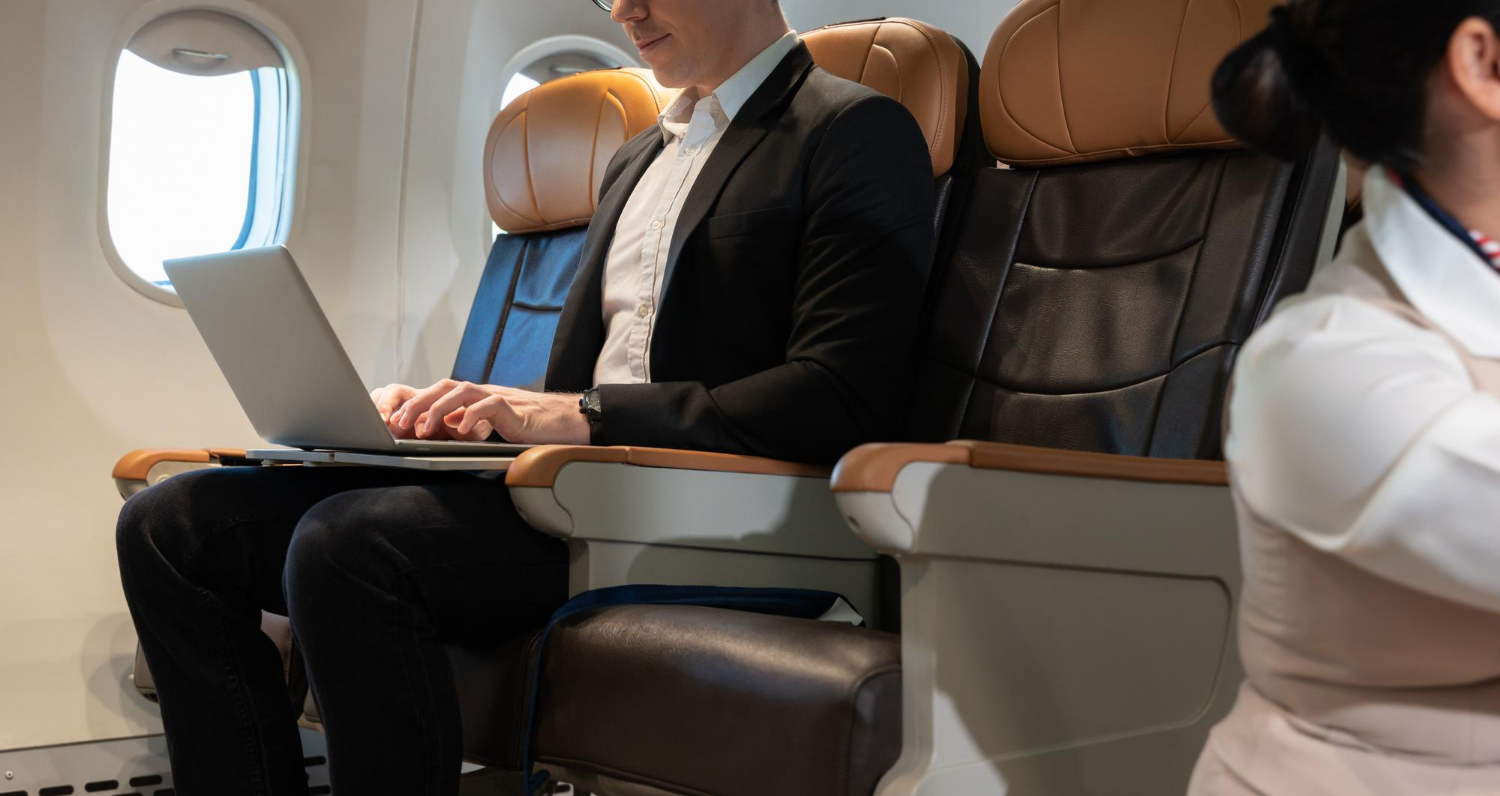
Instead of showing this traveler a generic list of add-ons, the airline’s booking engine, powered by the CDP, reconfigures itself in real-time to highlight:
- High-Speed “Stream-Ready” Wi-Fi packages.
- Seats with guaranteed power outlets.
- Early check-in at a partner hotel.
2. The Golden Window: Real-Time Triggering and Geofencing
In aviation, timing is everything. CDPs allow for hyper-local, time-sensitive triggers. By integrating mobile app location data (geofencing) with the unified customer profile, airlines can engage in “Micro-Moment Marketing”:

- The Departure Gate Upsell: As a passenger nears the gate, the CDP checks seat availability in Premium Economy. If seats are open and the passenger has a history of “splurging,” a push notification offers a “Last Minute Upgrade” for a fraction of the usual price.
- The In-Flight “Hunger” Trigger: By analyzing historical data, the CDP knows that a specific passenger usually orders a meal two hours into a flight. The seatback screen can proactively offer their favorite snack or a curated meal combo exactly at that 120-minute mark
3. B2B Personalization: The Untapped Frontier
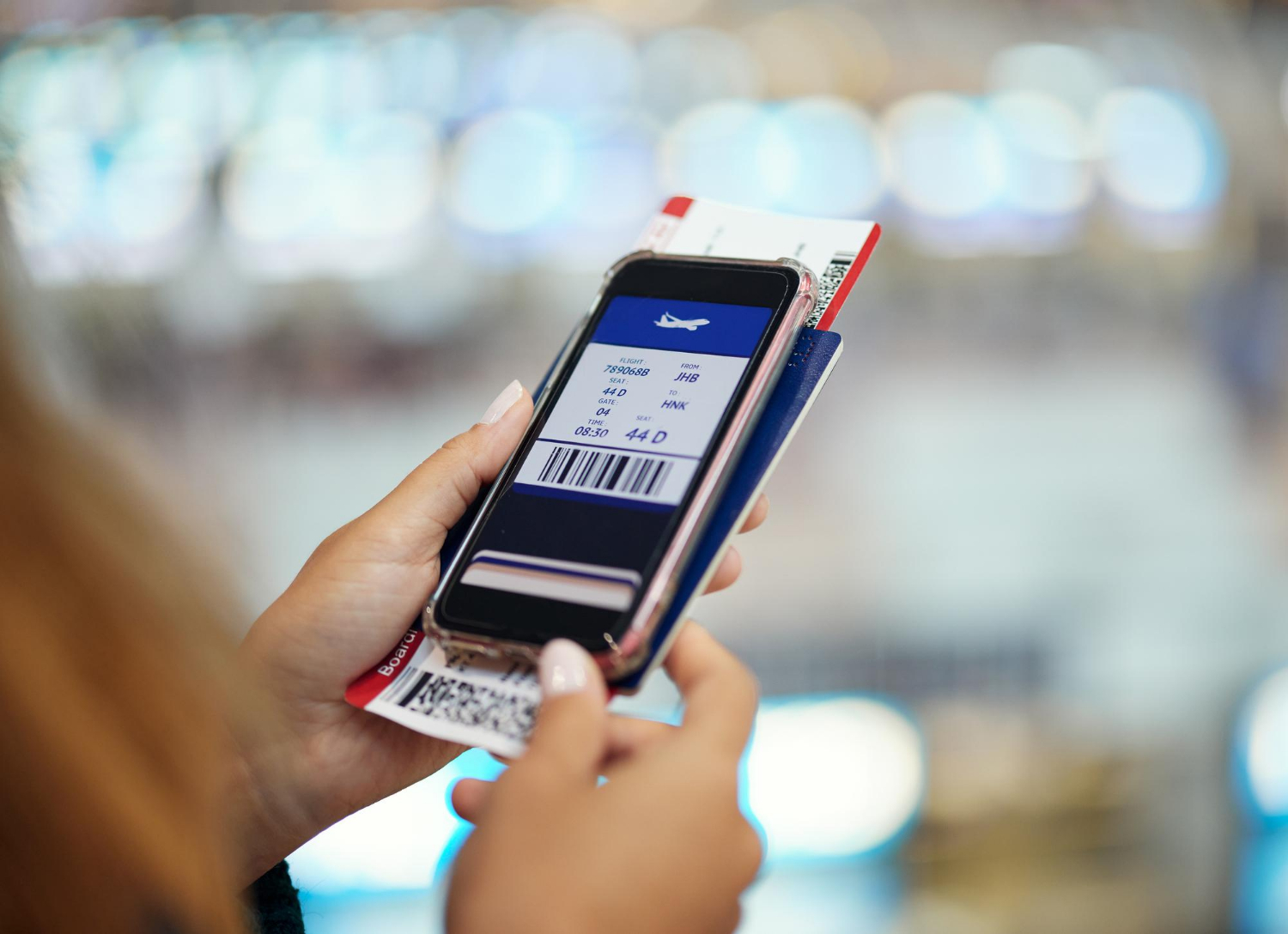
In 2026, airlines are using CDPs to bridge the gap between corporate compliance and individual preference. The CDP can store a company’s travel policy and overlay it with the traveler’s personal profile. If the policy forbids Business Class but allows “Traveler Well-being” expenses, the airline can automatically bundle an “Economy Comfort” seat and lounge access into a single invoice-friendly line item.
4. Dynamic Pricing and the Role of NDC
The technical backbone enabling this personalization is New Distribution Capability (NDC). While the CDP provides the intelligence, NDC provides the delivery mechanism.
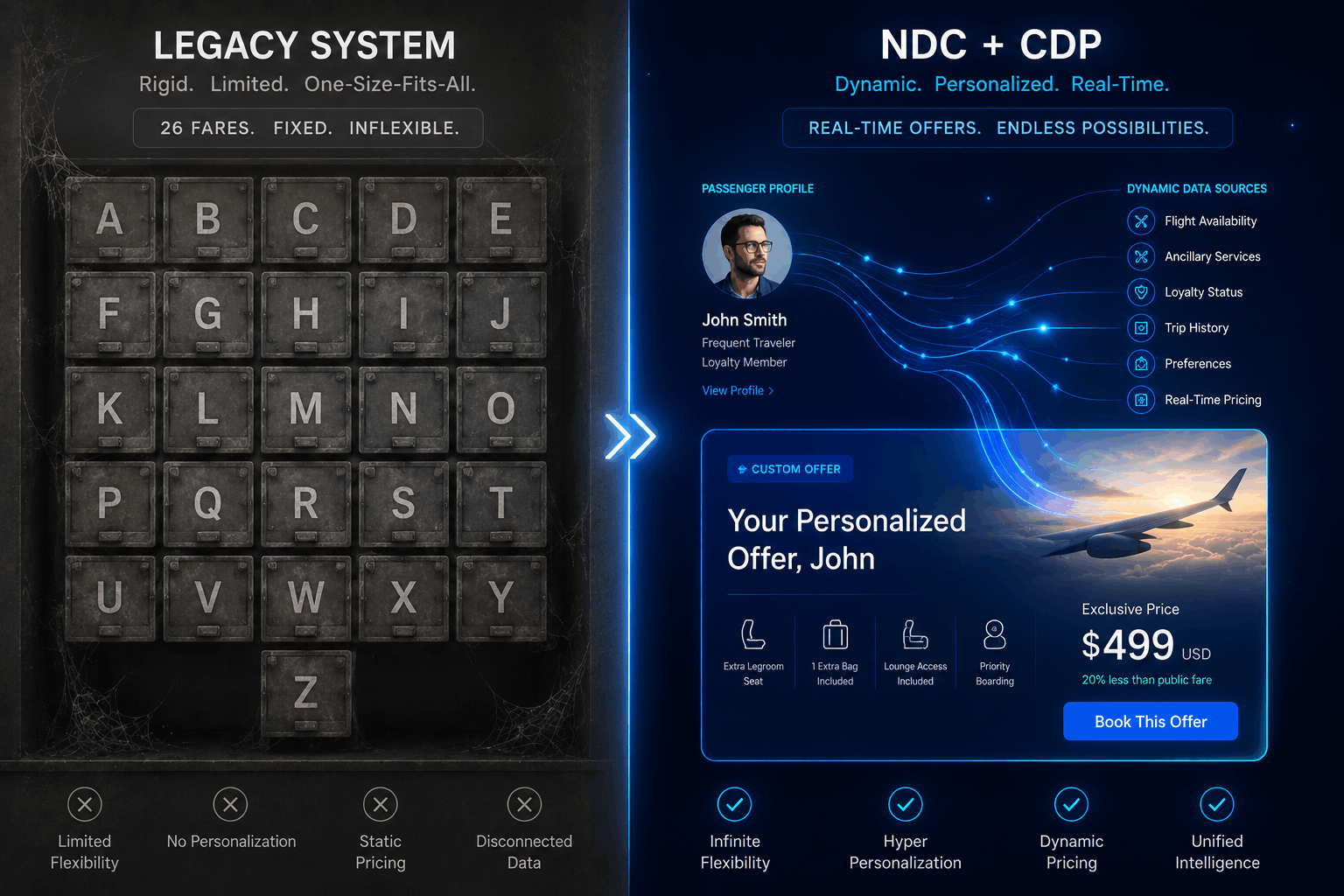
With NDC and a CDP, the airline can offer Dynamic Pricing. If a CDP identifies a “Loyal Frequent Flyer” who has been browsing a specific route but hasn’t booked, the airline can generate a unique, one-time offer that includes a free checked bag or a “Double Points” incentive. This isn’t just a discount; it’s a calculated move to secure a high-value customer using data-backed precision.
The ROI of a CDP-Driven Strategy

- The financial implications of this shift are staggering. For a mid-sized international carrier, a well-implemented CDP like Lemnisk can lead to a 10% reduction in marketing spend by suppressing ads to passengers who have already converted, and a 20% increase in ancillary revenue through hyper-accurate timing.
- However, the true challenge for many airlines isn’t finding the technology—it’s identifying where to start. Leading digital transformation teams often ground their strategy in a library of proven scenarios, such as those found in the industry-standard guide “20 CDP Use Cases for Airlines,” to ensure they are capturing the highest-value opportunities first.
- When these use cases are prioritized correctly, carriers typically see a 15% improvement in Net Promoter Score (NPS) because the travel experience finally feels seamless and intuitive rather than transactional.
Conclusion: The Sky is No Longer the Limit
As we look toward the remainder of 2026 and beyond, the competitive landscape of aviation will be defined by those who own the customer relationship. The “dumb pipe” airlines, those who simply move people from Point A to Point B will struggle to survive on ticket sales alone.
The winners will be the “Data-First Airlines.” They will use platforms like Lemnisk to understand the human being behind the seat number. They will realize that ancillary revenue isn’t about nickel-and-diming the passenger; it’s about providing enough value that the passenger wants to spend more. For the modern airline, the goal is no longer just to fly high, it’s to fly smart.
Maximize your margins by turning fragmented data into high-yield passenger experiences.
Get a Demo and see how we scale your ancillary revenue today.

Leave a Reply