Not every customer is worth the same to your retail business. Some buy once during a sale and disappear. Others return season after season, advocate for your brand, and account for a disproportionate share of your revenue. The challenge is identifying the second group early enough to act on it before a competitor does.
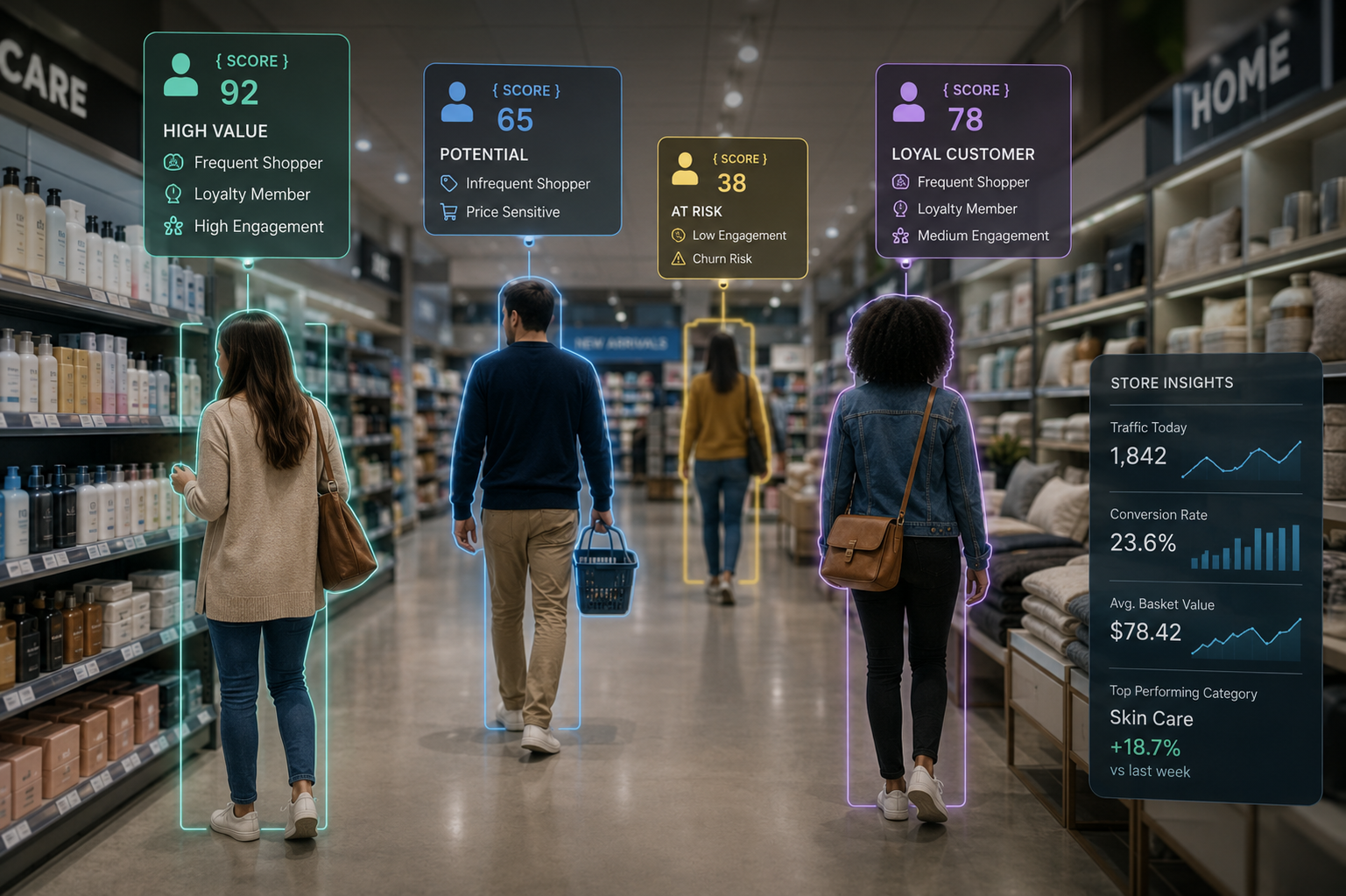
That is where predictive CLV scoring comes in. By combining behavioural data, purchase history, and AI-driven modelling, retailers can now assign a forward-looking value score to every customer in their database. The result is sharper marketing spend, stronger retention programmes, and a measurable lift in long-term revenue.
What Is Customer Lifetime Value and Why Does Prediction Matter?

Customer Lifetime Value (CLV) is the total net revenue a business can expect from a single customer over the entire course of their relationship. Traditional CLV calculations are retrospective: they tell you what a customer has been worth. Predictive CLV goes further; it forecasts what a customer will be worth, based on signals available right now.
For retailers, the difference matters enormously. A customer who made three purchases in the last six months may look identical to another who made three purchases across three years. Predictive scoring surfaces that distinction and helps you prioritise accordingly.
According to research by Bain & Company, increasing customer retention by just 5% can increase profits by 25% to 95%. Predictive CLV scoring is the mechanism that makes targeted retention possible at scale.
How Predictive CLV Scoring Works

Predictive CLV models draw on a combination of historical transaction data and real-time behavioural signals to generate a probability-weighted revenue forecast for each customer. Most modern implementations rely on three core components:
- Recency, Frequency, and Monetary (RFM) signals RFM remains the foundation. When did the customer last purchase? How often do they buy? How much do they spend? These variables anchor the model and establish baseline behavioural patterns.
- Propensity modelling Machine learning models predict the probability of future actions repeat purchase, churn, category expansion, or channel shift. These propensity scores are layered onto RFM to create a multi-dimensional view of likely customer behaviour.
- Unified customer profiles Predictive models are only as good as the data feeding them. A Customer Data Platform (CDP) that stitches together online browsing, in-store transactions, loyalty programme activity, and customer service interactions gives the model the complete picture it needs to generate accurate scores.
Key Signals That Drive High CLV Predictions
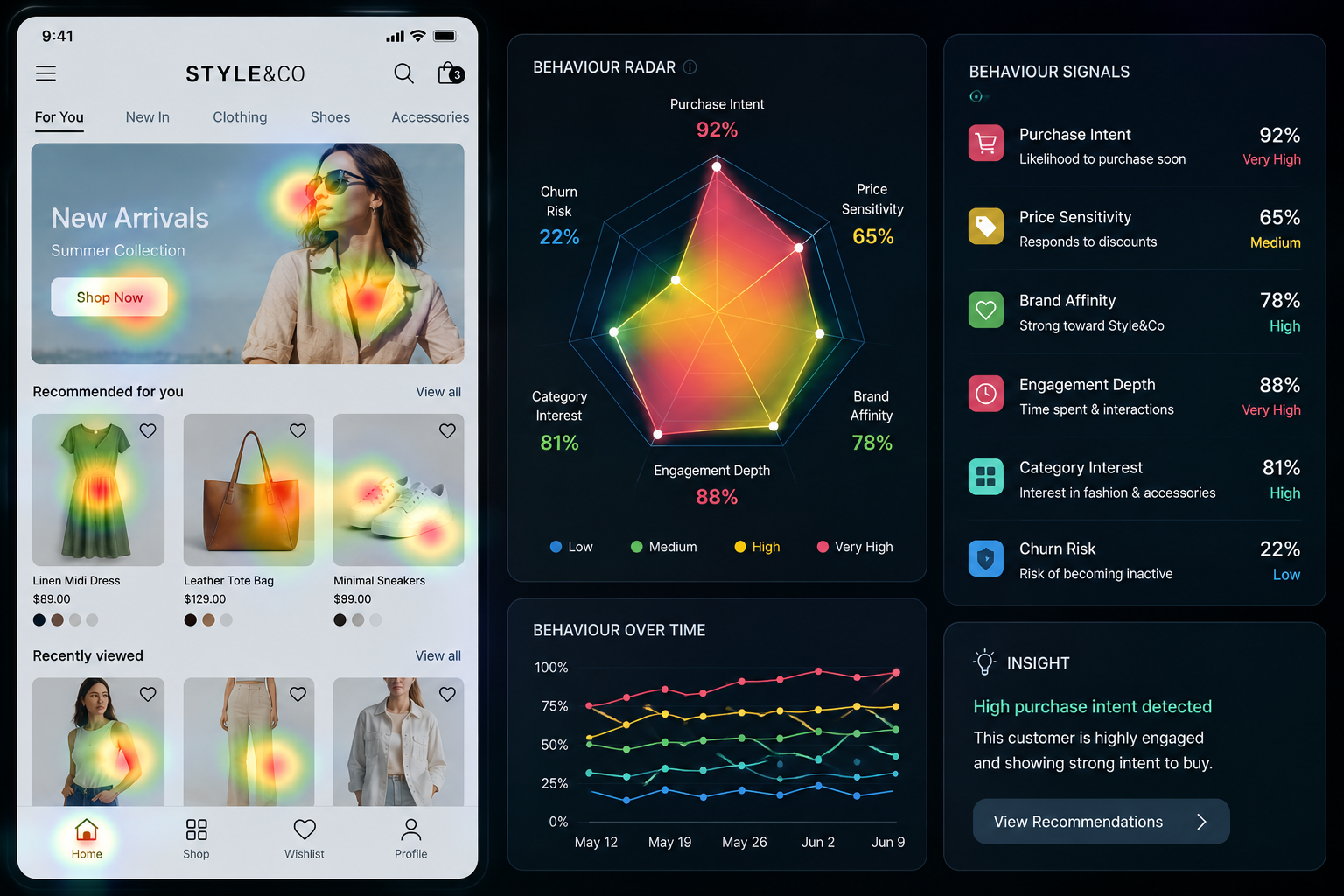
Retailers implementing predictive scoring typically find that a handful of signals carry outsized predictive weight:
- Early cross-category purchasing: A customer who buys across two or more categories within the first 90 days tends to have significantly higher long-term value than a single-category buyer.
- Loyalty programme engagement: Active points redeemers, app users, and members who update their preferences exhibit stronger retention signals than passive enrolees.
- Channel diversity: Customers who shop both online and in-store generate, on average, 30% more revenue than single-channel shoppers, according to Harvard Business Review research.
- Response to personalised communications: Email open rates, click-through on tailored recommendations, and use of personalised discount codes all correlate strongly with higher future spend.
- Return behaviour: Counterintuitively, customers who return items but re-purchase alternatives often demonstrate deeper brand engagement than those who never return anything.
- Social and referral activity: Customers who refer others or engage with brand content organically are early signals of advocacy-level loyalty.
Segmenting by Predictive CLV: A Practical Framework
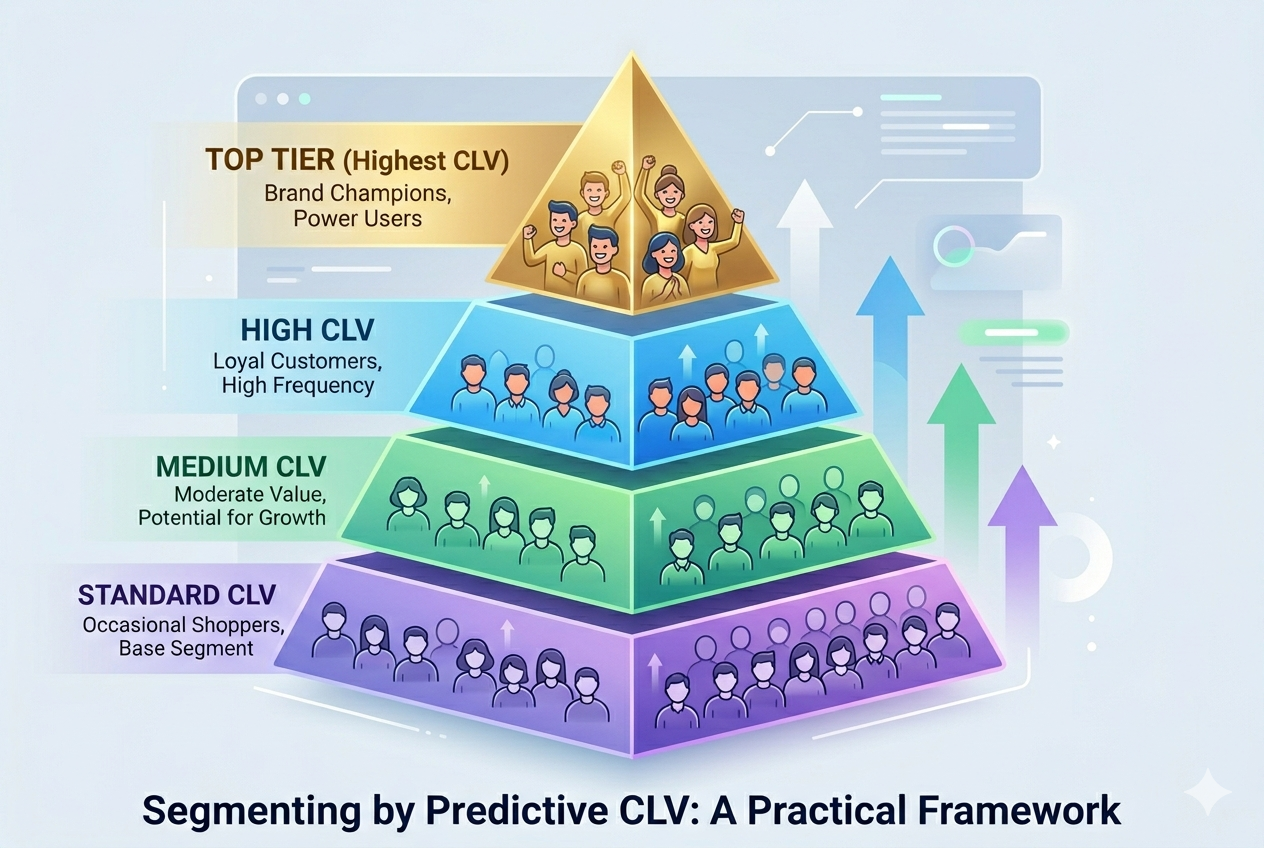
Once scores are generated, segmentation becomes the operational lever. A standard approach divides the customer base into four tiers:
Tier 1 Champions (Top 10%) These are your highest-scoring customers. The priority here is retention and advocacy. Exclusive access, early product launches, VIP events, and personalised outreach keep this segment engaged and reduce churn risk.
Tier 2 Rising Stars (Next 20%) This segment has high predicted CLV but has not yet demonstrated Champion-level behaviour. The goal is acceleration targeted offers that encourage category expansion, increased purchase frequency, and deeper loyalty programme engagement.
Tier 3 Mid-Tier Potential (Middle 40%) A large and heterogeneous group. Predictive models help identify which customers in this tier are on an upward trajectory and which are drifting. Trigger-based campaigns reactivation emails, birthday offers, replenishment reminders can move a meaningful subset into Tier 2.
Tier 4 Low CLV (Bottom 30%) Not every customer in this segment is unprofitable, but marketing spend here should be deliberately limited. Broad discount-driven acquisition that disproportionately attracts this segment erodes margin without building lasting value.
Activating Predictive CLV Scores Across Channels
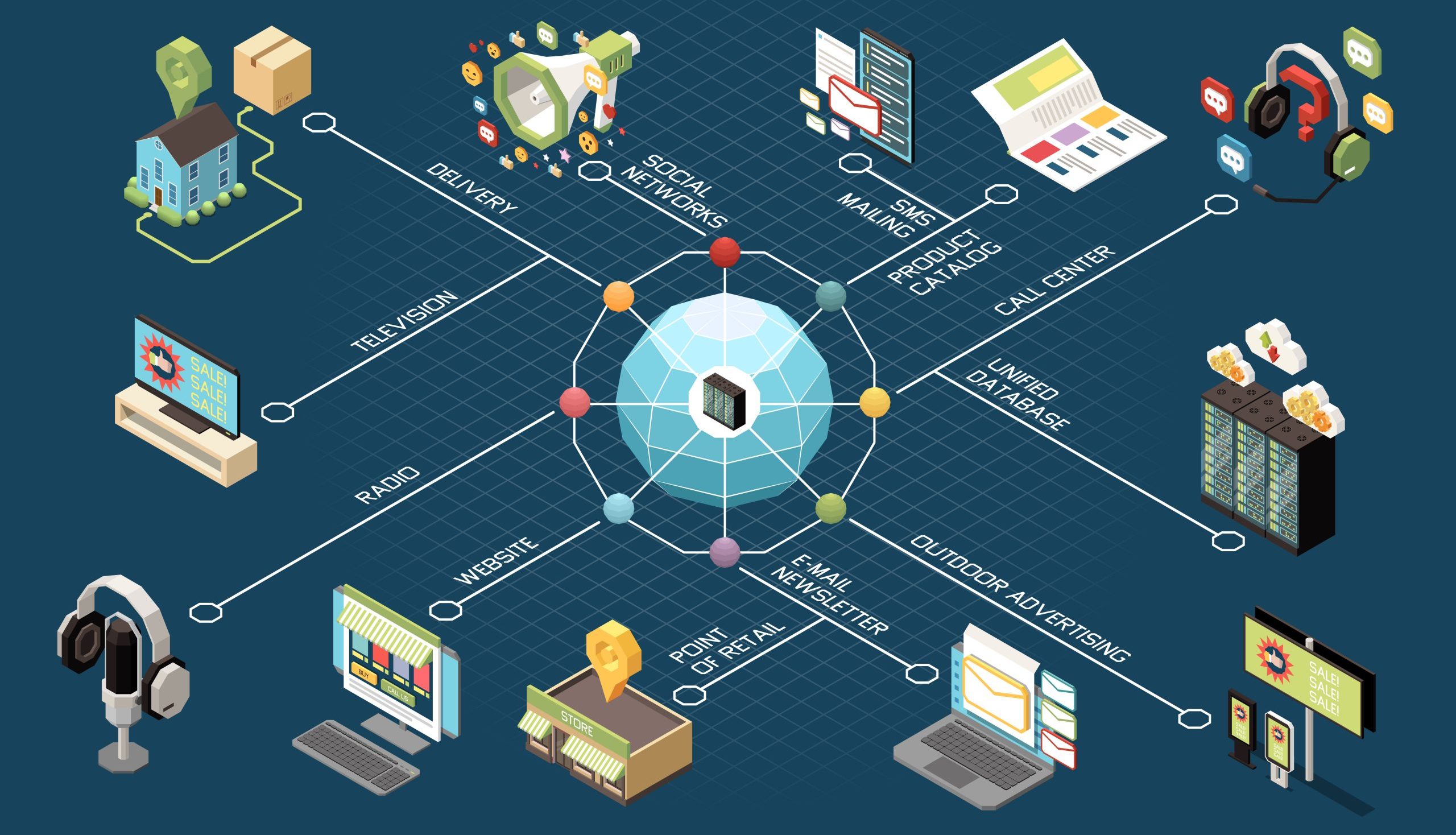
A predictive score sitting in a data warehouse creates no value. Activation is where the ROI is realised. High-performing retail teams connect CLV scores to every touchpoint:
- Paid media: Suppress low-CLV segments from expensive retargeting pools. Build lookalike audiences modelled on your top-tier customers to acquire more of the right type of shopper.
- Email and SMS: Trigger high-value retention journeys for Tier 1 and Tier 2 customers before churn signals appear, not after. Dynamic content blocks adapt messaging to each segment automatically.
- In-store: Share CLV scores with store associates so they can recognise high-value customers and deliver service-level experiences that justify the relationship.
- Loyalty mechanics: Adjust points multipliers, unlock thresholds, and reward tiers dynamically based on predicted value, not just historical spend.
- Customer service: Route high-CLV customers to senior agents or dedicated queues. The cost of elevated service is almost always recovered through retention.
The Role of a CDP in Predictive CLV at Scale
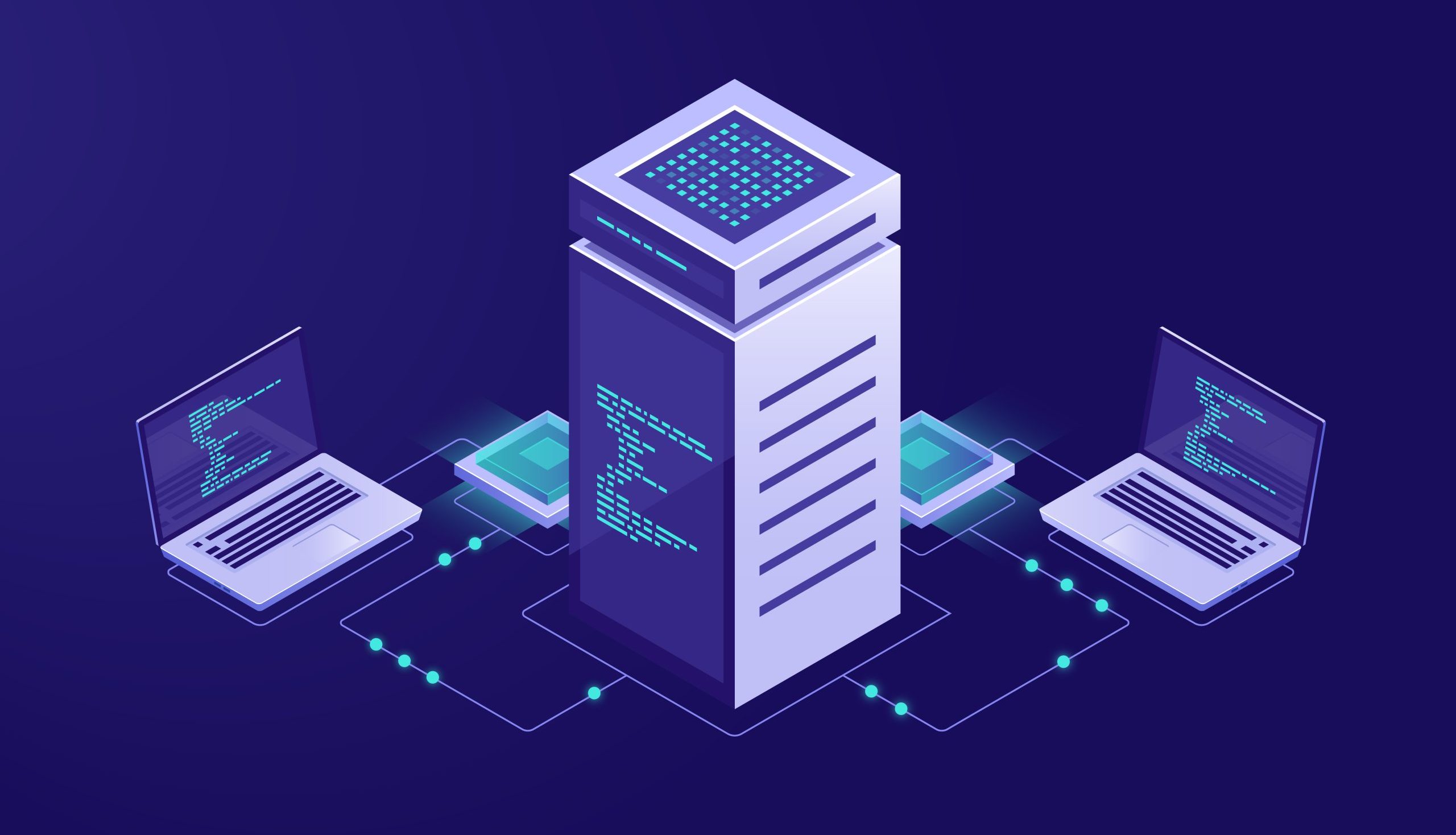
Running predictive CLV scoring across hundreds of thousands or millions of customers requires a data infrastructure capable of unifying, updating, and activating profiles in real time. This is where a Composable Customer Data Platform becomes essential.
A CDP that supports real-time identity resolution ensures that a customer’s in-store Saturday purchase, Monday app browse, and Tuesday email click are all stitched to the same profile before the model runs. Without that unification, scores are built on incomplete data and the predictions suffer.
Composable CDPs go further by allowing retailers to plug predictive scoring models directly into their existing stack rather than ripping and replacing their current tools. The CDP handles profile unification and score distribution; the models themselves can live in the retailer’s preferred ML environment. Activation flows to whatever channels the retailer already uses.
This architecture also enables continuous model refresh. As new purchase data arrives, CLV scores update automatically, keeping segmentation current without manual intervention.
Measuring the Impact of Predictive CLV Programmes
Defining the right success metrics before launch is critical to demonstrating business value. Retailers typically track:
- Revenue concentration: The share of total revenue generated by the top 10% of CLV customers, measured quarterly.
- Retention rate by tier: How effectively high-CLV segments are being retained versus a control group receiving standard communications.
- Tier migration rate: The percentage of Tier 2 and Tier 3 customers moving upward within a defined period, indicating successful acceleration.
- Acquisition efficiency: Whether lookalike audiences built on CLV Champions deliver lower CPA and higher first-year value than general acquisition campaigns.
- Marketing spend efficiency: The reduction in budget allocated to low-CLV segments, redeployed toward high-potential customers.
Getting Started: Three Practical Steps
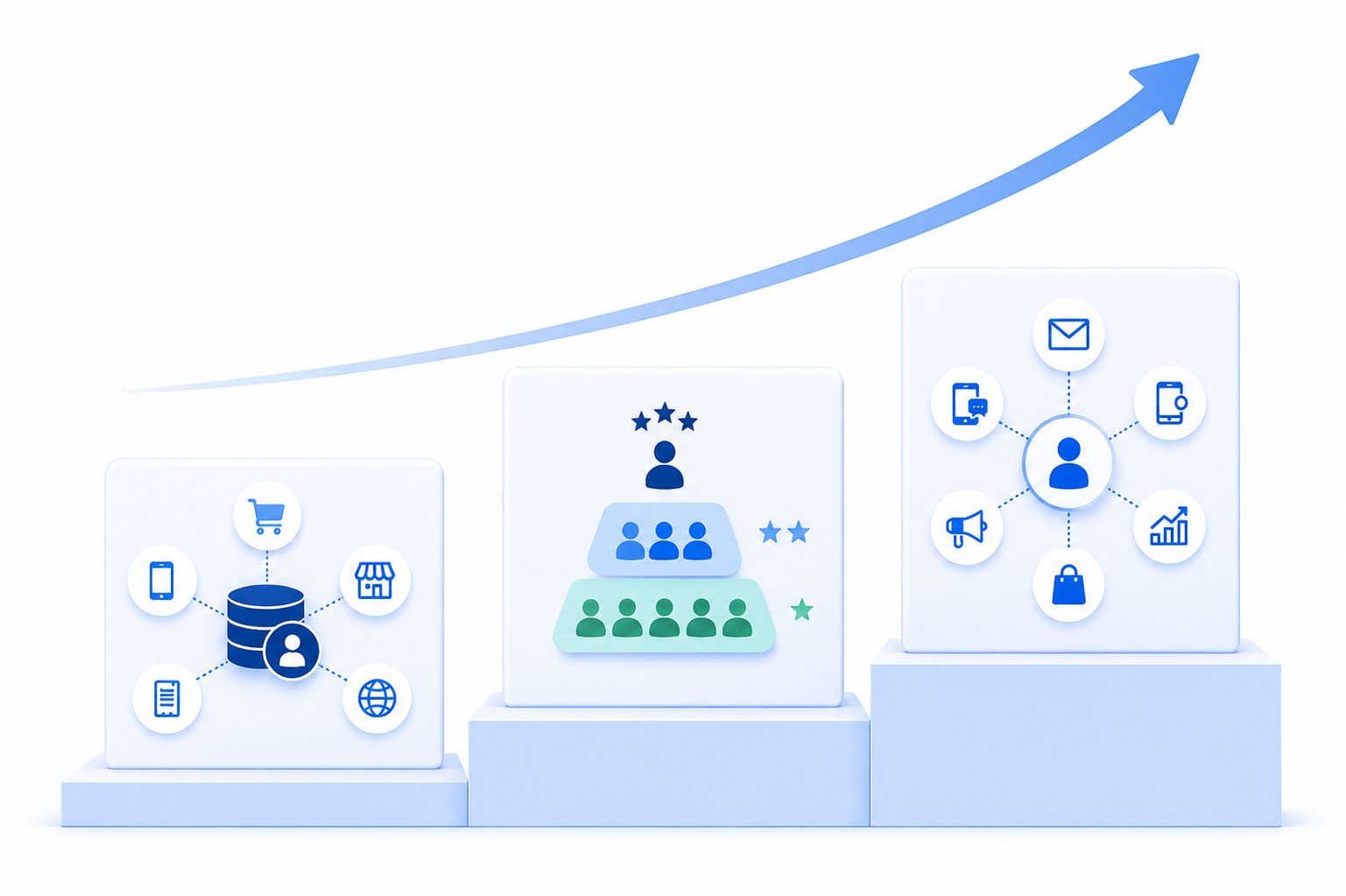
For retailers not yet running predictive CLV scoring, the path forward does not require a multi-year data science project. Three steps can establish a working programme within a single quarter:
Step 1: Audit your customer data. Identify where transaction data, loyalty data, and digital behavioural data currently sit. Even a partial unification across two sources can be enough to generate first-generation scores.
Step 2: Define your CLV tiers operationally. Before modelling, decide what actions each tier will trigger. This ensures the scoring programme is built around commercial outcomes rather than data science metrics.
Step 3: Evaluate your activation infrastructure. CLV scores need a route to your email platform, paid media tools, and CRM. A CDP with native integrations to your existing MarTech stack removes the manual handoffs that slow activation down.
Conclusion
Predictive CLV scoring is not a future-state capability for enterprise-only retailers. The combination of accessible machine learning tools, composable data infrastructure, and real-time activation pipelines means that retailers of any scale can now identify their most valuable customers before a competitor does and treat them accordingly.
The retailers who win the next decade of customer loyalty will not be those who spent the most acquiring customers. They will be those who knew which customers were worth keeping and built programmes designed to keep them.
Looking to implement predictive CLV scoring across your retail customer base? Lemnisk’s Composable CDP unifies your customer data and delivers real-time scores to every channel in your MarTech stack.

Leave a Reply