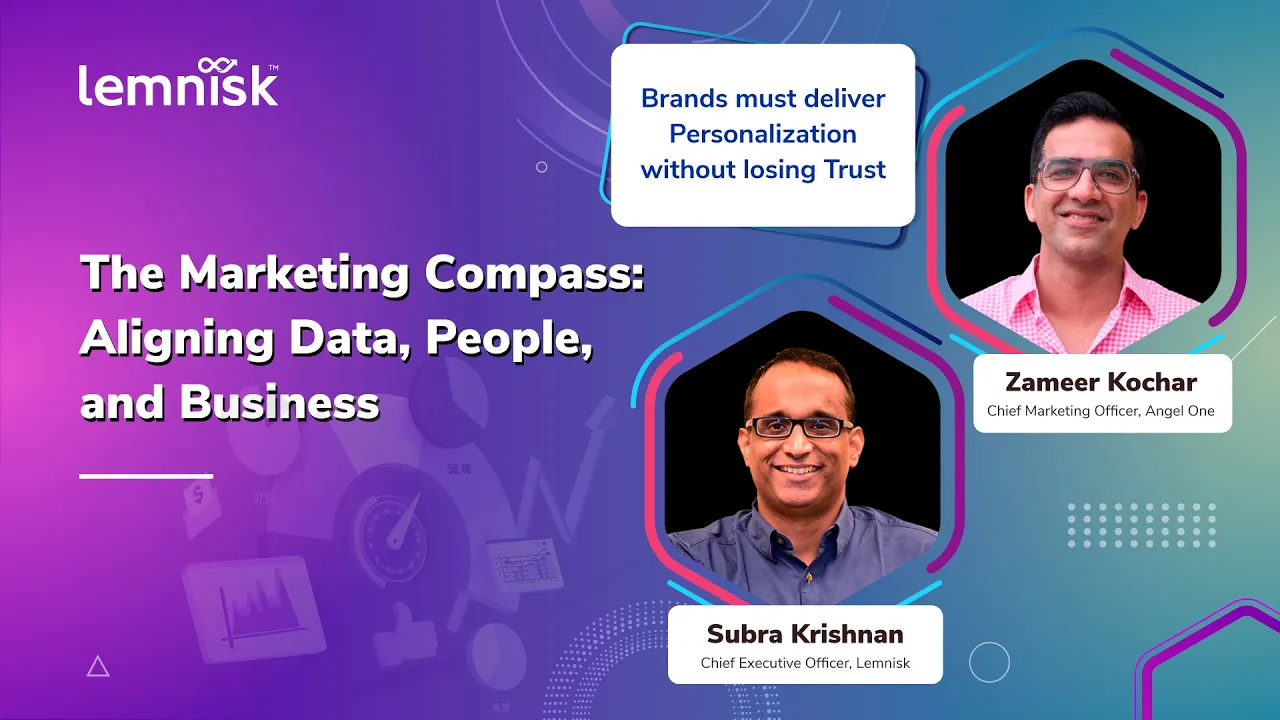
Marketing today is no longer just about visibility; it is about relevance, trust, and meaningful engagement. As digital natives reshape expectations and data becomes the backbone of decision-making, brands must evolve faster than ever. In an insightful exchange on the future of marketing featured on our podcast, Zameer Kochar, Chief Marketing Officer, Angel One, and a seasoned marketing leader with two decades of cross-industry experience, joined our CEO, Subra Krishnan, to explore how customer-centricity, data trust, and AI are reshaping modern marketing.
1. A Marketing Career Shaped by Diverse Industries
With over 20 years of experience across FMCG, media, travel, loyalty, lifestyle, sports, and financial services, Zameer emphasized that while tools and platforms continue to evolve, core marketing principles remain constant. Aligning brand strategy with business objectives and maintaining a strong focus on customer centricity emerged as recurring themes in his journey. He highlighted how brands such as Disney and Nike succeed by anchoring every activity to a clear core purpose, creating magic, and enabling athletic excellence, demonstrating that a strong brand purpose serves as the compass for all marketing decisions.
2. Gen Z and Millennials: Redefining Digital Engagement
Zameer discussed how Gen Z and millennials are transforming India’s marketing landscape by prioritizing digital engagement, simplicity, and transparency. These consumers expect:
- Digital-first interactions
- Co-creation and collaboration
- Trust and empowerment
- Simplified, intuitive brand experiences
He noted a striking trend: the average age of first-time investors is dropping to 18, and there is an increased participation from women. Zameer stressed the need for intuitive, self-serving digital platforms. He noted that brands should prioritize education-led engagement and gentle guidance over intrusive marketing tactics.
3. Customer Value Profiling for Smarter Engagement
To deliver relevance at scale, Zameer emphasized the importance of a customer value profiling framework centred on age, risk appetite, financial literacy, and life stage. This approach enables brands to tailor products, communication, and service journeys more effectively. We also discussed strategies for onboarding new customers and reactivating inactive users by leveraging AI and predictive modelling to drive timely and contextually relevant engagement.
4. Data Analytics, System Challenges & Ethical Considerations
Zameer highlights the importance of a strong data analytics framework built on:
- Digital transformation
- Data transformation
- Technical capabilities
He highlighted the challenges of managing legacy systems, integrating platforms, and building a single unified customer view across touchpoints. Addressing ethics and privacy, especially in the financial sector, he stressed the importance of regulatory compliance and the principle of consent-driven trust. He mentioned that mishandling data can directly impact brand credibility and even business turnover.
5. Privacy and Personalization: Finding the Right Balance
Balancing personalization with privacy is a key challenge in regulated industries. Zameer and Subra discussed strategies to navigate SEBI guidelines and data protection norms by ensuring communication is consent-driven, setting limits on message frequency, avoiding intrusive outreach, tracking engagement, and unsubscribing patterns. With responsible use of data analytics, brands can create personalized experiences that respect customer privacy while still adding value.
6. AI in Customer Engagement: Enhancing Efficiency with Care
Zameer emphasized that effective personalization starts with responsible data practices, including minimal data collection, secure storage, and disciplined data management frameworks. These foundations help protect customer trust while enabling meaningful engagement.
He also highlighted AI’s growing role in personalization, noting that successful adoption requires a cultural shift and long-term commitment. With clear objectives and well-defined use cases, AI can deliver scalable, impactful customer experiences over time.
7. AI Strategies, Brand Authenticity & the Human Touch
Zameer highlighted the growing importance of integrating AI thoughtfully into marketing strategies. He explained that AI can help create richer customer personas and enable agentic brand AI that consistently reflects a brand’s tone of voice and visual identity across channels.
To maintain quality and relevance, Zameer emphasized the importance of audit tools that continuously evaluate communication and content, ensuring that AI-driven outputs stay aligned with brand values and customer expectations.
Subra reinforced this perspective, noting that brand authenticity is especially critical when engaging Gen Z and millennials, who are quick to disengage from messaging that feels inauthentic. The conversation made it evident that AI-driven personalization succeeds when responsibility and authenticity remain at the core.
Final Thoughts
The conversation with Zameer offered a clear view of how modern marketing is evolving driven by Gen Z expectations, data-led decision-making, and responsible AI adoption. It reinforced that while technology enables scale and personalization, long-term success depends on trust, authenticity, and customer-centric thinking. By balancing AI with ethical data practices and human judgment, brands can build meaningful, lasting relationships in an increasingly digital world.
You can catch the whole conversation below:

Leave a Reply