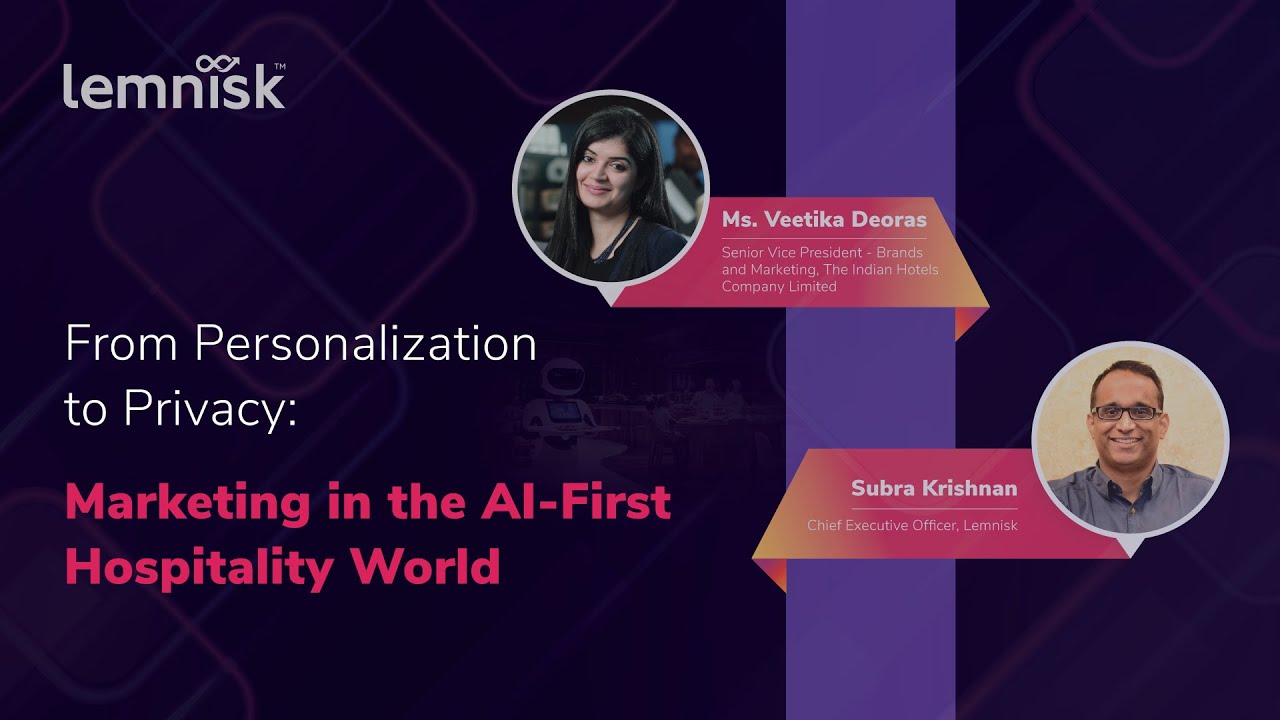
Marketing is transforming rapidly as digital innovation makes personalization a core customer expectation. In our latest podcast, Veetika Deoras, SVP – Brands & Marketing at The Indian Hotels Company Limited, joined our CEO, Subra Krishnan, to discuss emerging marketing trends, the rising focus on data privacy, and how Taj is redefining co-creation in hospitality.
1. Marketing Trends: From Mass Messaging to Meaningful Moments
Veetika opened the conversation by tracing how the role of marketers has transformed over the past two decades. Modern consumers are more informed and expressive than ever, demanding relevance over mere visibility from brands.
She highlighted four major shifts shaping modern marketing:
- Relevance over reach: Brands must communicate to individuals, not broadcast to large audiences.
- Experiential luxury: There is a rising demand for immersive, high-quality brand experiences.
- Co-creation with consumers: Customers increasingly shape and influence brand experiences.
- Sustainability: Environmentally conscious and ethically- driven practices have become a crucial part of marketing strategy today.
2. Co-Creation: Taj Hotels’ Signature Strength
Hospitality is one of the few industries where co-creation is inherent, and Taj Hotels has been leading it long before it became a buzzword. Veetika explained that every stay includes thousands of micro-interactions, from check-in to dining to housekeeping, each offering an opportunity to shape a personalized experience in real time.
Today, Taj is taking its legacy of high-touch service into digital channels. This includes personalized app experiences, tailor-made offers and packages, behaviour-informed recommendations, and an AI-powered holistic understanding of guest preferences.
3. Data Privacy: Personalization with Trust at the Core
As personalization accelerates, so does the importance of data privacy. Veetika emphasized that trust is non-negotiable, especially in a luxury hospitality brand where customer relationships often span decades.
She shared the importance of trust and data ethics, where only 10% of customer data is used for aggregated insights, and 90% is kept private, governed strictly by consent. AI systems follow pre-defined privacy rules, and human oversight steps in for edge cases or sensitive decisions.
Veetika also shared how Indian Hotels is incorporating AI across customer touchpoints, including chatbots, automated assistance, and personalized communications, while maintaining rigorous data governance practices.
She highlighted that AI can actually strengthen privacy by consistently enforcing compliance and reducing human error. However, she emphasized that despite AI’s ability to scale personalization, human judgment remains essential for complex or sensitive scenarios.
4. The Future: AI, Inclusion, and the Human Touch
Looking ahead, Veetika shared that the future of marketing will belong to brands that balance technology with empathy. As AI evolves from chatbots to predictive journeys, the true edge will still come from the emotional intelligence and authenticity of marketers.
She emphasized that consumer power is increasing, making purpose-driven brands and co-creation more important than ever, urging marketers to strengthen both their technical and emotional skills. Veetika also called for greater representation of women in AI and tech, emphasizing that better access to education and upskilling can unlock more inclusive and meaningful innovation.
Conclusion
The conversation with Veetika offered a compelling vision of the future in hospitality marketing, where personalization, trust, and co-creation take priority. Successful brands will integrate technology with empathy, uphold data ethics, and embrace purpose-driven strategies. By combining AI insights with human judgment, marketers can create experiences that are innovative, meaningful, and authentic.
You can catch the whole conversation below:

Leave a Reply