In today’s increasingly digital healthcare landscape, the ability to see a comprehensive, unified view of a patient—the so-called “Patient 360”—is no longer a luxury but a necessity. Healthcare executives, IT leaders, data professionals, and digital health teams are all grappling with the challenge of integrating disparate data sources, such as Electronic Health Records (EHR), mobile health apps, and patient engagement platforms. The objective is clear: to leverage connected data for improved personalization, care coordination, and patient experience.

One powerful approach to achieving this unified Patient 360 view is through the implementation of a Customer Data Platform (CDP). This blog explores how a CDP can serve as the connective tissue that integrates EHR, app, and engagement data, tackling key challenges such as data silos and interoperability, and offers practical strategies to unlock the full potential of patient data.
The Promise and Challenge of Patient 360
A Patient 360 view means having a holistic, real-time understanding of a patient’s health status, behaviors, preferences, and interactions across all touchpoints. It empowers healthcare providers to:
- Deliver personalized care plans
- Enhance care coordination among providers
- Improve patient engagement and satisfaction
- Drive better health outcomes
However, realizing this vision is easier said than done. Healthcare data is notoriously fragmented. EHR systems house clinical data but may lack behavioral or engagement insights. Mobile health apps collect patient-generated data but often operate in isolation. Engagement platforms capture communication and interaction data but may not easily integrate with clinical systems.
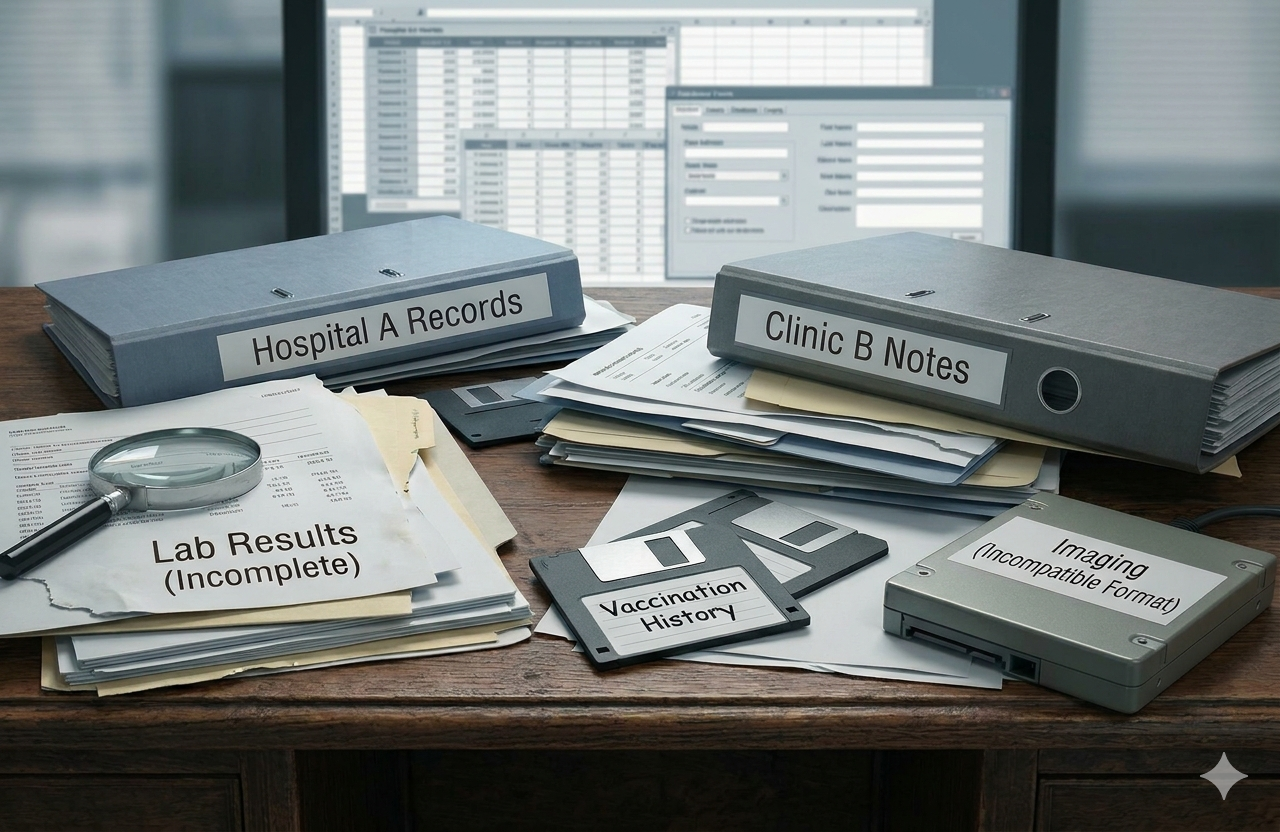
This fragmentation creates data silos that hinder a comprehensive patient view and limit the ability to use data-driven insights effectively. On top of this, interoperability challenges, data privacy regulations, and differing data standards add layers of complexity.
What is a Customer Data Platform (CDP) in Healthcare?
Originally popularized in the retail and marketing sectors, a Customer Data Platform is a software solution designed to unify customer data from multiple sources, cleanse and standardize it, and create a single, persistent customer profile accessible across systems.
In healthcare, a CDP can be adapted to unify patient data from EHRs, mobile apps, patient portals, engagement tools, and more. The platform ingests and harmonizes data—clinical, behavioral, demographic, and engagement—into a comprehensive Patient 360 profile.
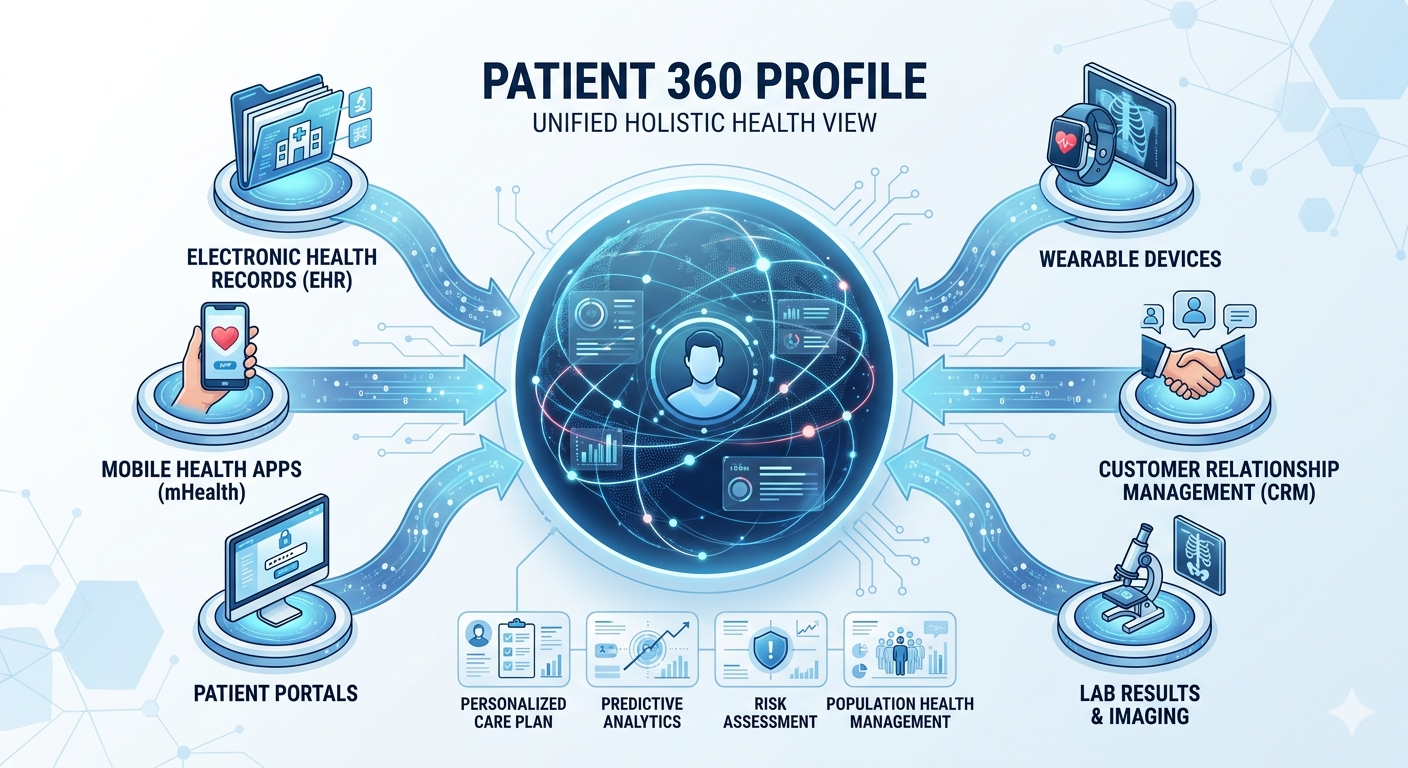
Key features of a healthcare-focused CDP include:
- Data Integration & Ingestion: Connectors to pull data from EHRs, mobile apps, CRM systems, patient engagement platforms, and other sources.
- Identity Resolution: Match patient records across systems to create a unified profile.
- Data Normalization & Governance: Standardize formats and enforce privacy and compliance controls.
- Real-time Data Processing: Enable up-to-date insights and decision-making.
- Segmentation & Analytics: Support personalized patient engagement and care strategies.
Overcoming Key Challenges with a CDP
1. Breaking Down Data Silos
A primary challenge in healthcare data integration is the siloed nature of systems and data. EHRs, mobile apps, and engagement platforms often operate independently, with limited data sharing.
A CDP acts as a central hub, ingesting data from these siloed sources and stitching together disparate records into unified patient profiles. This consolidation enables healthcare teams to see the full picture of patient health and interactions.
2. Navigating Interoperability Complexities
Healthcare systems use a variety of standards (HL7, FHIR, CCD, etc.) and proprietary formats, making interoperability difficult. CDPs built with flexible data ingestion pipelines and support for healthcare-specific standards can bridge these gaps, transforming and normalizing data for unified use.
Additionally, CDPs can connect with APIs from mobile apps and engagement platforms, ensuring seamless data flow across the ecosystem.
3. Ensuring Data Privacy and Compliance
Handling sensitive patient data requires strict adherence to HIPAA and other regulatory frameworks. A robust CDP incorporates data governance controls, encryption, access management, and audit trails to maintain compliance and protect patient privacy.
Practical Strategies to Implement a Patient 360 with a CDP

a. Define Clear Data Integration Objectives
Start by identifying the critical data sources to integrate: EHRs for clinical data, mobile apps for patient-generated health data, and engagement platforms for communication history. Map out the data fields needed to build comprehensive profiles.
b. Prioritize Identity Resolution
Accurate patient matching is essential to avoid fragmented or duplicate profiles. Leverage advanced identity resolution capabilities that use multiple identifiers (name, DOB, contact info, medical record numbers) to achieve high match accuracy.
c. Choose a Healthcare-Centric CDP
Select a CDP solution with proven healthcare integration capabilities, support for standards like FHIR, and built-in compliance features. The platform should also allow customizable data models to fit your organization’s unique needs.
d. Foster Cross-Functional Collaboration
Successful Patient 360 initiatives require collaboration across clinical, IT, data, and digital teams. Align stakeholders early, establish data governance policies, and define workflows that leverage the unified patient profiles effectively.
e. Use Data to Drive Personalization and Coordination
Once patient data is unified, use analytics and segmentation tools within the CDP to tailor patient communications, recommend personalized care plans, and enable care teams to coordinate interventions based on comprehensive insights.
Benefits of a Unified Patient 360 View
- Enhanced Personalization: Deliver tailored health education, reminders, and interventions based on patients’ unique clinical and behavioral profiles.
- Improved Care Coordination: Facilitate seamless communication and data sharing among providers, reducing redundancies and errors.
- Increased Patient Engagement: Engage patients more effectively through timely, relevant interactions across apps, portals, and communication channels.
- Better Outcomes and Satisfaction: Empower patients and providers with connected data to drive proactive, informed care decisions.
Closing Thoughts
Healthcare is evolving toward a more connected, patient-centric model, and data is at the heart of this transformation. By leveraging a Customer Data Platform to stitch together EHR, mobile app, and patient engagement data, healthcare organizations can overcome long-standing silos and interoperability challenges to achieve a true Patient 360 view.
For healthcare executives, IT leaders, and data professionals focused on unifying patient data, the CDP offers a practical, scalable solution to enhance personalization, care coordination, and patient experience—ultimately driving improved health outcomes in the digital age.
Ready to unlock the full potential of your patient data?
A well-implemented Customer Data Platform can transform fragmented systems into a unified Patient 360—driving better engagement, smarter care decisions, and improved outcomes.
If you’re exploring how to integrate EHRs, mobile apps, and engagement platforms into a single view, now is the time to take the next step.
– Get a Demo to see how a healthcare-focused CDP strategy can work for your organization.

Leave a Reply