Enterprises in BFSI, healthcare, and insurance handle some of the most sensitive customer data that exists: financial transaction histories, health records, policy details, and behavioral data used to personalize every touchpoint. When that data flows through a Customer Data Platform (CDP), the platform becomes a single point of concentrated risk. A breach doesn’t just cost money. It costs regulatory standing, customer trust, and in some jurisdictions, the license to operate.
This is why “ISO 27001 certified” has become a non-negotiable line item on enterprise CDP RFPs. But the certification is often treated as a checkbox rather than understood for what it actually verifies. This post breaks down what ISO 27001 covers, why it matters specifically for CDPs, and what enterprise buyers should look for beyond the certificate itself.
What ISO 27001 Actually Certifies
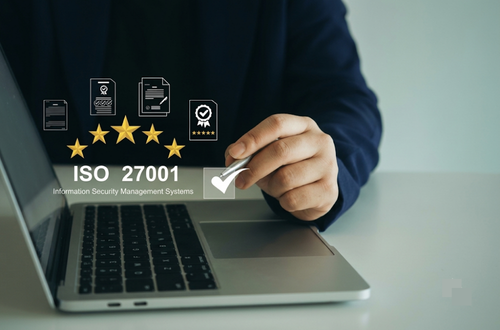
ISO 27001 is an international standard for information security management systems (ISMS). It doesn’t certify a single product feature or a one-time security audit. It certifies that an organization has a documented, repeatable, continuously monitored system for identifying information security risks and managing them.
A vendor that holds ISO 27001 certification has demonstrated, to an accredited third-party auditor, that it maintains controls across areas including:
- Access control and identity management
- Cryptography and data encryption standards
- Physical and environmental security of data centers
- Operations security, including change management and malware protection
- Communications security and network segmentation
- Incident management and breach response procedures
- Supplier and third-party risk management
- Business continuity and disaster recovery planning
Certification isn’t permanent. It requires annual surveillance audits and a full recertification audit every three years. This ongoing verification is what separates ISO 27001 from a vendor simply claiming to “take security seriously” in their marketing copy.
Why This Matters More for a CDP Than Most Software

A CDP is architecturally different from a typical SaaS application, and that difference is exactly why its security posture deserves closer scrutiny.
It aggregates identity across every channel. A CDP unifies data from web, app, CRM, point-of-sale, call center, and third-party sources into a single customer profile. That profile often includes PII, transaction data, and in regulated sectors, protected health or financial information. Concentrating that much sensitive data in one system raises the stakes of any single point of failure.
It sits at the center of activation. Unlike a data warehouse that’s primarily queried by analysts, a CDP actively pushes data out to ad platforms, email systems, personalization engines, and other downstream tools. Every integration point is a potential exposure surface if access controls aren’t tightly governed.
It’s subject to sector-specific regulation on top of general data protection law. A CDP used by a bank or NBFC has to align with RBI guidelines. One used by a health insurer has to account for HIPAA or local equivalents. One operating across Southeast Asia or the EU has to handle cross-border data residency and transfer requirements. ISO 27001 doesn’t replace these regulations, but a certified ISMS gives compliance teams a documented control framework to map against them.
Composable architecture adds integration risk. Many modern CDPs, including composable ones, connect into an enterprise’s existing data warehouse and MarTech stack rather than replacing it. This is good for flexibility, but it means the CDP vendor’s security practices extend into how they handle credentials, API access, and data-in-transit across every connected system.
What to Look for Beyond the Certificate

Asking “are you ISO 27001 certified” gets a yes-or-no answer. It doesn’t tell you whether the certification is current, what scope it covers, or how the vendor operationalizes it. Enterprise security and procurement teams should push further.
Check the certificate scope. ISO 27001 certificates specify a “statement of applicability” the exact systems, processes, and locations covered. A certification that covers only corporate IT and excludes the production environment where customer data actually lives is far less meaningful than one that covers the full platform.
Ask about data residency and encryption specifics. Certification confirms a management system exists; it doesn’t specify where data is hosted or what encryption standard is used. Ask directly whether data is encrypted at rest and in transit, what key management practices are in place, and whether the vendor supports region-specific hosting for data residency requirements.
Ask how access is governed within the platform. Role-based access control, audit logging of who accessed or exported what data, and consent management for how customer data can be used are all things an enterprise buyer should be able to see demonstrated, not just described.
Ask about incident response history and SLAs. A mature ISMS includes a documented incident response plan. Ask what the vendor’s breach notification timeline looks like and whether they’ve had to invoke it.
Look for complementary certifications. SOC 2 Type II, GDPR compliance documentation, and HIPAA compliance statements (where relevant) often accompany ISO 27001 in enterprise-grade platforms and cover different angles of the same underlying question: can this vendor be trusted with regulated data at scale.
Security as a Foundation for Trust, Not Just Compliance

For enterprises in regulated industries, security certification isn’t only about passing an audit. It’s what allows a CDP to actually deliver on its promise. Personalization, next-best-action recommendations, and predictive scoring all depend on rich, unified customer data. None of that is worth deploying if the underlying platform can’t guarantee that data is protected to the standard regulators and customers expect.
An ISO 27001 certified CDP gives compliance and security teams a documented, auditable framework to point to when regulators ask how customer data is protected. It also signals something less quantifiable but equally important: that the vendor has built security into its operating model rather than bolting it on after a customer asks.
When evaluating a CDP for an enterprise deployment, treat the certification as the starting point of the security conversation, not the end of it. The specifics scope, encryption practices, access governance, incident response are where the real evaluation happens.

Leave a Reply