Businesses today are very good at tracking digital behavior—what customers click, browse, and buy. However, one important source of insight is still not used effectively: call center conversations.
Every call reflects what a customer is thinking, feeling, or trying to do. It shows intent, concerns, and expectations in a way digital data cannot. Yet, many organizations simply store this information as recordings and rarely use it to improve customer engagement.
At Lemnisk, Voice to CDP helps change that by turning conversations into data that can be used immediately.
The Challenge with Call Center Data
Call center data is valuable, but businesses struggle to use it effectively

First, it is unstructured, which makes analysis difficult.
Second, it often sits separately from marketing and analytics systems.
Finally, teams usually process it too late to make an impact. Because of this, businesses miss the chance to respond when it actually matters. As a result, customer experiences feel disconnected and personalization becomes less effective.
What is Voice to CDP?
Voice to CDP converts call center conversations into structured data that fits directly into a Customer Data Platform.
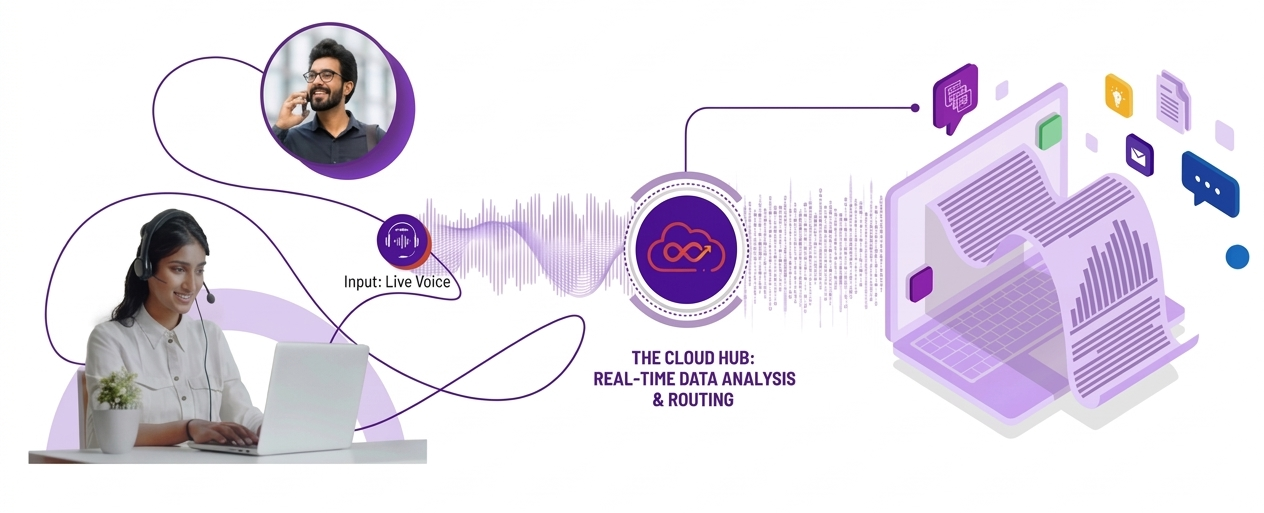
It captures voice interactions, converts them into text, and identifies key signals such as sentiment, intent, and topics. Then, it adds these insights to customer profiles in real time. As a result, conversations do not remain as recordings—they actively support customer engagement.
Why Voice Data Matters
Customers interact across multiple channels. However, they expect one consistent experience.
For example, a customer may call support about an issue and later receive unrelated communication. This creates confusion and reduces trust.
By connecting call center insights to the CDP, businesses can align every interaction with the customer’s current context. Therefore, communication becomes more relevant and consistent.
From Insight to Action
The real value of voice data comes from acting on it quickly.
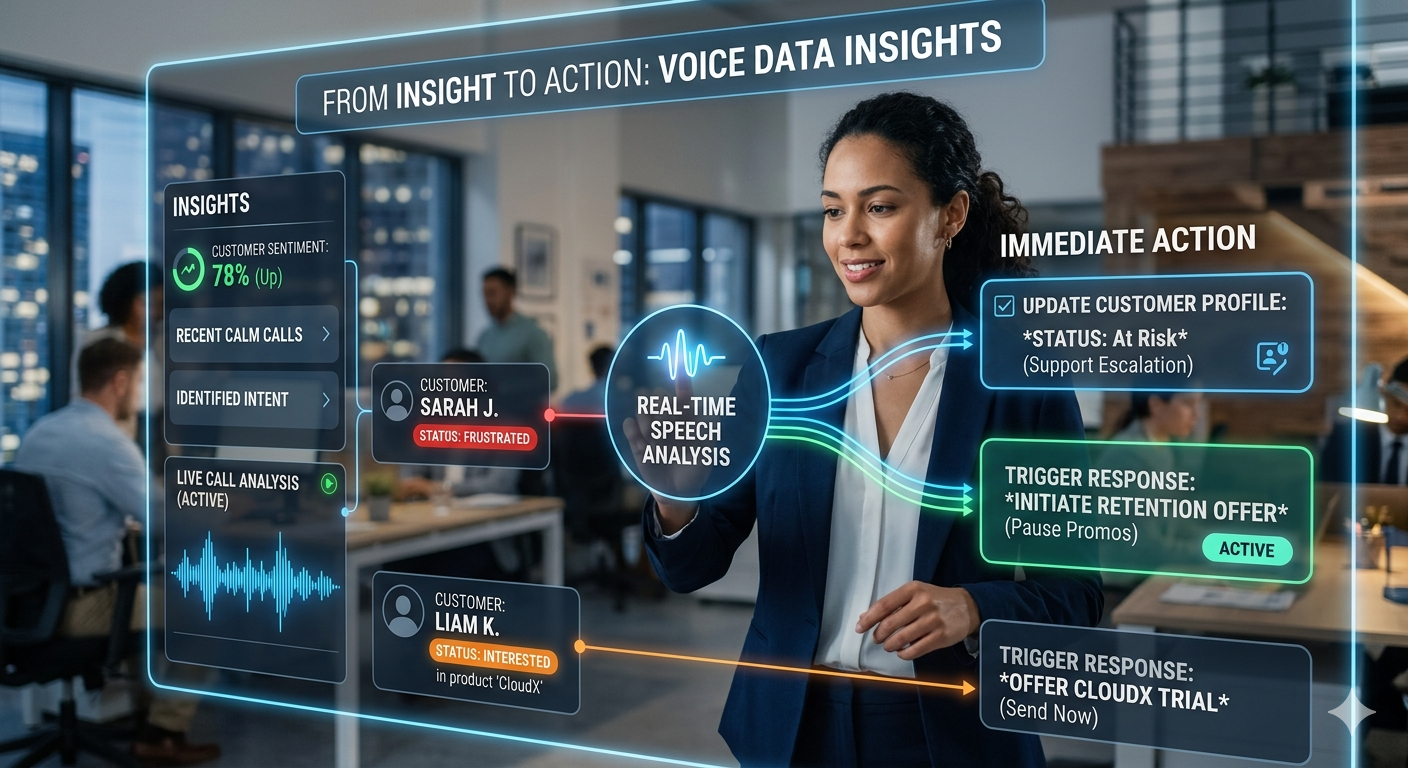
For instance, if a customer sounds frustrated during a call, the system can detect it immediately. It can then update the profile and trigger the right response, such as pausing promotions or initiating support.
Similarly, when a customer shows interest in a product, the system can capture that intent and trigger relevant offers.
In this way, businesses move from delayed reactions to real-time responses.
How Lemnisk Enables This
Voice to CDP handles large volumes of call data without adding complexity. Lemnisk’s Composable Customer Data Platform automatically transcribes conversations, identifies sentiment, and detects key topics and intent. As a result, teams no longer need manual analysis, and insights become available instantly.
In addition, N-dimensional clustering plays an important role. Instead of manually tagging calls, the system groups similar conversations based on intent, sentiment, and context. This helps businesses quickly identify patterns.
Moreover, the platform supports end-to-end integration. It connects everything—from capturing calls to updating customer profiles and enabling segmentation. Because of this, businesses avoid delays and can act on insights immediately.
1. Building a Unified Customer View
Understanding customers requires more than a single data source.
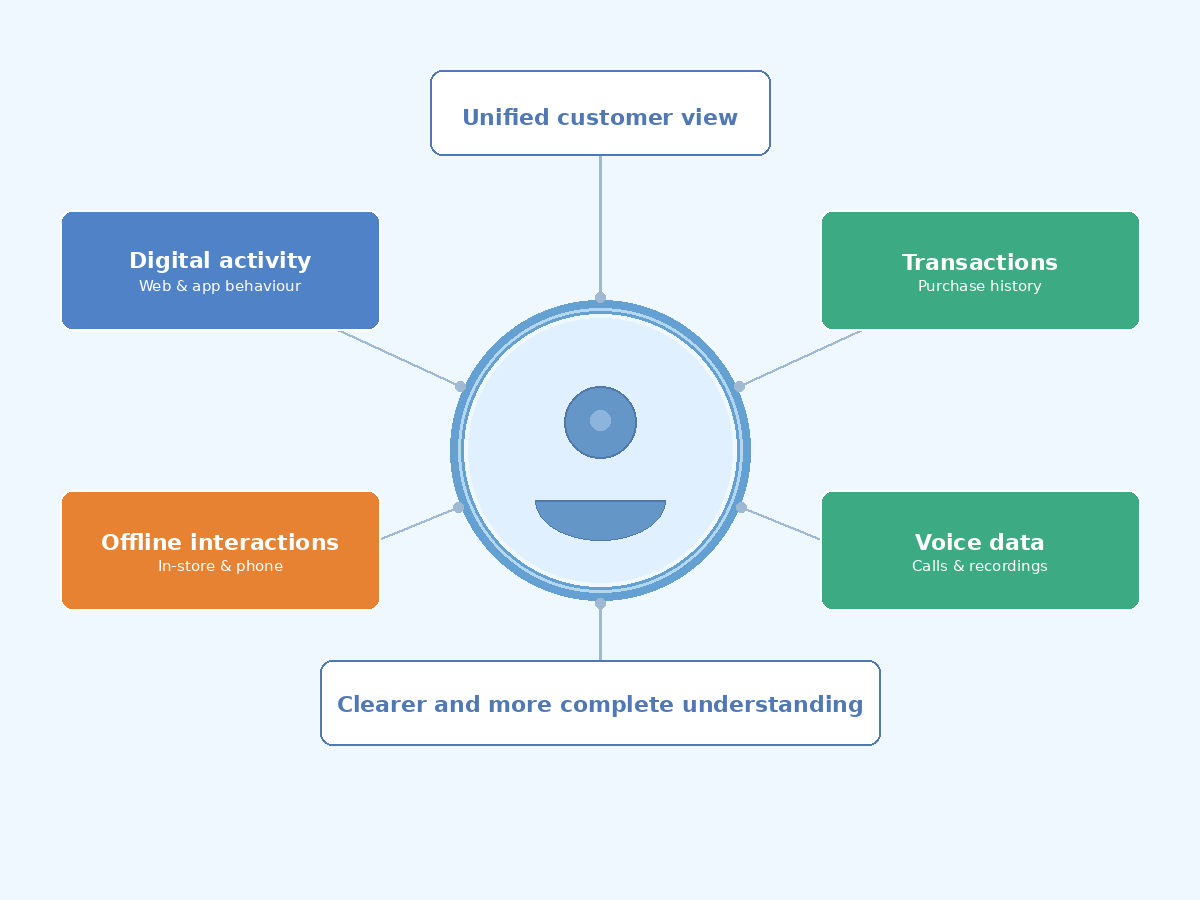
Lemnisk’s CDP combines digital activity, transactions, and offline interactions into one unified view. On top of that, voice data adds context by showing what customers actually say and feel.
As a result, businesses gain a clearer and more complete understanding of their customers.
2. Real-Time Personalization and Customer Experience
Voice data becomes most valuable when businesses use it in real time.

Insights from conversations can directly shape how businesses respond. For example, the system can adjust communication, trigger campaigns, or initiate support actions based on what the customer says. Therefore, interactions become more timely, relevant, and consistent leading to a better overall customer experience.
3. Improving Personalization
Effective personalization depends on understanding the customer clearly.
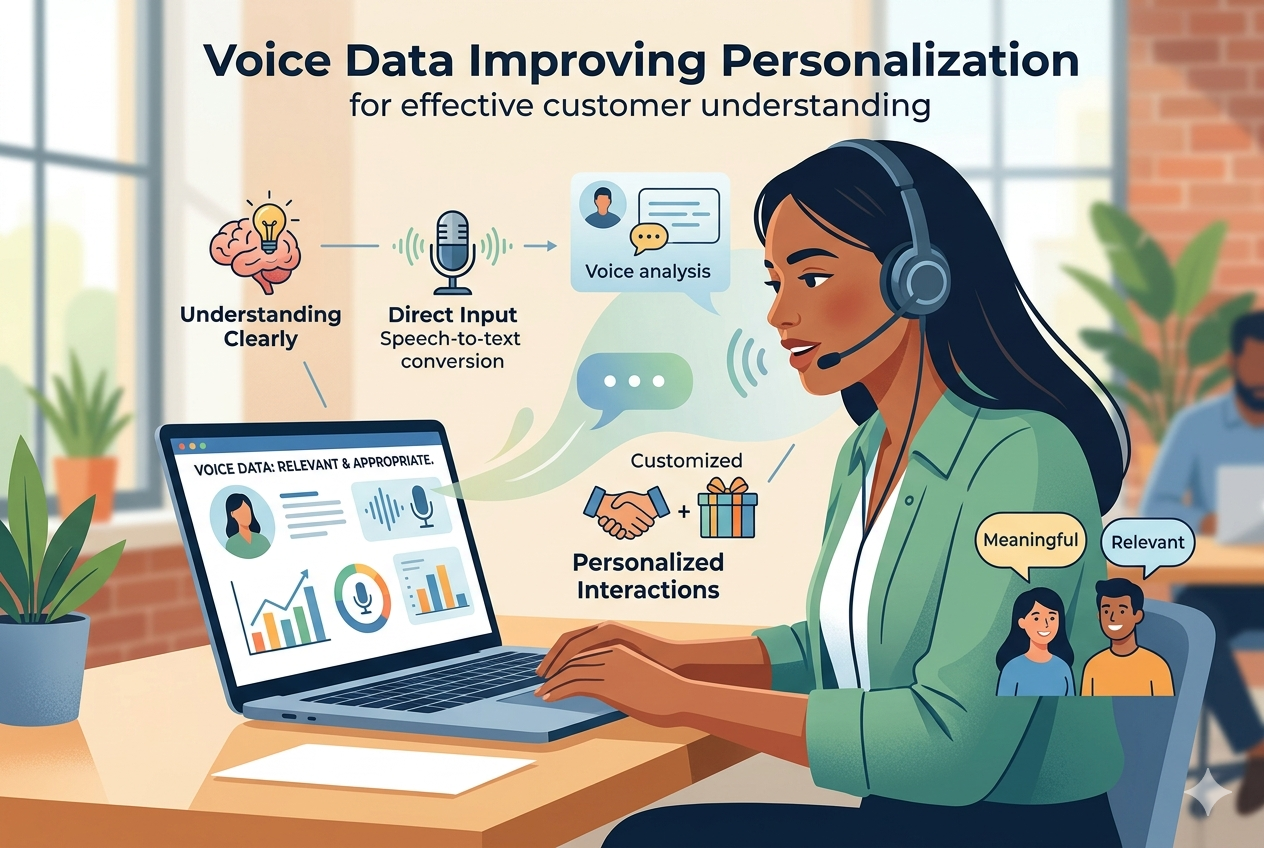
Voice data removes guesswork by providing direct input from customers. Because of this, businesses can communicate in a way that feels more relevant and appropriate. As a result, interactions become more meaningful and less generic.
4. Breaking Down Silos
In many organizations, support and marketing teams work separately. Consequently, communication often becomes inconsistent.
Voice to CDP connects these functions by sharing call insights across teams. This allows marketing to respond based on real customer issues, while support interactions influence ongoing engagement. In turn, businesses deliver a more consistent experience.
Business Impact
Using voice data effectively leads to clear improvements.
- Better customer experience through timely communication
- Higher conversions by acting on real intent
- Lower churn by identifying issues early
- Improved efficiency through automation
- Stronger decision-making with better data
Industry Applications
Voice to CDP works especially well in industries where customer calls are frequent.

- In banking and financial services, it helps identify intent related to financial products.
- In telecom, it supports early detection of service issues and reduces churn.
- In e-commerce, it provides insights into customer preferences and post-purchase concerns.
- In each case, conversations directly improve engagement.
Looking Ahead
As businesses continue to adopt AI, the need for reliable and real-time data will grow

Voice data adds context and intent that other sources often miss. When combined with a CDP, it helps businesses respond faster and make better decisions.
Conclusion
Call center conversations contain valuable insights that many organizations overlook. With Voice to CDP, Lemnisk enables businesses to capture this data, structure it, and use it in real time. By connecting what customers say with how businesses respond, companies can create more relevant and consistent experiences.
In a competitive environment, the ability to act on every interaction is essential.

Leave a Reply