Most travel aggregators run some version of the same loyalty program: book more, earn points, unlock a tier, get marginally better perks. It works well enough to keep on a pricing page, but it rarely explains why a traveller actually comes back. Points get redeemed once and forgotten. Tiers get gamed by business travellers who were never going to switch platforms anyway. Meanwhile, the traveller who genuinely could become a repeat customer the one who searched Goa three times in a month, abandoned a booking over a visa question, then came back a week later gets the same generic “10% off your next trip” email as everyone else.
Repeat traveller engagement doesn’t come from a points ledger. It comes from an aggregator’s ability to recognise a traveller’s intent, timing, and preferences well enough that the next interaction feels obviously relevant. That’s a data problem before it’s a rewards problem, and it’s exactly what a Customer Data Platform (CDP) is built to solve.
Why Loyalty Programs Undersell Repeat Behaviour

Loyalty programs in travel were designed for an era of infrequent, high-value transactions mostly airline miles and hotel tiers built around business travel. Aggregators adopted the same logic by default, but the traveller base looks different now: leisure-heavy, price-sensitive, comparison-shopping across five tabs before booking anywhere.
Three structural problems show up consistently:
- Points don’t change behaviour, they just get claimed. A discount earned through points influences one transaction, not a pattern of return visits.
- Tiers reward spend, not fit. A traveller who books once a year but always converts on the first search is more valuable than a frequent booker who is purely price-driven, but tier systems can’t tell the two apart.
- Loyalty programs are single-channel and static. They sit inside an app or account page, disconnected from search behaviour, support interactions, or post-trip sentiment all of which say more about repeat intent than a points balance ever will.
None of this means loyalty programs are useless. It means they’re a thin layer sitting on top of a much bigger, mostly ignored dataset: everything a traveller does before, during, and after a booking.
What a CDP Actually Adds
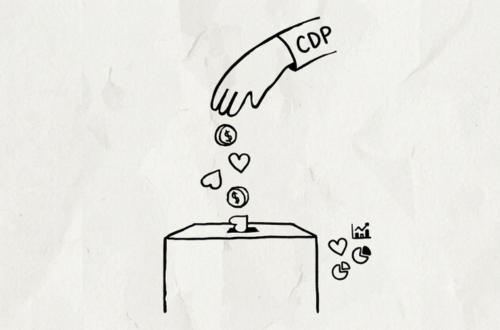
A composable CDP pulls together data that aggregators already generate but rarely unify search logs, browse and cart abandonment, booking and cancellation history, payment patterns, support tickets, app engagement, and post-trip surveys into a single traveller profile. That unification is what makes engagement feel personal instead of promotional.
1. Behavioural segmentation instead of spend-based tiers
Instead of grouping travellers by how much they’ve spent, a CDP groups them by how they behave: frequent-searcher-rare-booker, deal-triggered bookers, last-minute planners, family-trip repeaters, solo business travellers. These segments update continuously as new signals come in, rather than resetting once a year like a loyalty tier does.
2. Predictive travel intent
By modelling historical booking cadence a family that travels every school holiday, a professional who books a short trip every quarter a CDP can estimate when a traveller is likely to be in-market again, often before they’ve started searching. That prediction window is far more useful for retention than a generic “we miss you” email sent on a fixed 90-day schedule.
3. Real-time behavioural triggers
Search abandonment, repeated destination lookups, price-check-without-booking patterns, and near-miss cancellations are strong repeat-engagement signals. A CDP can trigger a relevant nudge a price-drop alert tied to the exact route someone searched, not a blanket seasonal sale within the window where it still matters.
4. Preference learning that compounds over time
Every interaction adds to what the aggregator knows: preferred destinations, typical travel party size, budget band, airline or hotel chain affinities, sensitivity to price versus convenience. This preference layer becomes the basis for recommendations that improve with every trip, which is a stickier form of loyalty than a points balance that resets to zero after redemption.
5. Orchestration across channels, not just one app
A CDP synchronises what the traveller sees across email, app push, WhatsApp, and retargeting so the messaging is consistent and sequenced — pre-trip logistics, in-trip support nudges, post-trip re-engagement rather than each channel firing off its own disconnected campaign.
What This Looks Like in Practice

Consider a traveller who searches for a Bali trip twice in one week, adds flights to cart, then drops off without booking. A loyalty-program-first approach has nothing to offer here beyond a static discount code. A CDP-driven approach can trigger a personalised nudge referencing the exact dates and route searched, timed to when browsing typically resumes for that traveller segment, and it can hold off on discounting entirely if the traveller’s historical pattern shows they convert without one.
Or consider a traveller who completes a trip and later opens a support ticket about a refund delay. That interaction is a strong signal about future booking risk a poorly handled post-trip experience predicts churn better than almost any other data point. A CDP that connects support data to the marketing layer can suppress promotional messaging until the issue resolves and route in a service-recovery touchpoint instead, protecting the relationship rather than pushing another sale into it.
Neither scenario needs a loyalty program to work. Both need a system that recognises the traveller and responds to context.
Measuring Engagement Without a Points System

Without tiers and redemption rates as a proxy, aggregators need retention metrics that reflect actual behaviour:
- Repeat booking rate within a defined window (90/180/365 days)
- Time-to-next-booking, tracked against the predicted intent window
- Customer lifetime value (CLV) segmented by behavioural cohort, not spend tier
- Reactivation rate for dormant travellers reached through behavioural triggers versus blanket campaigns
- Search-to-book conversion lift among travellers receiving personalised nudges versus generic offers
These metrics tie retention directly to the quality of the data and personalisation layer, which makes the CDP’s contribution measurable in a way a loyalty program’s soft “engagement score” usually isn’t.
Why This Fits Travel Aggregators Specifically

Aggregators sit on unusually fragmented data by nature of the business model search engine logs, GDS and supplier feeds, payment gateways, support platforms, and app analytics rarely live in one system. A composable CDP is built for exactly this kind of stack: it connects to existing data sources rather than requiring a rip-and-replace, and it lets marketing, product, and support teams work off the same traveller profile instead of three different partial views.
That composability matters more in travel than in most other industries, because the businesses that win repeat travellers aren’t the ones with the most generous points program they’re the ones who make the fifth search feel as effortless as the first.
The Takeaway

Loyalty programs optimise for redemption. CDPs optimise for relevance. For travel aggregators trying to build genuine repeat engagement, the second one is doing the actual work a points balance just gets attached to it afterward, if at all.
Lemnisk’s composable CDP unifies traveller data across search, booking, payment, and support systems into a single profile turning fragmented signals into timely, relevant engagement at scale. Built for travel aggregators who want retention driven by behaviour, not by points.

Leave a Reply