Imagine you walk into a bank, and before you even sit down, the relationship manager already knows you’ve been browsing home loan rates, that you missed your last EMI, and that you’re likely considering switching providers. They greet you with exactly the right offer — at exactly the right moment.
This is not a coincidence. Instead, it is predictive scoring operating in real time. And in today’s digital-first landscape, it is entirely achievable — not just at a branch level, but across every channel, every touchpoint, and every customer interaction, simultaneously.
What Is Predictive Scoring?
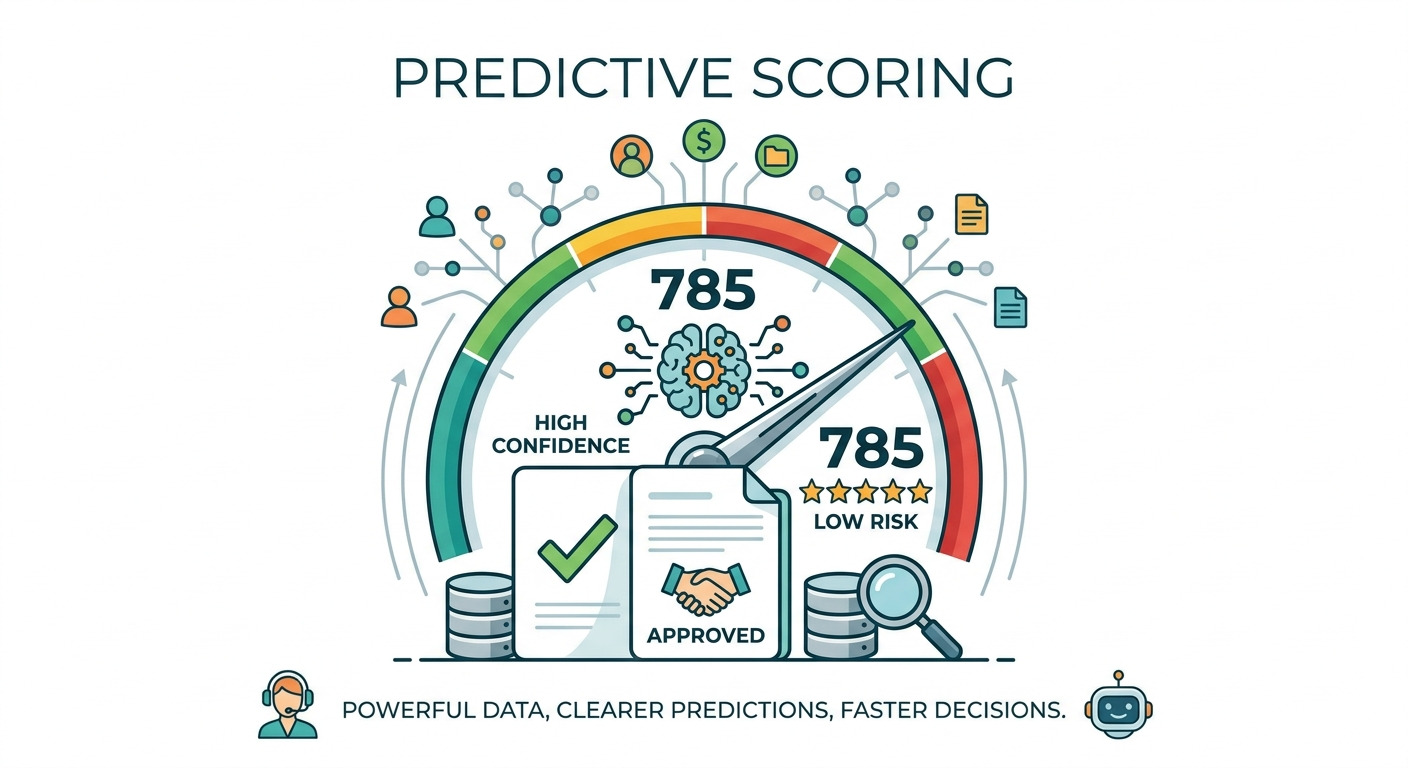
At its core, predictive scoring assigns each customer a numerical value that reflects something meaningful about their current state — how likely they are to make a purchase, how at risk they are of leaving, or how receptive they might be to a specific offer.
In simple terms, think of it as a credit score, but instead of measuring financial trustworthiness, it measures customer intent and Customer behavior. The key difference is that while a credit score updates periodically, a real-time predictive score updates continuously with every customer action.
A traditional lead score is like a doctor’s diagnosis made at a scheduled appointment. A real-time predictive score is like a continuous health monitor — responding instantly as conditions change, not waiting for the next checkup.
The Limitations of Traditional Segmentation
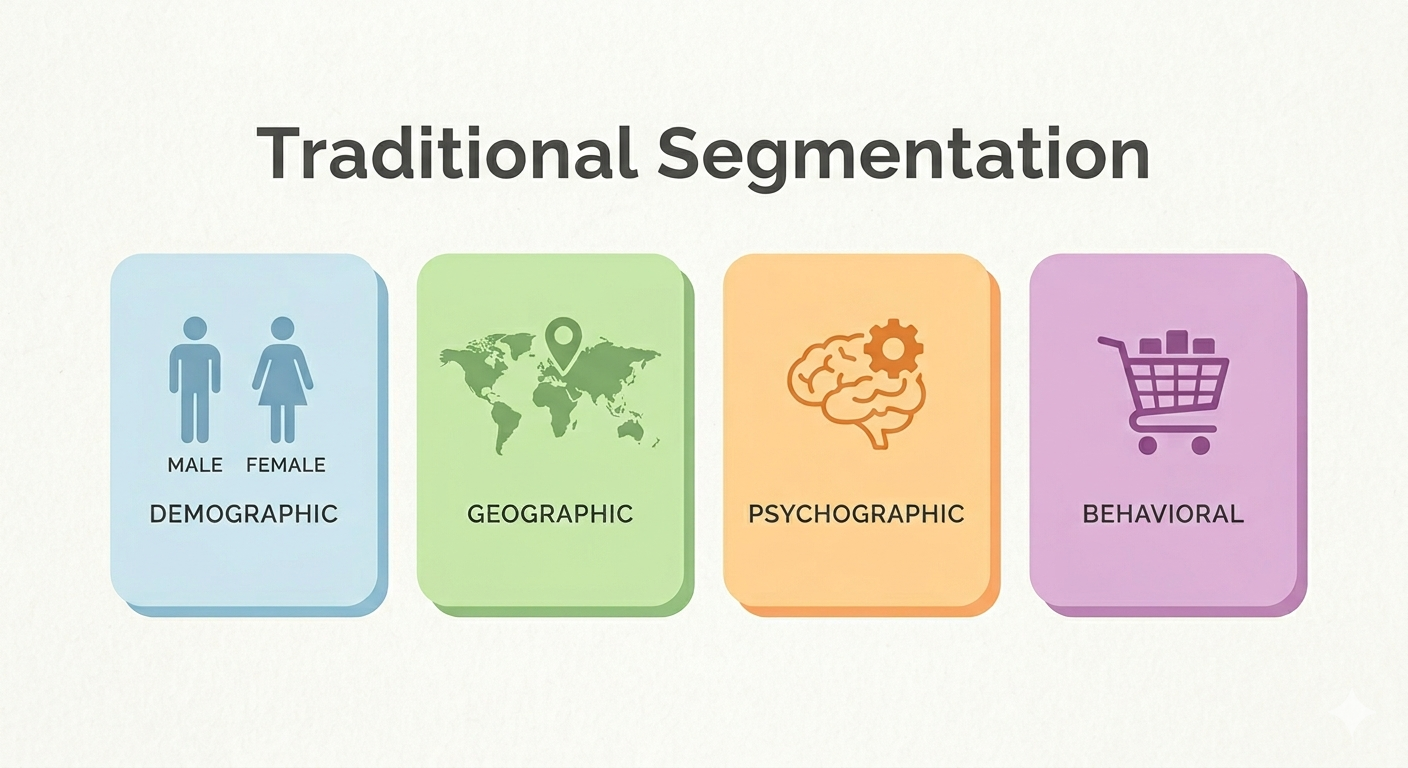
Currently, most marketing and CX teams on batch logic. Teams pull customer segments at the end of the week, build campaigns around static groups like ‘high-value customers,’ ‘lapsed users,’ and ‘new signups,’ and send communications on a fixed schedule. As a result, by the time those messages land, the underlying data is already stale.
A customer who appeared highly engaged on Friday may have visited a competitor’s platform over the weekend. A lead who seemed disinterested last month may have spent twenty minutes on your pricing page at midnight. Static segmentation has no mechanism to capture these shifts.
The reality is that customer intent has a very short shelf life. A user abandoning a cart, a policyholder logging in to check claim status, a prospect visiting a product comparison page for the third time in one session — these are not passive data points. They are live signals of intent. And the window to act on them is often measured in minutes, not days.
How Real-Time Predictive Scoring Works
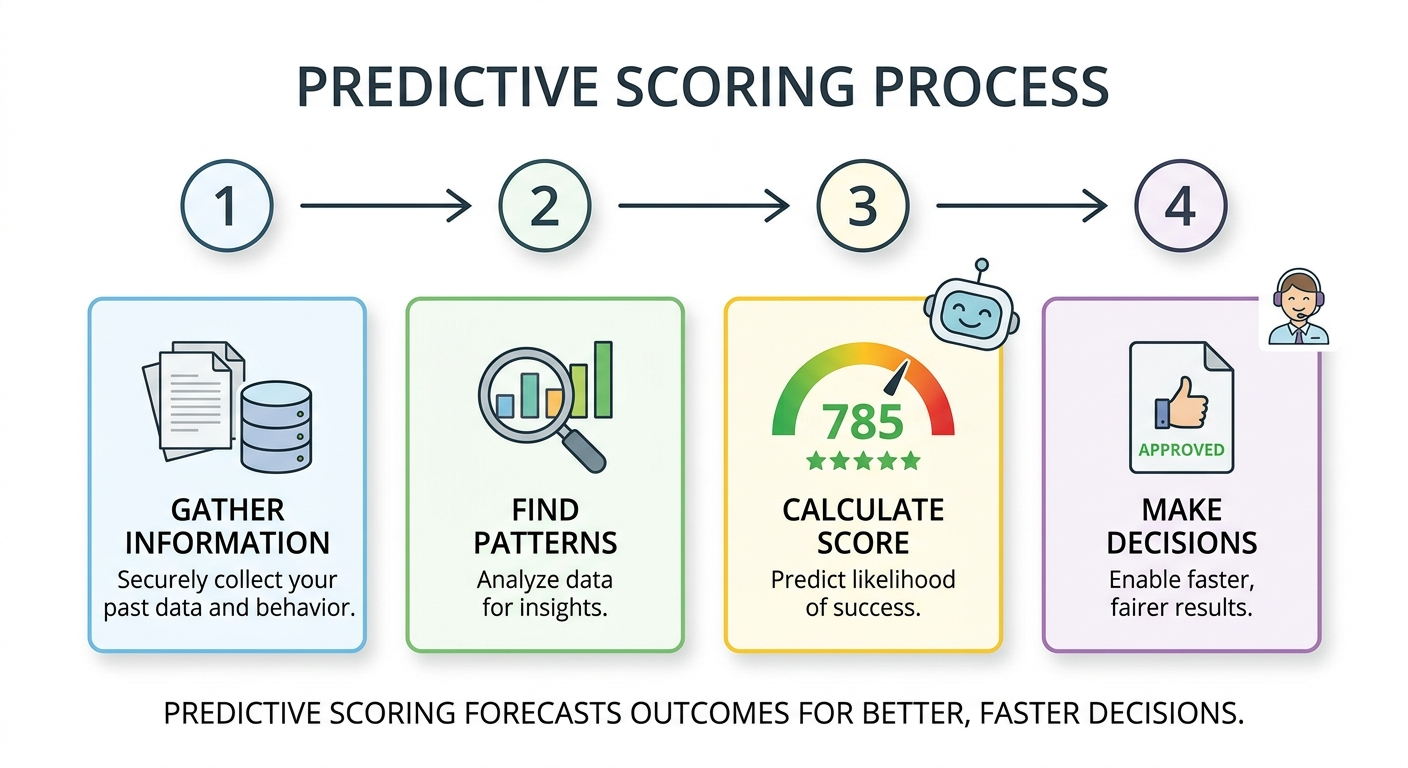
Real-time predictive scoring brings together three things: unified data from all channels, machine learning models, and the ability to act on results instantly.
In practice, the process works as follows:
1. Data Unification – The platform aggregates and links — website behavior, app interactions, CRM records, transaction history, call center logs, email engagement — is aggregated and linked to a single, continuously updated customer profile.
2. Event Detection : Every customer action, whether a page visit, a form submission, a product search, or a support call, is captured as an event that triggers a model evaluation.
3. Score Computation – Machine learning models analyze the customer’s behavioral history alongside the triggering event to produce an updated score — whether that is purchase propensity, churn risk, next best offer likelihood, or fraud probability.
4. Automated Action : When a score crosses a predefined threshold, a response is triggered automatically — a personalized notification, a targeted campaign, a sales alert, or a tailored message on whichever channel the customer is most likely to engage with.
The process requires no manual intervention. The system continuously monitors, evaluates, and responds — at scale, in real time.
The Scores That Drive Business Outcomes
Predictive scoring is not a single metric. It is a suite of models, each designed to surface a specific insight:
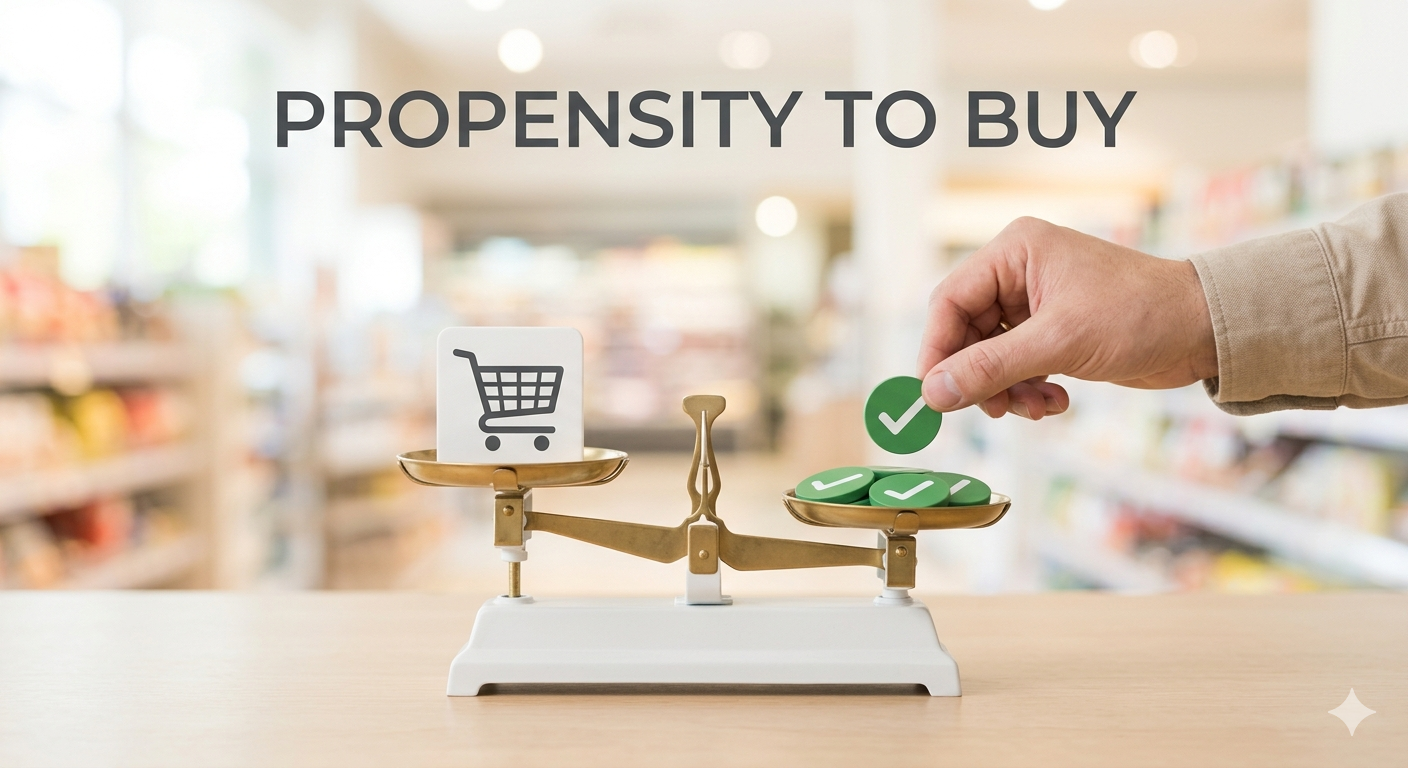
- Propensity to Buy — Identifies customers most likely to convert in the near term, allowing sales and marketing teams to concentrate effort where it will have the greatest impact.
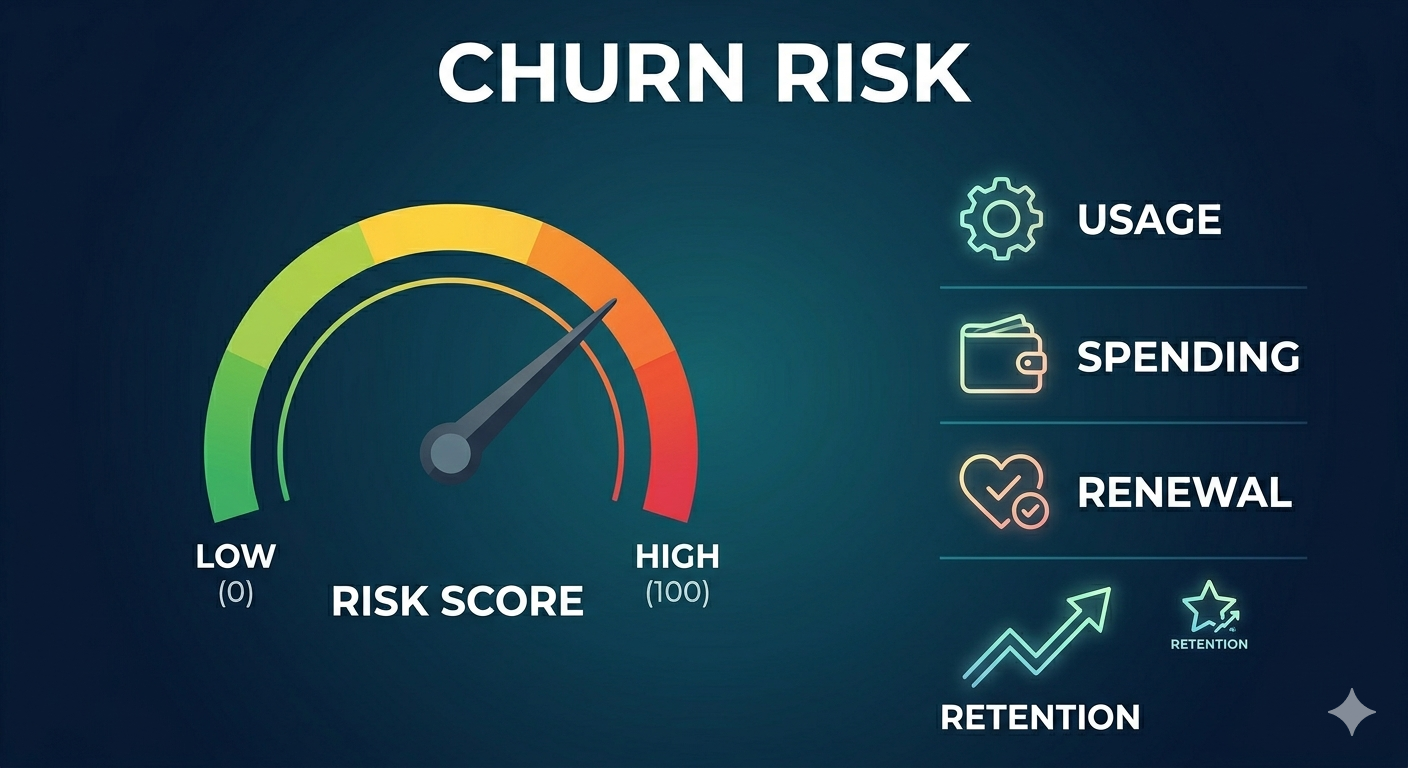
- Churn Risk Score — Detects early indicators of disengagement — reduced usage, increased support contacts, competitor research behavior — before a customer reaches the point of no return.
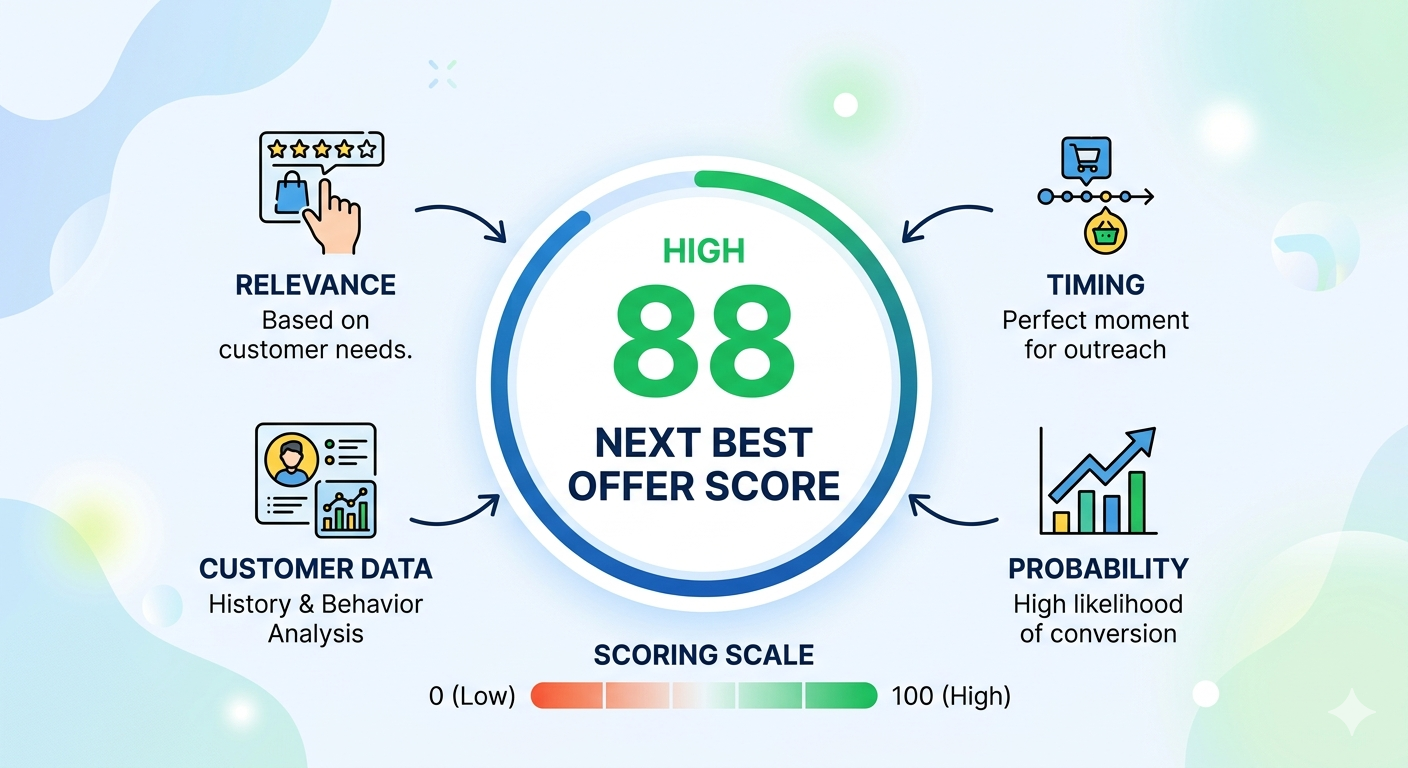
- Next Best Offer Score — Determines which product, service, or communication is most relevant to a specific customer at a specific moment, based on their profile and current context.
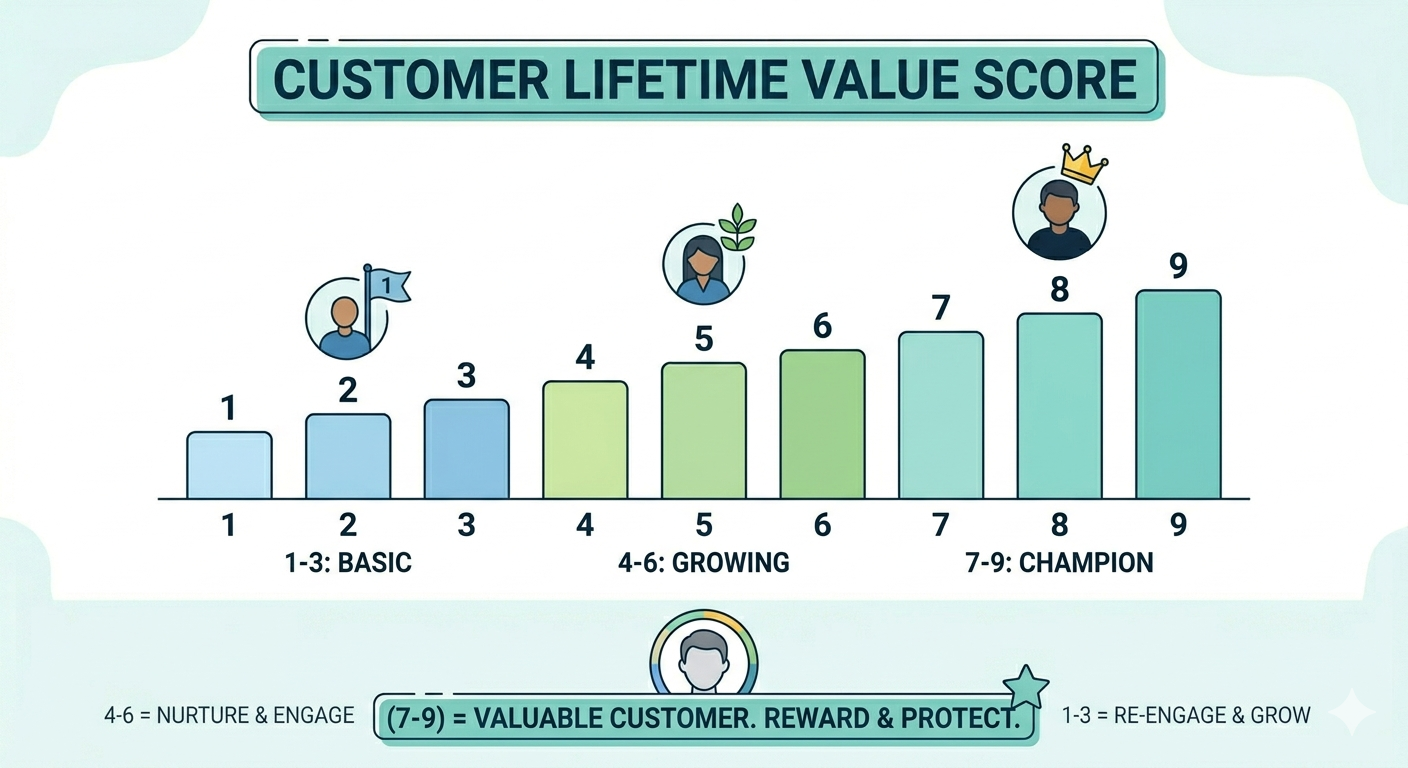
- Customer Lifetime Value Score — Projects the long-term revenue potential of individual customers, enabling smarter decisions around acquisition spend, retention investment, and service prioritization.
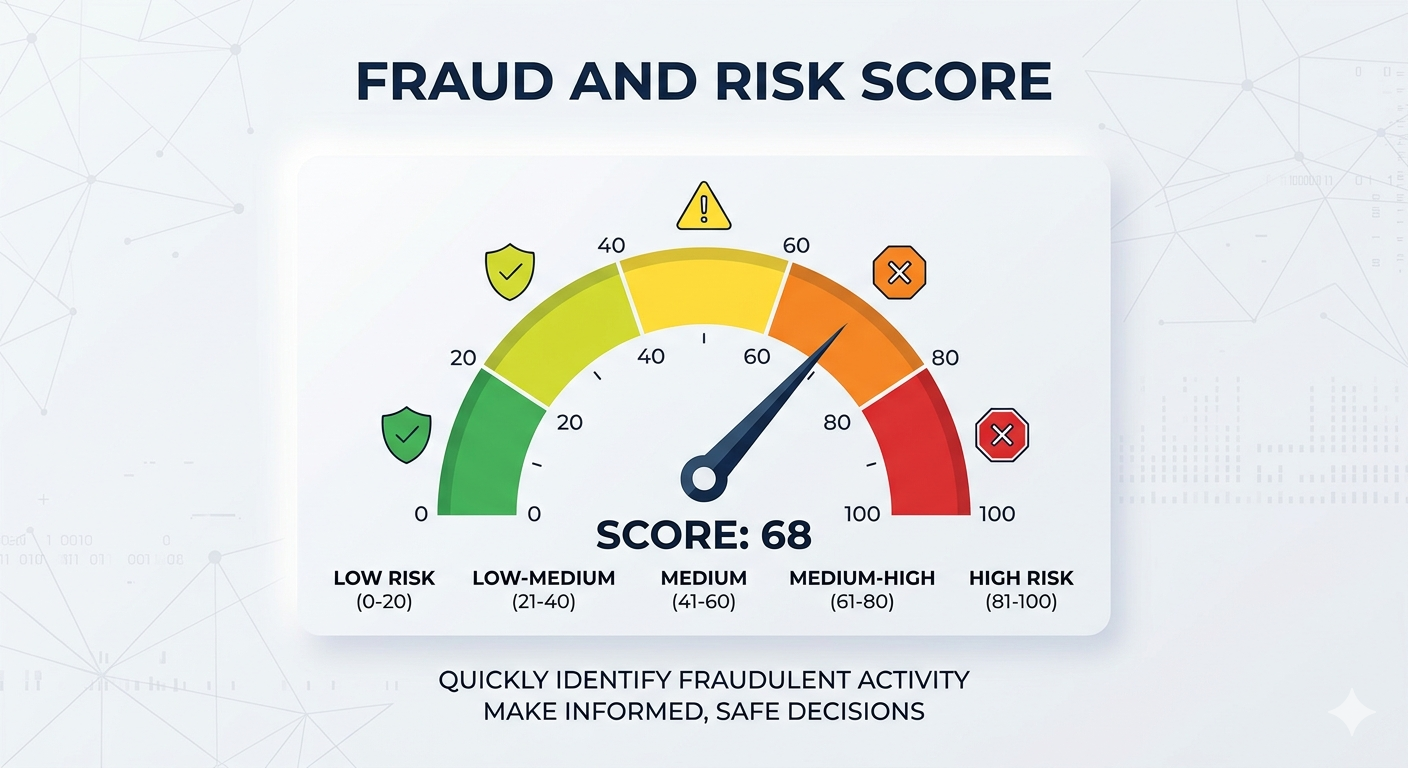
- Fraud and Risk Score — In financial services, this identifies unusual behavior that may indicate fraud, default risk, or policy misuse, often before a transaction happens
Why the “Real-Time” Component Is Non-Negotiable
It is reasonable to ask whether predictive scoring is valuable regardless of timing. The answer is yes — but only to a point. a score that you generate yesterday is useful context. A score generated right now is an operational asset.
Customer intent is highly time-sensitive. The prospect who visits your pricing page three times in a single session is in a fundamentally different state of consideration than the same person twenty-four hours later. The policyholder who calls in immediately after receiving a claim denial is experiencing a very specific emotional and decisional moment. Acting on these signals an hour later — let alone a day later — is the equivalent of arriving after the conversation has already ended.
Real-time scoring converts data from a historical record into a live decision-making system. It allows marketing Service, sales, and customer service functions to operate from the same current picture of each customer — and to respond to that picture as it evolves, not as it was.
Addressing the “This Requires a Data Science Team” Concern
A common and understandable hesitation is that real-time predictive scoring sounds like the domain of data engineers and machine learning specialists — something that teams typically spend months developing and ongoing technical maintenance.
This was true several years ago. It is no longer the case. Modern platforms use pre-trained models and simple interfaces that let business users set rules, define scores, and trigger actions without coding.
The more accurate analogy is a smart automation system: a business user sets the conditions, the platform monitors and executes, and the results are measurable from day one.
In Conclusion
Real-time predictive scoring changes how businesses manage customer relationships, moving from periodic campaigns to continuous, data-driven engagement. For organizations operating in competitive, high-volume environments, the ability to identify intent and act on it in the moment it appears is no longer a differentiator. It is becoming a baseline expectation.
This is precisely where Lemnisk comes in. Lemnisk’s AI-powered Customer Data Platform is built to unify your customer data from every source, compute predictive scores the instant a customer takes action, and automatically trigger the right response — across email, SMS, WhatsApp, push, or ads — without requiring your team to manage it manually. The result is smarter engagement, lower churn, and better conversion, delivered at enterprise scale.
If your organization is looking to move from reactive campaigns to proactive, real-time customer intelligence, we’d love to show you what that looks like in practice.

Leave a Reply