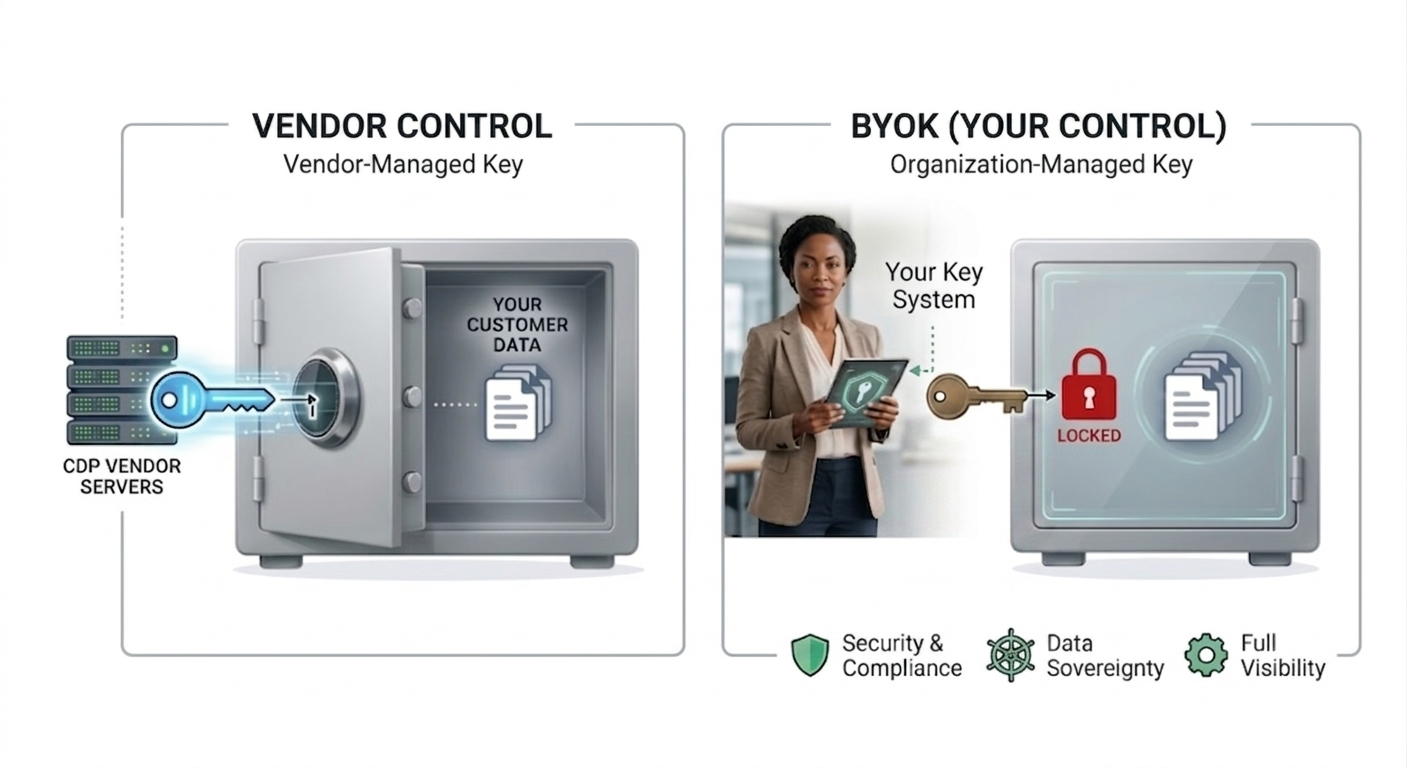
Let’s start with an uncomfortable analogy.
Imagine renting a safe deposit box at a bank. You put your most valuable documents inside, lock it up, and walk away feeling secure. What you do not realize is that the bank made a copy of your key. They are not doing anything malicious with it. But it exists. And someday, under the right circumstances, someone will use it.
That is the relationship most organizations have with their Customer Data Platform (CDP) vendor today.
Your customer data is encrypted, yes. But the keys that unlock it? Those live on the vendor’s servers. Under their policies. Subject to their vulnerabilities. And if things go sideways, whether that is a breach, a legal order, or an acquisition, your data is only as safe as the decisions they make at that moment.
BYOK, Bring Your Own Key encryption, is how you take that key back. And for CDP-driven organizations, it is quickly shifting from a security nice-to-have to a non-negotiable.
The Problem Nobody Wants to Say Out Loud
Here is what the vendor brochure does not highlight.
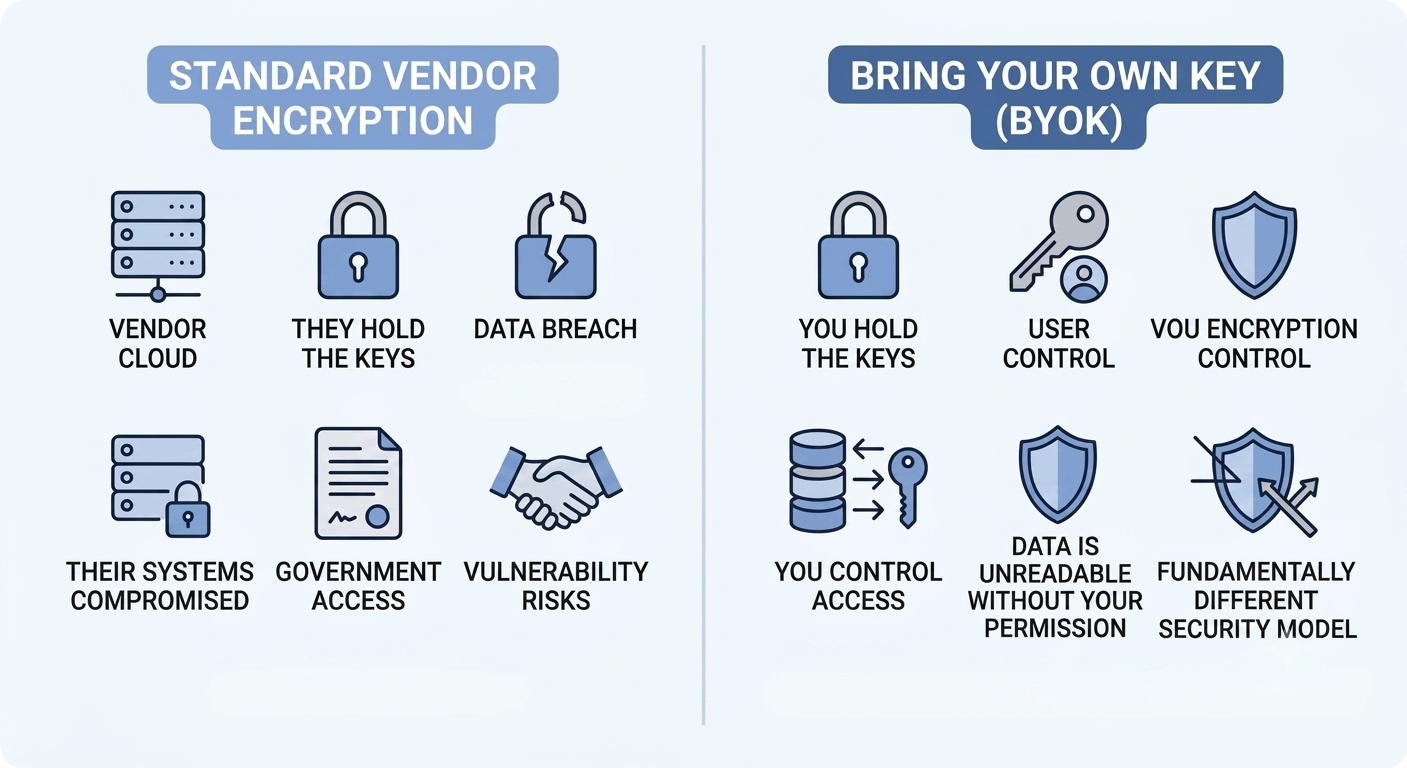
When a standard cloud-based CDP encrypts your data, they hold the keys. Which means:
- If their systems are breached, an attacker gets your data and the means to read it, in one shot
- If a government issues a data request, they can comply, with or without your knowledge
- If you terminate the contract, they can technically still access your data until deletion is confirmed
- If they get acquired, your data governance now depends on a company you never vetted
None of this is theoretical. It has happened to real organizations. And the cost, financially, legally, and reputationally, is not small.
BYOK flips the entire model. You hold the keys. The vendor holds encrypted data they cannot read without your permission. That is a fundamentally different conversation.
It is also a critical step toward true data sovereignty. Organizations retain control over who can access customer data, regardless of where that data is stored or processed, reducing dependence on vendor-controlled security models.
What BYOK Actually Does
The concept is straightforward even if the acronym sounds intimidating.
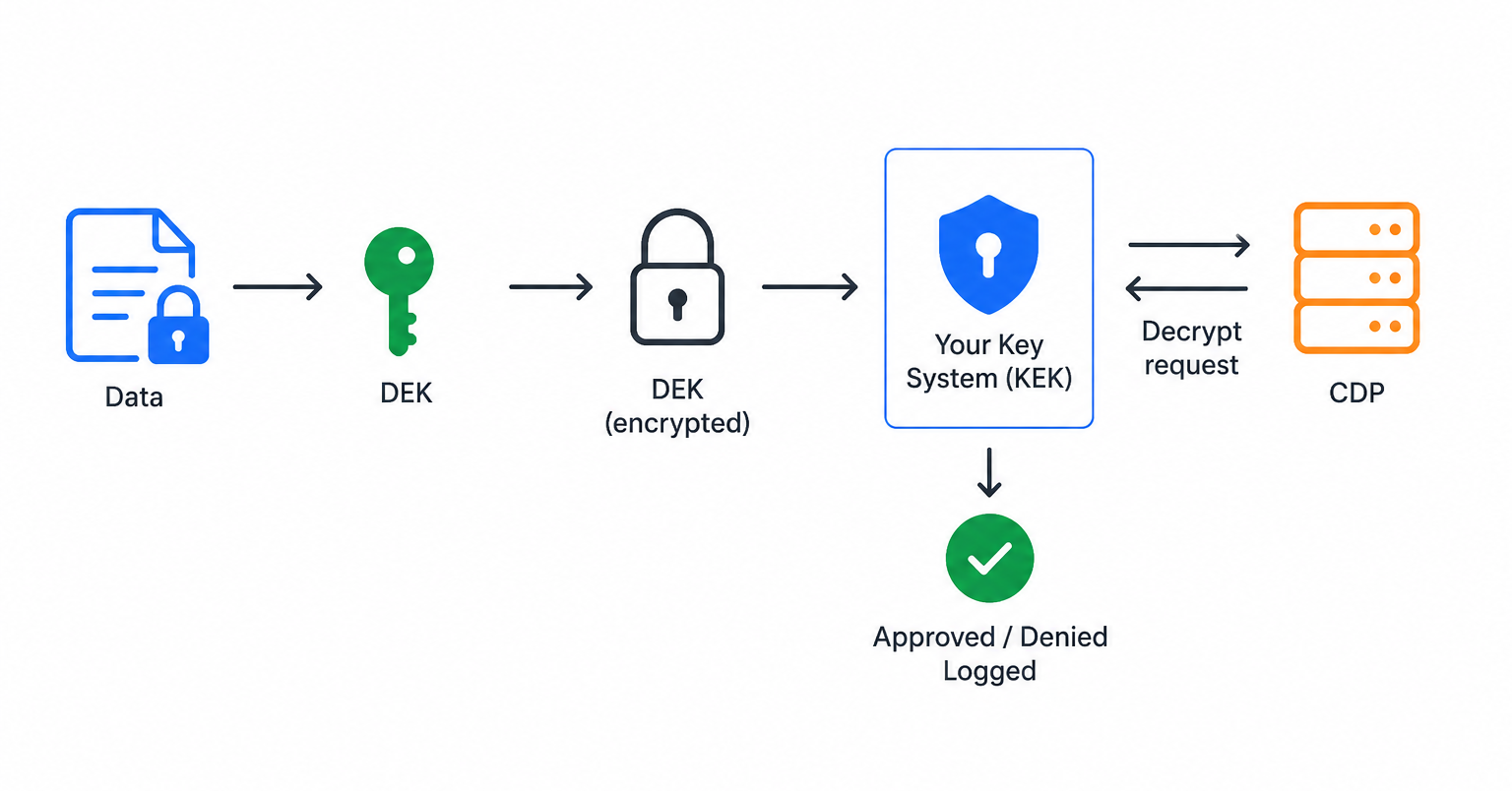
You generate and manage your master encryption keys in your own environment, through services like AWS KMS, Azure Key Vault, or Google Cloud KMS. The CDP uses those keys to encrypt and decrypt your data, but the keys themselves never leave your infrastructure.
The vendor processes your data. They cannot independently access it.
Here is how the mechanics work:
- Your data is encrypted with a Data Encryption Key (DEK)
- That DEK is wrapped and protected by your master Key Encryption Key (KEK), which lives in your environment
- Every time the CDP needs to read data, it sends a decryption request to your key system
- Your system either approves or denies it
- Every single request is logged, in your system, on your terms
The result is something most cloud security setups simply do not offer: a complete, independent, vendor-agnostic audit trail of who accessed your customer data and when.
The Feature Every Legal Team Secretly Wants
Here is the one BYOK capability that tends to make compliance leads sit up straight.
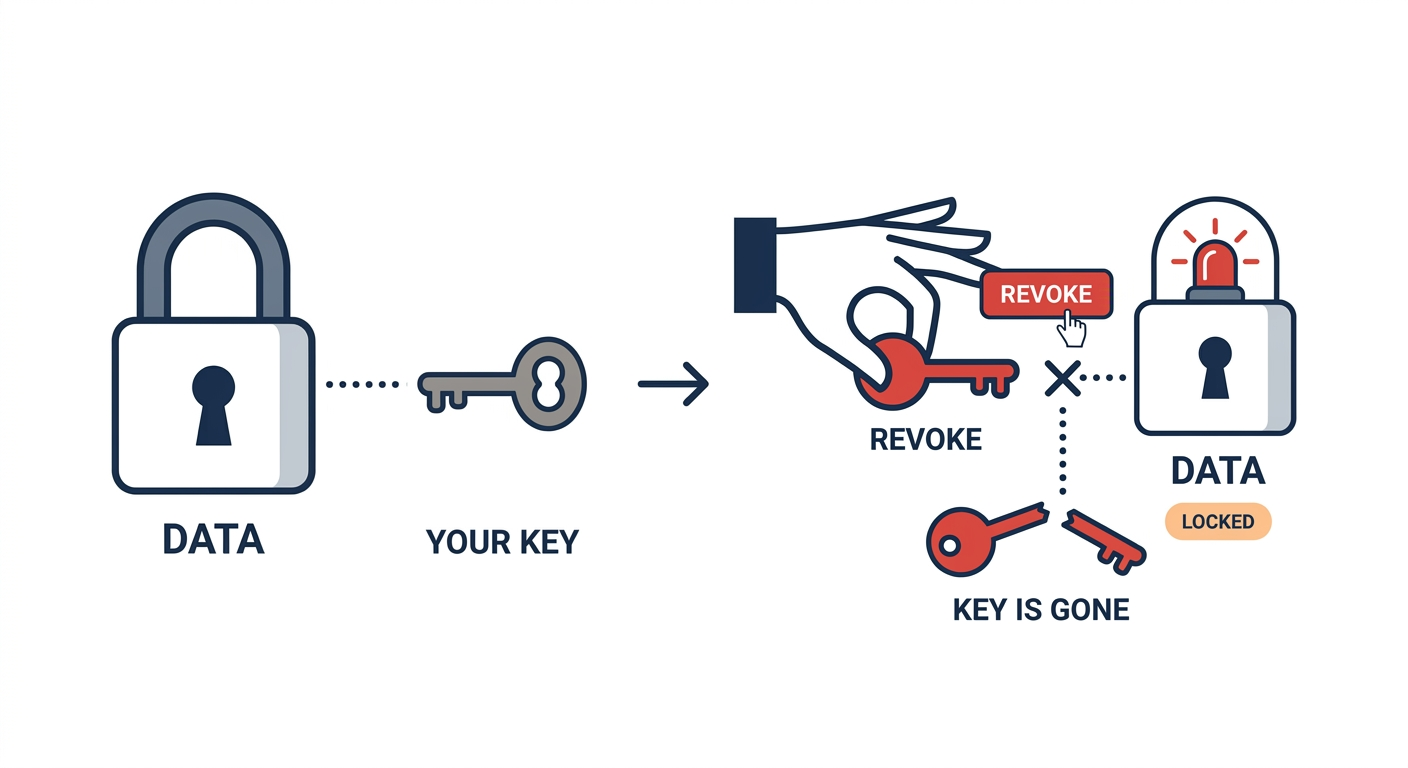
It is called key revocation. And it is exactly what it sounds like.
With BYOK, if you need to cut off a vendor’s access to your data, you revoke or rotate your keys. The vendor’s systems immediately lose the ability to decrypt anything. Not in 30 days. Not after a deletion confirmation process. Immediately. The data may still physically sit on their servers but it is cryptographically worthless without your keys.
Think about what that means in practice:
- Ending a vendor relationship? Revoke the keys. Done.
- Suspect a breach in the vendor’s environment? Revoke the keys while you investigate.
- Regulatory audit requiring proof of data control? Your key access logs are the proof.
- Employee with broad data access leaves the company? Rotate the keys, access is gone.
No other security model gives you this kind of immediate, enforceable control. Contracts are only as good as enforcement. Cryptography does not negotiate.
Regulators Are Not Asking Nicely Anymore
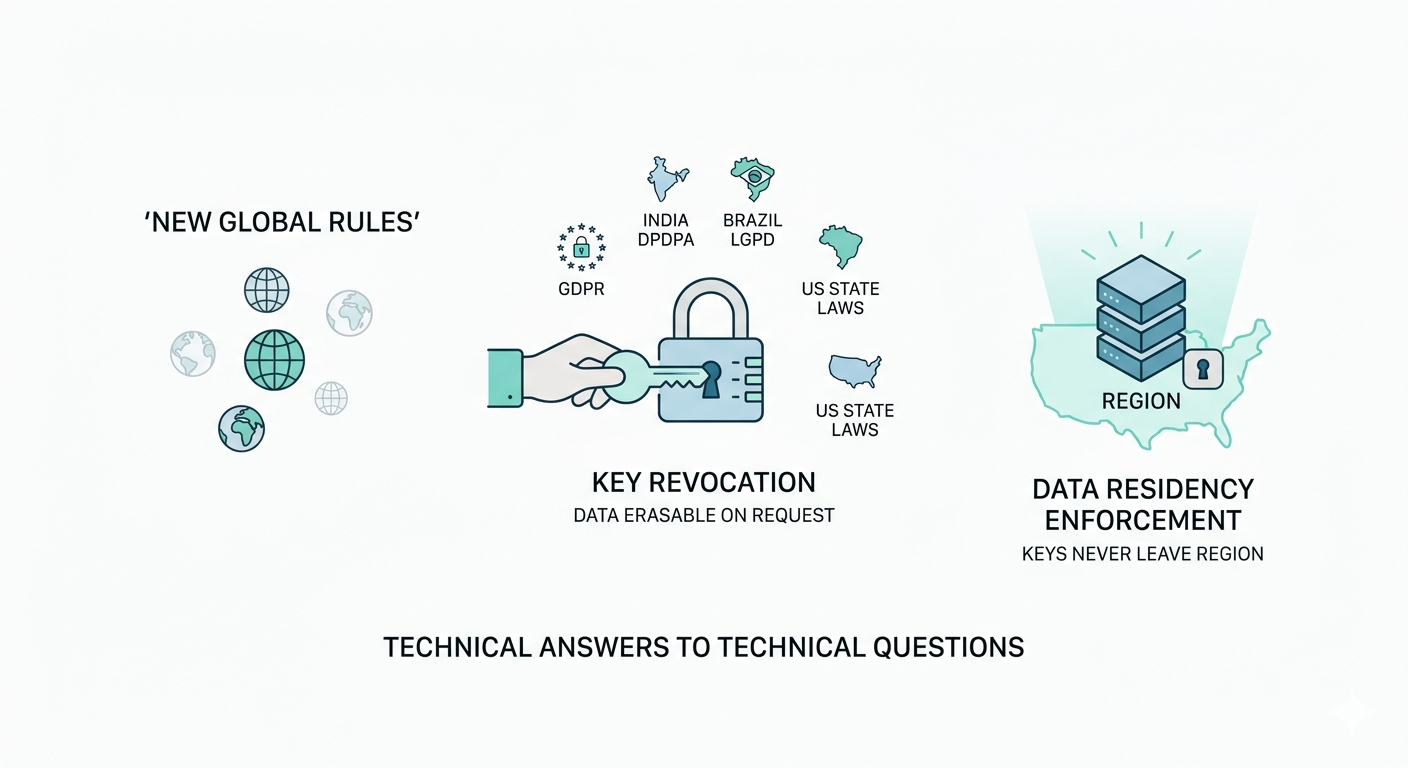
The global Data privacy landscape has changed. Laws are no longer just asking organizations to protect data. They are asking organizations to prove it.
- GDPR requires that personal data be erasable on request. Key revocation is a technically airtight way to fulfill that. No waiting on vendor queues. No hoping the deletion actually happened. The data becomes unreadable the moment you act.
- India’s DPDPA, Brazil’s LGPD, and a growing list of US state laws are each tightening requirements around residency, access controls, and breach accountability. The direction of travel is clear: technical controls, not just policy commitments.
- Cross-border data residency rules are particularly relevant for CDP environments. With BYOK, you can ensure that customer data in a specific region is only ever decrypted using keys that never leave that region. The encryption layer becomes a residency enforcement mechanism.
The organizations that will navigate the next wave of regulatory enforcement most confidently are the ones that have technical answers to technical questions. BYOK is one of those answers.
“We Will Get to It Later” Is a Strategy With Consequences
A lot of organizations know BYOK matters. They have it on the roadmap. It will get prioritized eventually.
Here is what eventually actually costs.
IBM’s 2024 Cost of a Data Breach report puts the average breach at $4.88 million. That number does not include data regulatory fines, customer churn, or the reputational damage that compounds quietly for years afterward. It also does not account for the internal chaos of trying to prove data control after the fact, when auditors are already in the building.
The organizations building BYOK into their CDP infrastructure now are not being paranoid. They are being structurally smarter. They are reducing their attack surface, satisfying regulators before enforcement arrives, and building customer trust as a deliberate asset rather than hoping nothing goes wrong.
Reactive security is always more expensive than proactive security. Always.
What to Actually Look for in a CDP’s BYOK Setup
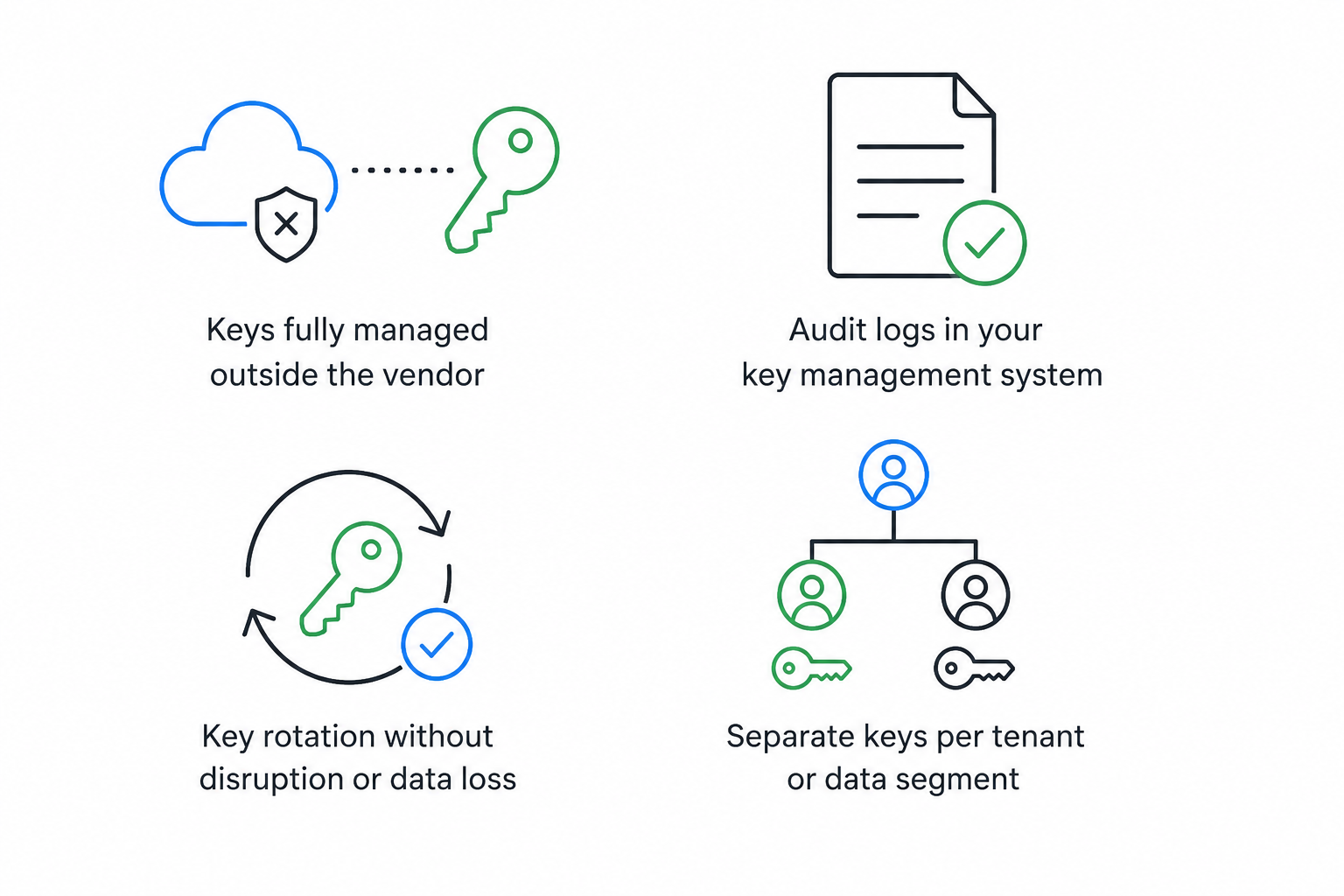
Not every vendor that says BYOK means the same thing. The details matter.
True external key management vs. vendor-controlled “customer keys” If the keys are managed through the vendor’s own console, that is not real BYOK. Real BYOK means your keys live entirely outside the vendor’s infrastructure. If they have admin access to the key management interface, separation is an illusion.
An independent audit trail The access logs should live in your key management system, not just the vendor’s dashboard. You need to be able to verify access yourself, independently, without asking the vendor to pull a report.
Graceful key rotation Key rotation should happen without service disruption or data loss. If a vendor cannot clearly explain how rotation works in a live environment, that is worth pressing on before you sign anything.
Tenant-level key isolation In multi-tenant CDP environments, separate keys per customer or data segment limit the blast radius of any single compromise. It is the difference between a contained incident and a catastrophic one.
The Trust Signal That Is Now a Procurement Requirement
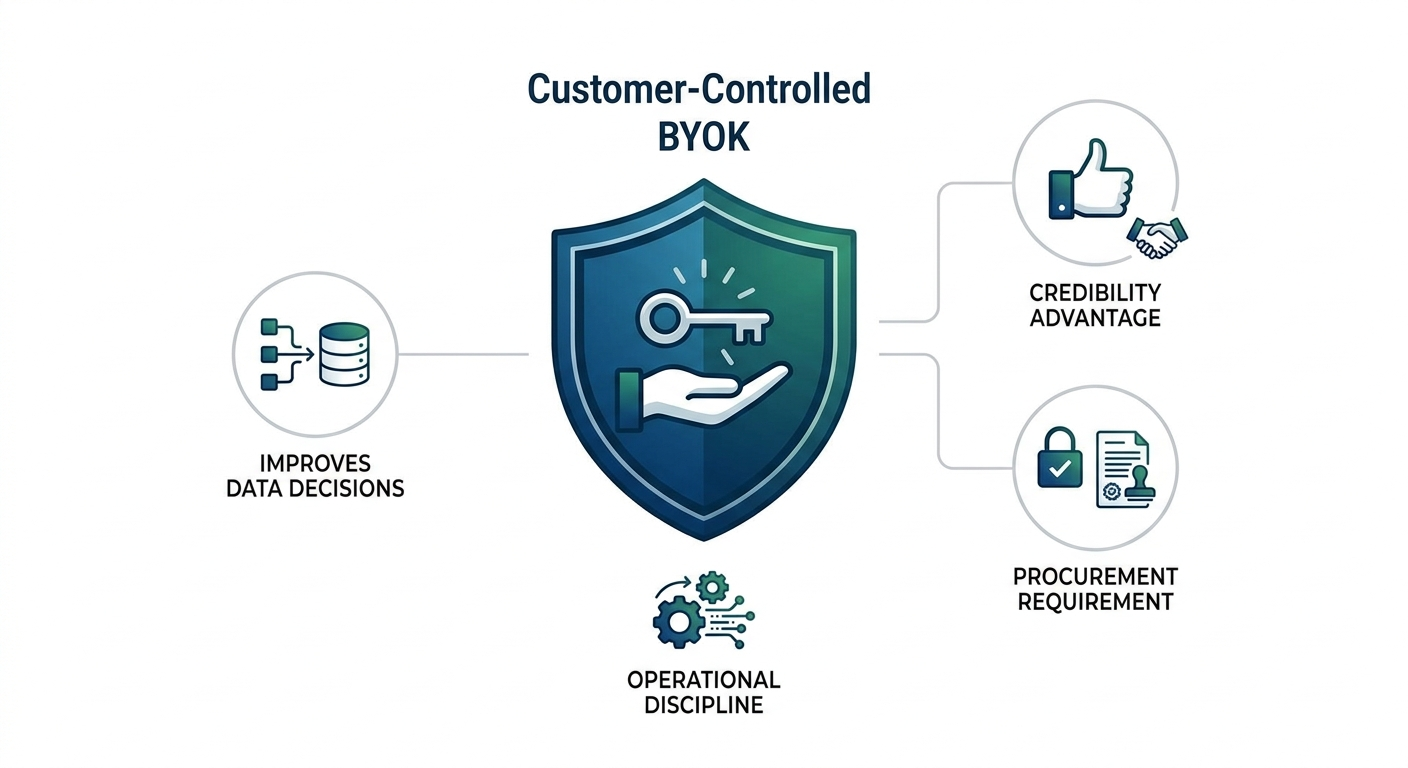
Something interesting has happened in enterprise sales conversations over the last two years.
BYOK support used to be a differentiator. Something a vendor could highlight as a premium feature. It is rapidly becoming a checkbox requirement, especially among buyers in financial services, healthcare, and any regulated industry.
Enterprise procurement teams are asking about it directly. Increasingly, those conversations extend beyond security to include data residency, sovereignty, and regulatory compliance requirements. Legal teams are flagging its absence as a risk. And organizations that can demonstrate customer-controlled encryption are walking into vendor evaluations with a credibility advantage that others simply do not have.
Beyond the external signal, there is an internal one too. When key management is a real operational discipline in your organization, something shifts. Teams get more deliberate about what data they actually collect. Retention policies get tightened. Access gets scoped more carefully. BYOK does not just protect the data you have. It quietly improves the quality of the data decisions you make going forward.
The Bottom Line
Encryption without key control is like locking your house and leaving a spare key under the mat.
Everyone knows where to look.
BYOK removes the spare key entirely. It puts control of your customer data exactly where it belongs, in your hands, enforced cryptographically, not just contractually. For CDPs handling sensitive customer data at scale, it is not the future standard. It is the current one. The organizations that have not caught up yet are carrying risk they may not fully see until it is too late.
That is exactly the foundation Lemnisk is built on. As a real-time CDP that deploys within your own cloud environment, Lemnisk treats BYOK not as a feature but as a first principle, because organizations serious about data ownership should never have to choose between powerful customer intelligence and genuine security.
Build the foundation now. Before you need it.

Leave a Reply