Imagine asking your marketing data a question the same way you’d ask a colleague. Skip SQL, ditch pivot tables, and forget waiting three days for the analytics team to run a report. Just plain English — and a precise audience segment delivered instantly. That’s the promise of LLM-powered audience builders, and it’s quickly becoming a reality reshaping how marketers work.
The Old Way: Why Audience Segmentation Was Always Broken
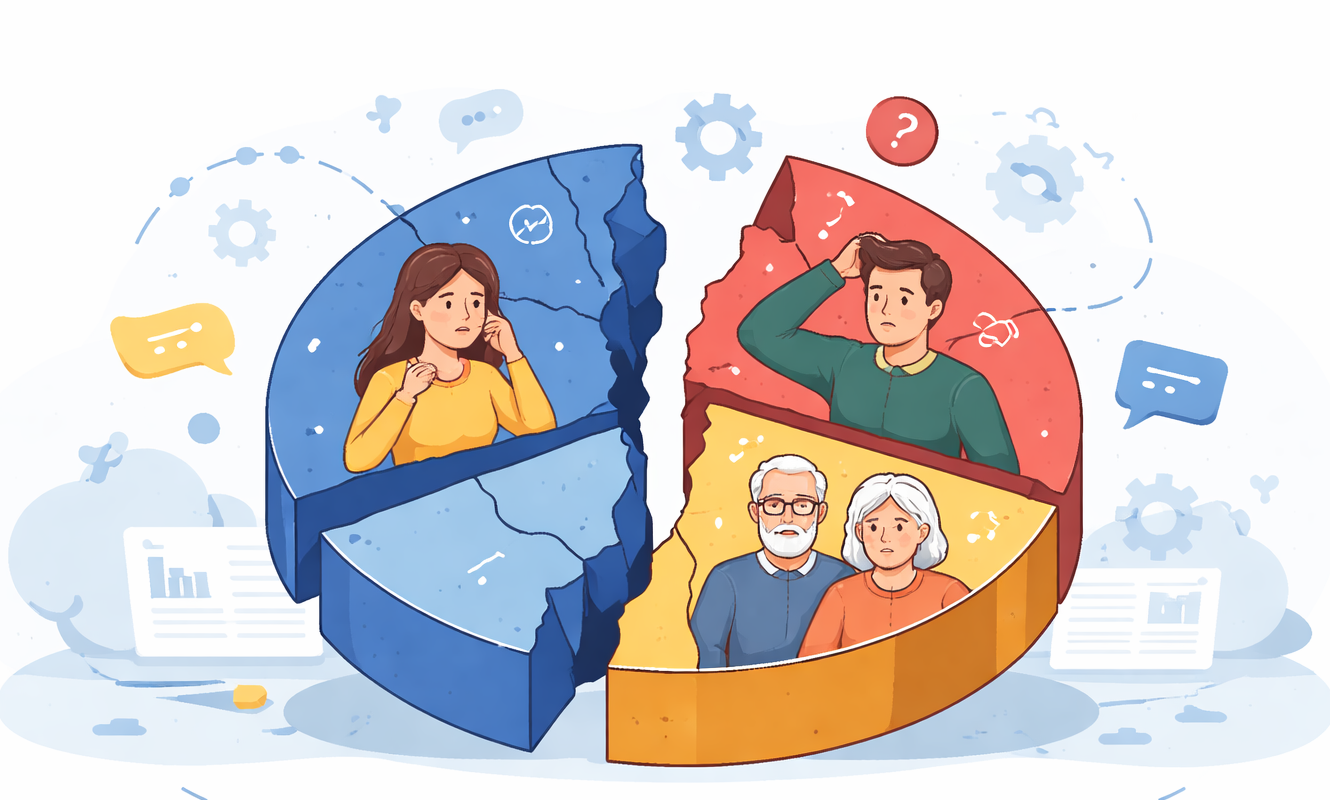
For years, building a precise audience segment meant one of two things: either you had a data analyst on speed dial, or you spent hours wrestling with clunky dashboards filled with dropdown filters and boolean logic. Marketers — the people who actually know what audience they need — were locked out of the process by a technical barrier.
The consequences were real. Campaign targeting suffered because segments were approximations. Time-sensitive opportunities were missed while waiting on data teams. And worst of all, marketers stopped asking creative questions because the cost of answering them was too high.
Audience segmentation tools existed, but they spoke a language that required training: query builders, filter stacks, SQL scripts. The people with the business intuition rarely had the technical skill, and the people with the technical skill rarely had the marketing context. It was a gap that cost companies measurable revenue.
What Is an LLM-Powered Audience Builder?
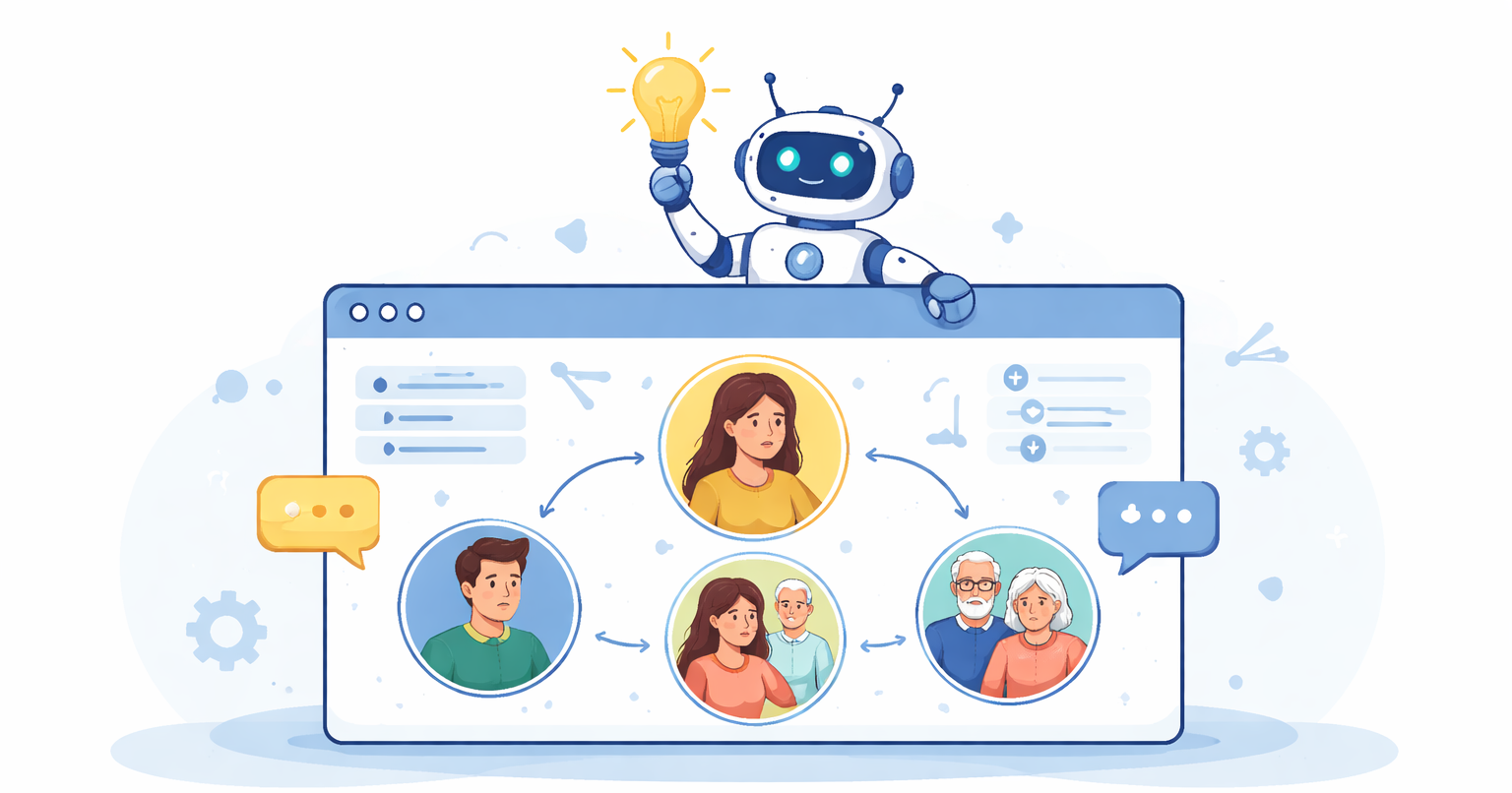
An LLM-powered audience builder is a marketing intelligence tool that uses a large language model to translate natural language queries into precise data operations against your customer or prospect database. Instead of configuring filters, a marketer types a question — and the system understands intent, maps it to the underlying data schema, and returns a usable segment.
A marketer might type: “Show me customers in the US who bought running shoes in the last 90 days, haven’t opened an email in 30 days, and have a lifetime value above $300.”
The LLM parses every clause — geography, product category, recency, engagement status, and LTV threshold — translates it into the correct query logic, and surfaces the matching audience. What used to take hours now takes seconds.
This is fundamentally different from keyword search or simple chatbot interfaces. The model reasons about the query, disambiguates vague terms using the data schema context, and handles complex multi-condition logic that would trip up most filter-based tools.
How It Works Under the Hood
The architecture behind a well-built LLM audience builder typically combines several layers working in concert.
The LLM sits at the center, receiving the natural language prompt. But raw language understanding isn’t enough — the model also needs schema context: knowledge of what tables exist, what fields mean, and what values are valid. This is usually injected as structured context in the system prompt or via retrieval-augmented generation (RAG) that dynamically pulls relevant metadata.
From there, the model generates a structured query — often SQL, but sometimes a JSON filter object depending on the underlying data warehouse or CDP architecture. That query executes against live data, and results flow back to the marketer as an audience count, a preview, and an export option.
Sophisticated implementations add clarification loops (the model asks follow-up questions when intent is ambiguous), explainability (the system shows what logic it applied), iterative refinement (marketers adjust segments through follow-up prompts), and privacy guardrails (compliance rules enforced automatically at the query layer).
Real-World Use Cases Driving Adoption
Email campaign targeting. Instead of manually stacking filters in an ESP, a campaign manager describes the audience in one sentence. The system builds the list, shows the expected reach, and pushes it directly to the email platform.
Paid media suppression lists. Ad teams can quickly query “customers who purchased in the last 14 days” without involving data engineering — suppressing recent buyers from acquisition ads in minutes, not days.
Churn prediction audiences. Customer success teams ask for “users who haven’t logged in for 60 days and are on a paid plan” to trigger win-back sequences automatically.
Personalization at scale. Product teams build behavioral cohorts for A/B testing without writing a single line of code. Different audience slices get different in-app experiences based on queries that take seconds to define.
Across all of these, the common thread is democratization. LLM-powered audience builders remove the analyst bottleneck without removing the analyst — they free up data teams to focus on harder problems while giving marketers the independence they need to move fast.
Bringing It to Life with Lemnisk
While the promise of LLM-powered audience building is compelling, its real value depends on how seamlessly it connects to your underlying customer data and activation workflows. This is where platforms like Lemnisk stand out.
Lemnisk’s LLM Audience Builder allows marketers to define audience segments in plain English, but what makes it powerful is what happens behind the scenes. The system doesn’t just interpret text — it maps each part of the query to actual customer events, attributes, and behaviors within your data, ensuring that even complex, multi-condition segments are built with precision.
Because it sits on top of a unified customer data platform, marketers aren’t working with fragmented datasets. Every query taps into a connected view of the customer, enabling more accurate targeting and eliminating the inconsistencies that often come from siloed systems.
Equally important is transparency. Instead of treating AI-generated segments as a black box, Lemnisk exposes the underlying logic in a clear, editable interface. Marketers can review how the audience was constructed, tweak conditions, and refine segments before activating them — combining AI speed with human control.
This tight feedback loop enables real-time iteration. Teams can test variations, adjust criteria, and immediately see how those changes impact audience size and composition — dramatically reducing the time from idea to campaign launch.
And because audience creation is directly connected to activation, these segments don’t just sit in dashboards. They can be pushed into live campaigns across channels, powering personalized experiences at scale without additional engineering effort.
The result is a system where natural language isn’t just a convenience layer — it becomes the interface to a fully operational marketing engine, bridging the gap between data, decision-making, and execution.
Why This Approach Works
- Intuitive Segment Creation
Marketers can describe audiences the way they think, not the way systems demand. There’s no need to translate ideas into rigid filters or predefined logic — the interface adapts to natural language, lowering the barrier to entry while accelerating execution.
- Intelligent Data Mapping
Behind every query, the system connects language to real data — aligning phrases with events, attributes, and behavioral signals. This ensures that even nuanced audience definitions are grounded in the actual data structure, reducing errors and increasing precision.
- Transparent and Editable Logic
Instead of operating as a black box, the system makes its reasoning visible. Marketers can inspect how a segment was constructed, adjust conditions, and refine logic — combining AI-driven speed with full control and confidence.
- Faster Campaign Execution
By compressing the time between idea, audience creation, and activation, teams can move at the pace modern marketing demands. What once required multiple tools and handoffs can now be done in a single, continuous workflow.
The Business Impact: Speed, Precision, and Scale

The productivity gains are substantial. Organizations piloting natural language audience builders report dramatically shorter cycles from campaign idea to launch. Segments that took two to three days to build through ticket-based workflows are now available in under a minute.
But speed is only part of the story. Precision improves too — paradoxically. When marketers can iterate on audience definitions in real time, they ask better questions. They test variations. They catch errors by seeing the audience size change in response to each refinement. The result is more thoughtfully constructed segments, not just faster ones.
There’s also a compounding effect on campaign creativity. When building an audience isn’t a friction point, marketers explore more hypotheses. Niche segments — “loyalty members in Tier 2 cities who clicked a discount email but didn’t buy” — become viable targets rather than ideas too cumbersome to act on.
Challenges and What to Watch For

Data quality is upstream of everything. An LLM can perfectly interpret a query and still return bad results if the underlying data is inconsistent, poorly labelled, or incomplete. These tools surface data quality problems faster than they solve them — which is ultimately useful, but requires investment in data hygiene.
Hallucination risk in query generation. LLMs can generate plausible-looking queries that are logically wrong. Good implementations mitigate this through schema validation, query previews, and result explanation — but users should always sanity-check segment sizes, especially for high-stakes campaigns.
Privacy and governance. Natural language interfaces make it easy to query for things that shouldn’t be queried for. Robust implementations enforce role-based access controls and data governance rules at the query layer, not just the UI layer.
Model dependency and cost. Running LLM inference at scale has a cost profile very different from traditional query engines. Organizations should evaluate total cost of ownership carefully, especially for high-volume or real-time audience use cases.
The Future: Conversational Intelligence for Every Marketer

We’re at the start of a major shift. LLM-powered audience builders are just the first layer. The direction is clear—marketing tools will feel more like conversations than complex interfaces.
The next evolution will bring proactive intelligence. These systems won’t just answer questions—they will surface opportunities marketers haven’t considered. For example: “You have 4,200 users similar to your highest-LTV cohort who have never received a targeted campaign.” Insights like this, delivered naturally, can reshape marketing strategy.
For organizations still deciding whether to invest, the real question is no longer “should we?” It’s “how quickly can we?” Teams that connect marketing intent with data execution will move faster. They will personalize better and reduce wasted spend on poor targeting.
Conclusion
LLM-powered audience builders are not just another feature. They redefine how marketers interact with data. By removing friction between intent and execution, they enable faster, smarter, and more precise audience creation.
As this shift accelerates, success will depend on more than just having data. Winning teams will be those who use data fluidly and confidently. Increasingly, that means interacting with data in plain English.
Close the gap between insight and execution with Lemnisk.
Empower your marketing team to build precise audiences faster—without writing a single line of code. Get a Demo now.

Leave a Reply