India’s Digital Personal Data Protection Act (DPDP) has moved from legislative text to operational reality for financial institutions. For banks, the shift isn’t just a compliance exercise handled by the legal team. It changes how customer data is collected, stored, and used for personalization. It also affects how data is shared with downstream systems. This changes how marketing, risk, and product teams operate.
Banks have traditionally relied on first-party and third-party data. First-party data includes transaction history, account activity, and app behavior. Third-party data includes credit bureau feeds, purchased lists, ad-tech identifiers, and data broker enrichment. DPDP tightens rules around consent, purpose limitation, and data retention. This makes third-party and loosely governed data riskier to rely on.
First-party data is collected directly from customers. It has clear consent and a stated purpose. This makes it the most sustainable foundation for banks.
What DPDP Actually Required
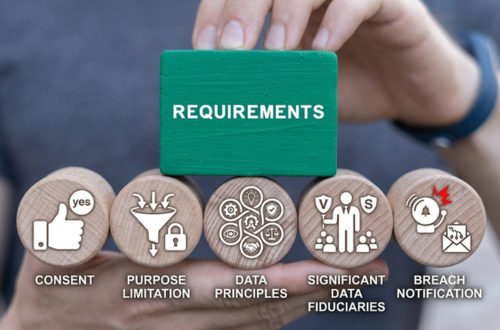
DPDP is built around a few core obligations that directly affect how banks handle customer data.
Consent must be specific, informed, and freely given. Banks cannot rely on blanket consent collected at account opening for broad future use cases. Instead, they need to obtain consent for a defined purpose and demonstrate how they obtained it.
Purpose limitation restricts how banks use collected data. Banks cannot silently repurpose data gathered for KYC or loan underwriting for cross-sell campaigns without a separate lawful basis. This directly affects how marketing teams build audiences and personalization logic.
Data principals the law’s term for individuals whose data banks process can access and correct their data. They can also withdraw consent and, in some cases, request erasure.
Banks need infrastructure that can act on these requests across every system holding customer data, not just the system of record.
Significant Data Fiduciaries are a category many large banks may fall into due to the volume and sensitivity of data they process. They face additional obligations, including data protection impact assessments, mandatory data protection officers, and periodic audits.
Breach notification requirements mean banks need to know what data was affected and who it belongs to, ideally in near real time.
This becomes difficult when data is fragmented across core banking systems, loan origination platforms, CRM, and marketing tools. Without a unified view, identifying affected data becomes much harder.
None of this is unique to India. It mirrors the direction set by GDPR in Europe, with many other jurisdictions following a similar path.
For banks, the stakes are higher because of the data’s sensitivity. A single customer’s data can span savings accounts, credit cards, loans, insurance, wealth management, and multiple digital channels, each historically managed as a separate silo.
Why Third-Party Data Becomes A Liability

Third-party data cookies, device identifiers, purchased segments, data broker feeds carries consent that a bank cannot verify or fully control. The bank using that data has no direct relationship with the individual and no way to confirm the data was collected lawfully under DPDP’s standards. As enforcement matures, relying on this data for targeting or profiling shifts from a gray area to a direct compliance exposure.
This is compounded by the broader decline of third-party cookies and the tightening of ad-tech identifiers globally. Banks that built personalization and acquisition strategies on top of third-party signals are losing that layer regardless of what DPDP requires. The two pressures point in the same direction: toward data a bank collects itself, with consent it can document, for purposes it can defend.
What A Compliant First-Party Data Strategy Looks Like

Building a first-party data strategy under DPDP isn’t a single project with an end date. It’s an operating model with several components that need to work together.
1. Unified consent management.
Consent needs to be captured, stored, and enforced consistently across every channel and system web, app, branch, call center, and any third-party integration that touches customer data. A consent record sitting in one system while marketing automation pulls from another is where compliance gaps open up.
2. A single customer view built on owned data.
Fragmented data across core banking, CRM, and marketing tools makes it nearly impossible to honor a data principal’s access or erasure request completely, and just as hard to apply consent preferences consistently. A Customer Data Platform that unifies first-party data into one identity, with consent and purpose tags attached at the record level, gives both compliance and marketing teams a system that actually enforces the rules rather than trusting each team to remember them.
3. Purpose-bound activation.
Personalization and next-best-action logic need to check not just what data is available, but what it’s been consented for. This means the activation layer the system deciding what offer or message a customer sees has to be purpose-aware, not just identity-aware.
4. Data minimization by design.
Collecting less data, retaining it for shorter periods, and avoiding speculative data collection “in case it’s useful later” reduces both compliance risk and breach exposure. This runs counter to the instinct to capture everything possible, but it’s a more defensible long-term position.
5. Auditable data lineage.
When a regulator or a customer asks how a piece of data was used, banks need to trace it where it was collected, what consent covered it, which systems touched it, and what decisions it informed. This requires data infrastructure built with lineage tracking from the start, not retrofitted after an incident.
Why This Matters For Personalization And Growth, Not Just Compliance

There’s a temptation to treat DPDP purely as a legal constraint that limits what marketing and growth teams can do. However, the more accurate framing is that it forces banks toward a data foundation that was already the right one for effective personalization: accurate, consented, first-party data tied to a single customer identity, rather than fragmented signals stitched together after the fact.
More importantly, banks that build this foundation now get a compounding advantage. Personalization built on verified consent and accurate identity resolution performs better and creates less regulatory exposure than personalization built on inferred or third-party signals. In contrast, banks still relying on fragmented data and loosely governed third-party sources will face both compliance risk and declining targeting accuracy at the same time.
Where To Start

For banks still assessing their exposure, the practical starting point is an audit. Map every system that holds customer data. Identify what consent covers each data flow. Flag where third-party or purchased data feeds into personalization or underwriting decisions.
Next, consolidate first-party data into a single, consent-aware customer view. Only then should banks layer personalization and activation on top. DPDP compliance and scalable personalization are not competing priorities. Both depend on the same foundation: a unified, first-party, consent-governed customer view.
Banks that build this foundation now can spend less time reacting to regulatory changes. They can also build a stronger base for product and marketing decisions. This is the problem a Composable CDP is built to solve. Lemnisk unifies first-party data from core banking, digital channels, and CRM into a single customer identity. Consent and purpose are captured at the record level, rather than added later.
Entity-level identity resolution keeps this view accurate across touchpoints. Purpose-aware activation ensures personalization and next-best-action decisions follow customer consent. Combined with ISO 27001-certified infrastructure and data residency controls, Lemnisk gives banks a stronger foundation for DPDP compliance and personalization.
For banks building a first-party data strategy under DPDP, this is the starting point: infrastructure that treats consent and identity as core to the data model, not as a compliance layer added later.

Leave a Reply