Marketing has never been short on data, only on the ability to act on it in time.
Every click, scroll, purchase, and pause generates valuable signals about customer intent. Yet for many organizations, this data remains fragmented across systems, processed too late, or reduced to static audience lists that no longer reflect reality.
Meanwhile, customers have moved on.
They expect brands to recognize intent instantly, adapt in the moment, and deliver experiences that feel less like campaigns and more like conversations.
This widening gap between data availability and real-time action is where traditional audience segmentation begins to fall short.
Which raises a critical question: Is segmentation still about grouping users or is it about continuously understanding who they are right now?
What is Audience Segmentation?
Audience segmentation is the process of dividing a broad customer base into smaller, meaningful groups based on shared characteristics so brands can deliver more relevant and personalized experiences.
Traditionally, segmentation is built using a mix of :
-
- Demographic data (age, income, occupation)
- Geographic data (location, region)
- Psychographic traits (interests, lifestyle, values)
- Behavioral signals (browsing activity, purchases, engagement)
- Technographic data (device type, platform usage)
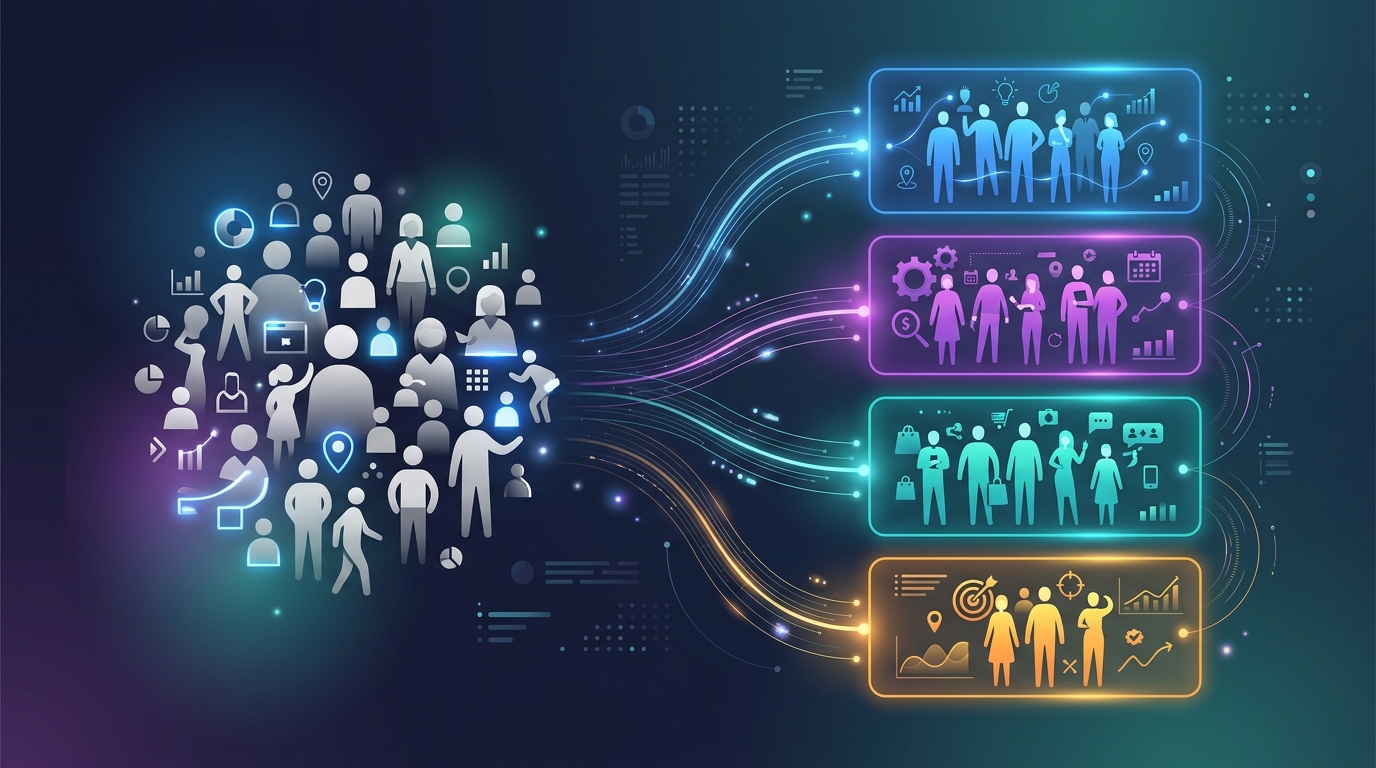
The goal is simple: move from mass messaging to precision-driven engagement.
For example, a first-time visitor, a repeat buyer, and a user who has abandoned a cart should not receive the same message. Effective segmentation ensures each user gets communication aligned with their intent and stage in the journey.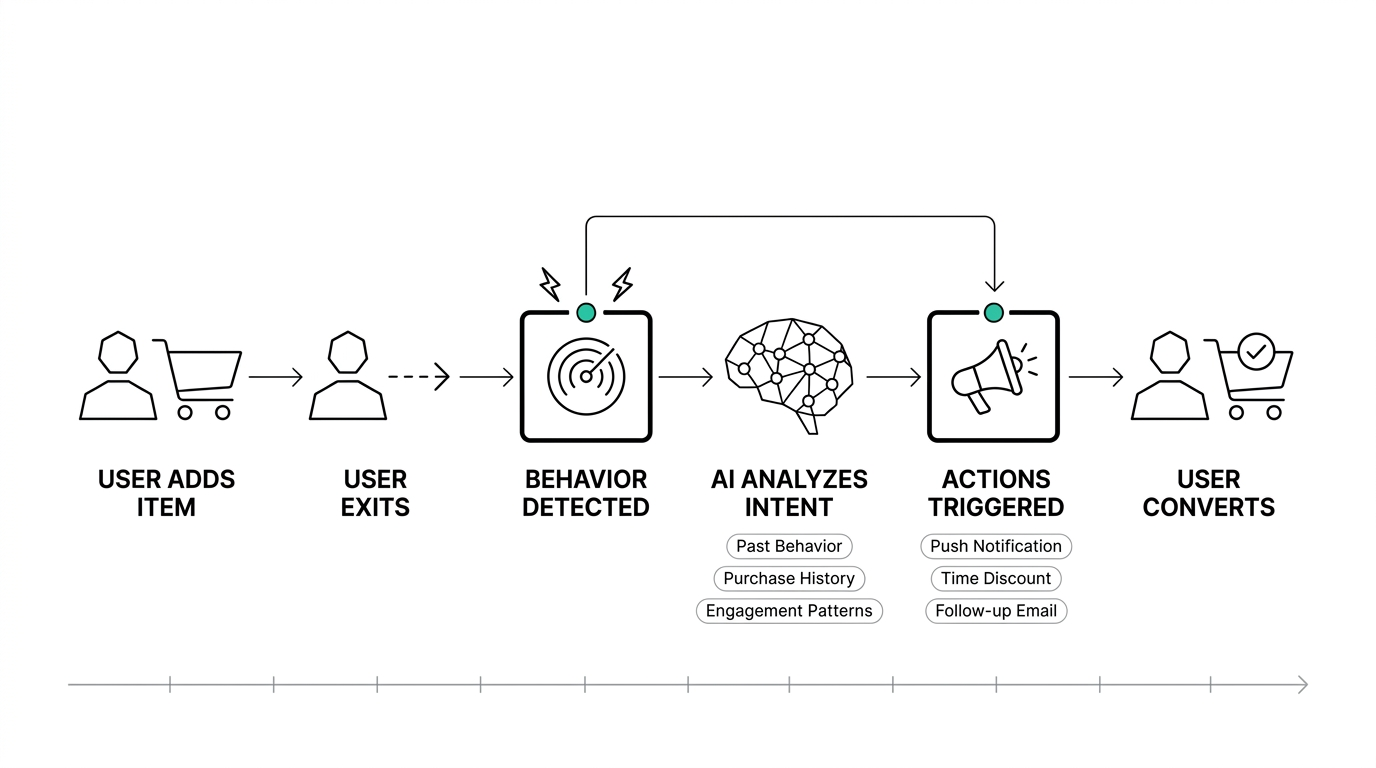
Done well, audience segmentation improves engagement, conversion rates, and customer retention. But the way segmentation is traditionally executed hasn’t kept pace with how customers behave today.
How Traditional Segmentation Works and Why It Falls Short
Traditional segmentation follows a structured process:
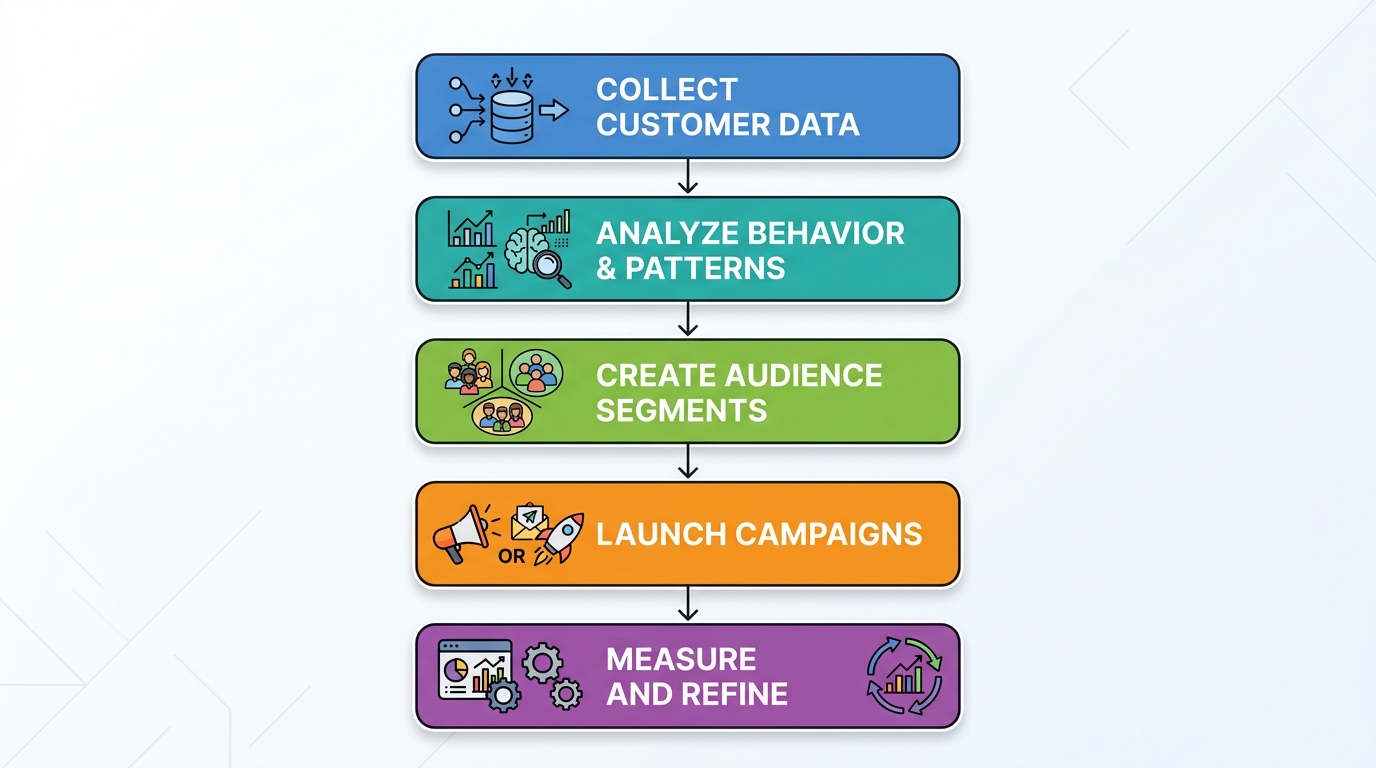
While logical, this model assumes that customer behavior changes slowly enough to act on over time.
That assumption no longer holds.
Today’s customer journeys are dynamic and compressed. A user might discover, evaluate, and purchase within minutes. In this environment, delays in data processing or campaign execution can mean missed opportunities.
Key Limitations of Traditional Segmentation
- Data Silos
Customer data is often spread across CRMs, analytics tools, and marketing platforms that don’t communicate effectively, resulting in incomplete customer views.
- Static Segments
Segments are fixed at a point in time. They don’t update fast enough to reflect real-time behavior.
- Delayed Activation
Campaigns triggered hours or days later often miss the moment of intent entirely.
- Operational Complexity
Manually creating and managing multiple segments becomes inefficient and difficult to scale.
The result? Segmentation exists, but relevance suffers.
Enter Customer Data Platforms (CDPs): A New Approach to Segmentation
A Customer Data Platform (CDP) fundamentally changes how audience segmentation works.
Instead of treating segmentation as a one-time activity, CDPs make it continuous and real-time.
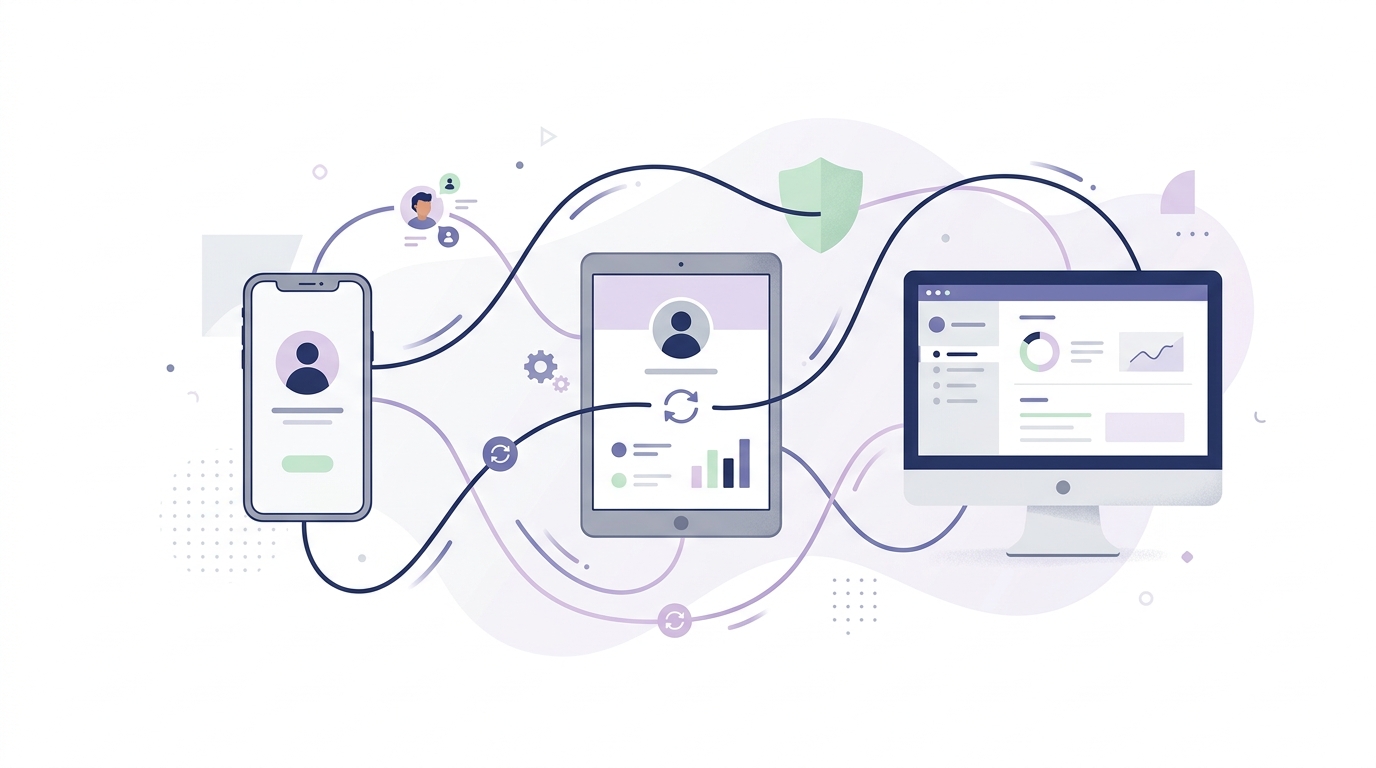
CDPs unify customer data from multiple sources like web, mobile apps, CRM systems, email platforms, and offline interactions into a single, persistent customer profile.
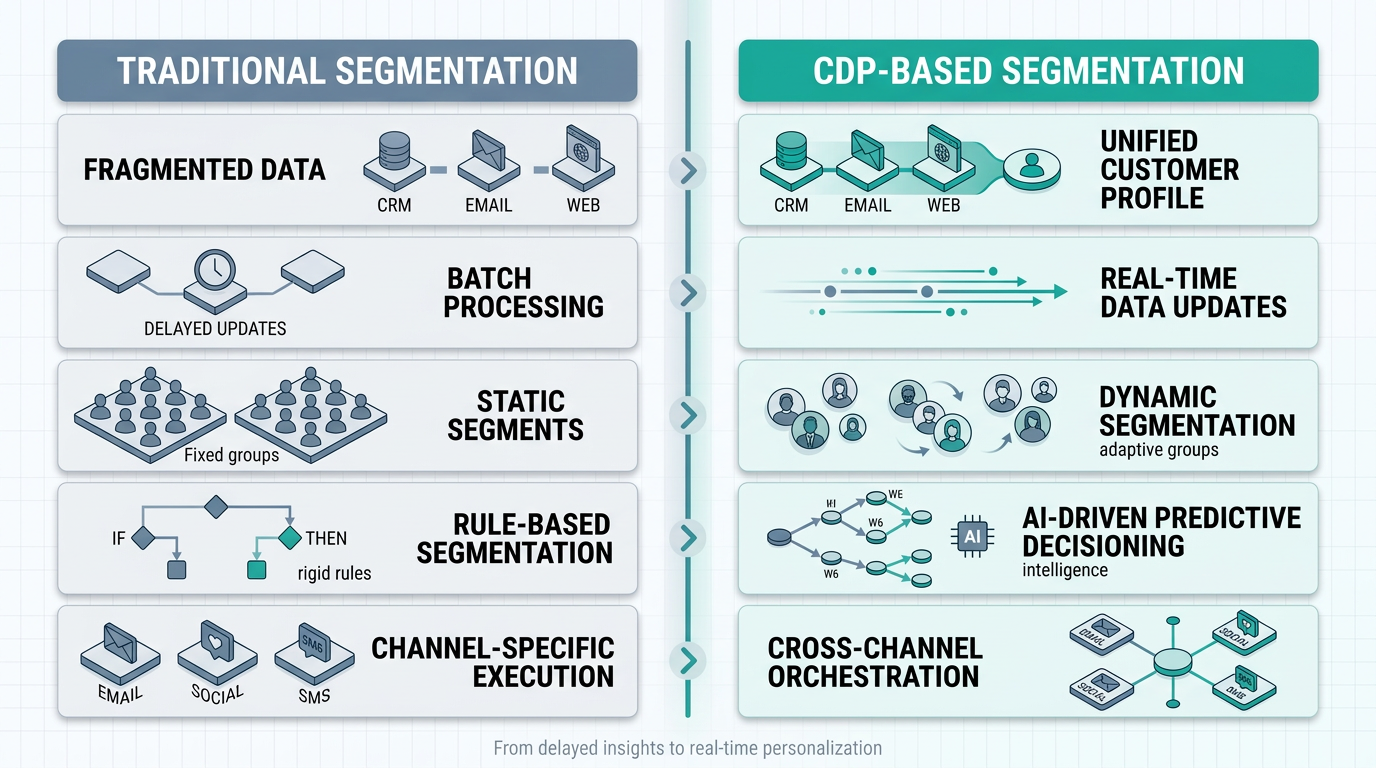
But the real transformation goes beyond unification.
Modern CDPs apply AI and machine learning to:
- Detect behavioral patterns
- Predict future actions
- Continuously update audience segments
This means segmentation is no longer static, it becomes dynamic, adaptive, and context-aware.
How CDP-Driven Segmentation Is Different
The difference between traditional segmentation and CDP-driven segmentation is not incremental, it’s foundational.
Here’s how that shift plays out:
1. From Static Lists to Dynamic Audiences
Segments update continuously as user behavior changes, even within a single session.
2. From Delayed Insights to Real-Time Action
Decisions happen instantly, allowing brands to act while intent is still high.
3. From Rule-Based Segmentation to AI-Driven Intelligence
Machine learning identifies high-value users, predicts churn, and recommends next-best actions automatically.
4. From Channel Silos to Omnichannel Orchestration
Segmentation powers coordinated experiences across web, app, email, ads, and more.
5. From Campaigns to Continuous Engagement
Segmentation is no longer a step before execution. It becomes embedded within every interaction.
How Lemnisk Enables Real-Time Audience Segmentation
While many CDPs focus on data unification, platforms like Lemnisk are built for real-time decisioning and personalization at scale.
This distinction is critical.
Lemnisk doesn’t just help you understand your audience, it helps you act on that understanding instantly.
What This Looks Like in Practice
- Real-Time Customer Profiles
Every interaction updates the customer profile immediately, ensuring decisions are based on the latest behavior.
- AI-Driven Micro-Segmentation
Instead of broad audience buckets, Lemnisk identifies granular, high-intent segments automatically.
- In-the-Moment Personalization
Messaging adapts dynamically across channels (web, mobile, push notifications, and email).
- Continuous Learning and Optimization
The system improves over time, refining segmentation and recommendations with every interaction.
In this model, segmentation is no longer something marketers manually define and revisit. It becomes a live system, constantly learning, adapting, and activating.
Why Real-Time Segmentation Matters More Than Ever
Several industry shifts are making real-time, AI-driven segmentation essential:
- The decline of third-party cookies is increasing reliance on first-party data
- Stricter privacy regulations require better data management and transparency
- Rising customer expectations demand highly relevant, personalized experiences
Today, customers don’t compare your brand only to competitors. They compare it to the best digital experience they’ve ever had.
In this environment, delayed or generic engagement doesn’t just underperform, it gets ignored.
Real-time segmentation is no longer a competitive advantage. It’s the new baseline.
From Audience Segmentation to Continuous Intelligence
Audience segmentation has always been about understanding customers.
But in today’s fast-moving digital landscape, understanding alone is not enough.
The real advantage lies in the ability to interpret signals instantly and act on them in real time.
This is the shift from segmentation as a static strategy to segmentation as continuous intelligence.
Because the question is no longer: “Who is this customer?”
It’s: “Who is this customer right now—and are we responding fast enough?”
And increasingly, the answer depends on whether your segmentation approach is built for a slower, static world or designed for real-time engagement.

Leave a Reply